Ask us whether to hire or buy crane mats and you're usually after a single number — hire costs this, buying costs that, and here's the day count where one overtakes the other. That number doesn't exist as a one-size answer, because the decision underneath it is really three questions that happen to get asked in one breath: how often will you need matting, over what stretch of time, and do you want the balance-sheet weight and upkeep of owning ground protection at all. A groundworks subcontractor running one job a quarter gets very different answers to those three than a Tier 1 main contractor with three concurrent piling programmes — and the right call depends entirely on which of those two you look like, or where between them you actually sit.
So rather than hand you a made-up breakeven, we'll walk through what any real figure has to be weighed against once you've got it in front of you — the cost categories that sit under each model, the utilisation pattern that tips the balance, and the questions worth putting to us before you commit either way.
What sits under the cost of hiring
Hire pricing across the UK plant and equipment world follows a familiar pattern — day rates cost more per day than weekly rates, and weekly rates cost more per day than long-term contract hire. That's standard hire economics, not anything peculiar to ALIMATS®. Tie a piece of kit up for a single afternoon and the supplier has to price in the risk of it sitting idle either side of that booking; commit to a long-term hire and the asset keeps earning continuously, which is why the per-day cost comes down as the commitment lengthens. The upshot is that the true cost of hiring isn't one figure at all — it's a curve, and where you land on it depends on how the hire is structured: day, week, or contract term.
What hiring takes off your plate matters as much as what it charges for. There's no storage to find between jobs, no maintenance regime to run, and no mat ageing quietly in a yard as a depreciating line whether it's earning its keep or not. Hire also puts the full configuration range at your disposal without a penny of capital tied up in it — the job that needs a compact pad and the job that needs a wide spread across an outrigger footprint each get exactly what they need, rather than you making do with whatever size happens to already be sitting in your own yard. That flexibility is easy to underrate until you've watched a site try to force last quarter's mat size onto this quarter's ground conditions.
What sits under the cost of buying
Buying starts with the upfront capital outlay, and that's before anything else gets counted. Then comes the space to store the mats between deployments and the ongoing care of keeping them in usable condition — a real cost, even if it's a lighter one for aluminium than for the alternatives. Steel matting needs galvanising or repainting to stay ahead of corrosion; timber needs regular condition and rot checks. ALIMATS, being 6005A aluminium, needs inspection and cleaning between deployments rather than a heavy maintenance programme — a genuine mark in its favour when you're weighing what ownership actually costs to sustain, and a lighter burden than either of the other two materials commonly used for the same job, even if it isn't zero.
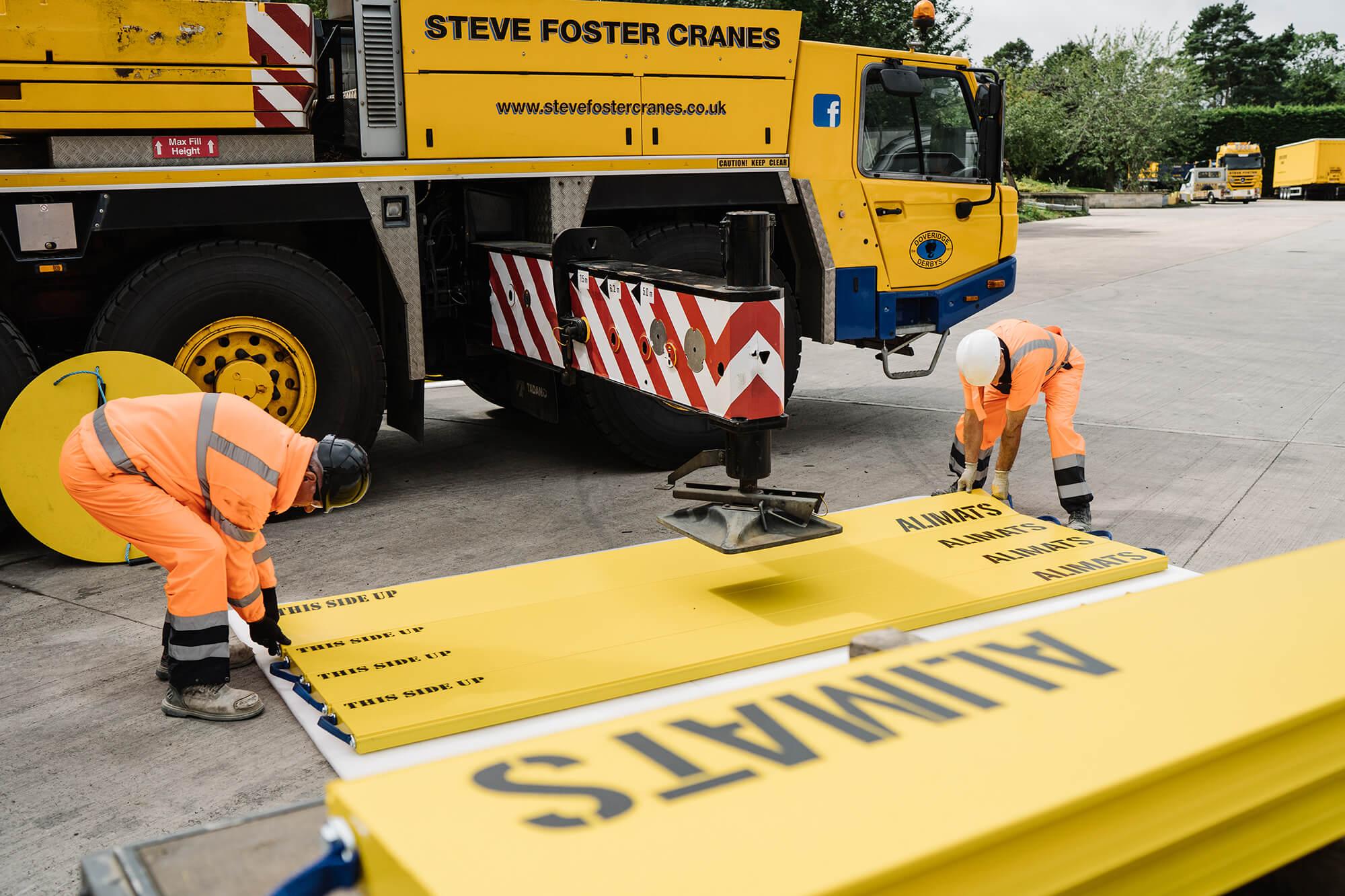
Ownership brings things hire can't. Mats bought outright can be painted in your corporate colours — not an option on hired stock, which has to go back into general circulation for the next hirer — and that gives some contractors real brand visibility across a site, which is more than cosmetic for firms who value that kind of consistency on major projects. Owning also hands you full control over availability: no risk of the unit you need on a Tuesday already being out on someone else's job that same Tuesday. And once utilisation is high enough, an owned asset keeps returning its value job after job, redeployed rather than paid for afresh each time — the flip side of the capital outlay, but one that only pays off if the mats are genuinely working hard enough, often enough, to justify what went into buying them.
| Factor | Favours hire | Favours buy |
|---|---|---|
Job frequency | Occasional, defined-contract, or unpredictable work | Continuous, rolling programme of work |
Capital | None tied up in equipment | Upfront outlay, offset by ownership over time |
Storage & upkeep | None — handled by the supplier between hires | Yard space and inspection/cleaning become your responsibility |
Configuration range | Full range available on demand, matched to each job | Limited to whatever's in your own stock |
Availability control | Dependent on supplier stock at the time you need it | Full control — always available when you need it |
Brand visibility | Not available on hire stock | Mats can be painted in corporate colours |
Balance sheet | No depreciating asset to carry | Asset depreciates but can be redeployed job after job |
Factor:
Favours hire:
Favours buy:
Factor:
Favours hire:
Favours buy:
Factor:
Favours hire:
Favours buy:
Factor:
Favours hire:
Favours buy:
Factor:
Favours hire:
Favours buy:
Factor:
Favours hire:
Favours buy:
Factor:
Favours hire:
Favours buy:
The question that actually decides it: utilisation
Strip everything else away and the hire-versus-buy decision comes down to one thing: how often will this equipment be working, and how predictable is that pattern? If you need crane mats occasionally, for a defined contract, or in a way that's genuinely hard to forecast job to job, hire will usually suit you better — nothing sits unused, and unpaid-for-by-anyone, in the gaps. If you're running mats continuously across a rolling programme of work, or you need guaranteed same-day availability across several concurrent sites where a hired unit might simply not be free when you need it, ownership tends to pay for itself over time.
Where exactly that crossover sits depends on your own job frequency, the rates you've actually negotiated, how many sites you're running at once, and what your storage and admin overhead really costs to carry. That's precisely why we don't publish a "buy if you use it more than N days a year" rule — a number like that, pinned up without knowing your rates and your utilisation, is a guess dressed as a calculation, and false precision is worse than none. We'd rather run your figures with you and give you the number that's actually true for your business.
The middle path: hybrid hire and ownership
Plenty of the contractors we work with don't pick one model and stick to it — they run both at once, and we'd usually encourage it. A common and genuinely sensible approach we see is owning a smaller core stock sized for routine, predictable work, and hiring in additional configurations from us for peak demand, unusual jobs, or anything outside the range the owned stock covers. That way the capital you've tied up in owned equipment stays matched to the baseline of work that's reliably there, while hiring from us absorbs everything above and beyond it — the one-off heavier lift, the site with ground conditions nobody planned for, the month three jobs land at once instead of one.
It's a middle path we like naming outright, because it gets little airtime next to the binary of "hire or buy". If your workload has a stable core plus an unpredictable tail — which describes a lot of the contractors we supply doing crane and heavy-plant work — we'll usually point you toward hybrid provisioning, because it tends to match how the work actually turns up rather than forcing every job through one model that fits some of it well and the rest of it badly.
What to put to us before you decide
None of the above is any use without real figures behind it, and those come from a conversation about your actual situation, not a published rate card built for the average case. Ask us directly what the hire rate looks like at the volume and duration you're realistically expecting, rather than a generic day rate that assumes a one-off booking. Ask whether long-term hire converts any credit toward eventual purchase, if a hire arrangement later turns into a decision to buy. Ask what delivery and logistics cost under each model — we typically bundle that into hire, but it's worth confirming rather than assuming. And on the buy side specifically, ask what happens to owned stock between jobs: who's responsible for storage, who checks its condition before the next deployment, and what that costs you in staff time and yard space that a hire arrangement would otherwise absorb.
Put those answers next to your own job frequency and site count, and the generic "hire vs buy" question turns into an actual number specific to your business — which is the only version of this comparison worth acting on. That's the conversation we'd far rather have with you than sell you a rule of thumb.
Frequently asked questions
Is it always cheaper to hire crane mats than to buy them?
Not always — it depends entirely on how often you'd use them and over what period. Hiring avoids capital outlay, storage and maintenance liability, but day rates for short, one-off bookings are priced higher per day than long-term hire or ownership works out to at high utilisation. We won't hand you a single right answer without your own job frequency and rates in front of us.
How do crane mat hire rates typically work?
As with most plant hire, day rates are priced highest per day, weekly rates lower, and long-term contract hire lower still, because a supplier pricing a single-day booking has to account for the mat potentially sitting idle either side of it. The exact figures vary by supplier and volume, so ask us for rates at the duration you actually need rather than assuming a generic day rate applies.
At what point does it make sense to buy crane mats instead of hiring?
Broadly, once matting becomes a continuous requirement across a rolling programme of work, or you need guaranteed same-day availability across multiple concurrent sites, ownership tends to pay for itself over time. Exactly where that crossover sits depends on your own job frequency and negotiated hire rates — there's no generic day-count that applies to every business, which is why we work it out with you rather than quote a rule of thumb.
Do I have to choose one model — hire or buy — and stick with it?
No. A common approach is to own a smaller core stock sized for routine, predictable work and hire additional configurations for peak demand or unusual jobs. That keeps your capital matched to the baseline workload while hire absorbs the unpredictable tail on top of it.
What maintenance do owned ALIMATS mats actually need?
Being 6005A aluminium, ALIMATS needs inspection and cleaning between deployments rather than the heavier maintenance regime steel or timber matting demands — no galvanising or repainting, and no rot checks. It's a genuinely lighter ownership burden than the alternative materials, though it isn't zero.
Can I switch from hiring to buying if my needs change?
Yes — outright purchase sits alongside single-day, weekly and long-term hire, and moving from one to the other is straightforward if a hire arrangement turns into a recurring or permanent requirement. Ask us directly whether any hire spend counts toward the eventual purchase.
Why can't a mat hire supplier just tell me a breakeven number?
Because a breakeven day-count depends on the rates you've actually negotiated, your job frequency, and how many sites you're running at once — none of which a generic figure can capture. A supplier quoting one universal number without knowing your specifics is guessing, not calculating. We'd rather run your real numbers and give you a figure you can act on.
Do hired mats arrive in the same condition every time?
Every mat is inspected, cleaned and quality-checked before we redeploy it after a previous hire, so you're never inheriting damage or wear from someone else's job. It's part of why the maintenance burden sits so much lower for a hire customer than it would for an owner managing that process themselves.
Can hired mats be painted in our corporate colours?
No — that's specific to mats bought outright, since hired stock has to return to general circulation for the next customer. If brand visibility on site matters to your business, it's a point genuinely in favour of buying rather than hiring.