There's a crane booked, a ground survey that's come back saying the surface won't take the point load, and a start date that won't move. That's the situation behind almost every call we take about crane mats for hire — nobody rings us out of curiosity. The real questions aren't what a crane mat is; they're whether we can get matting on site in time, what it costs to have it there, and what happens to it once the lift is done.
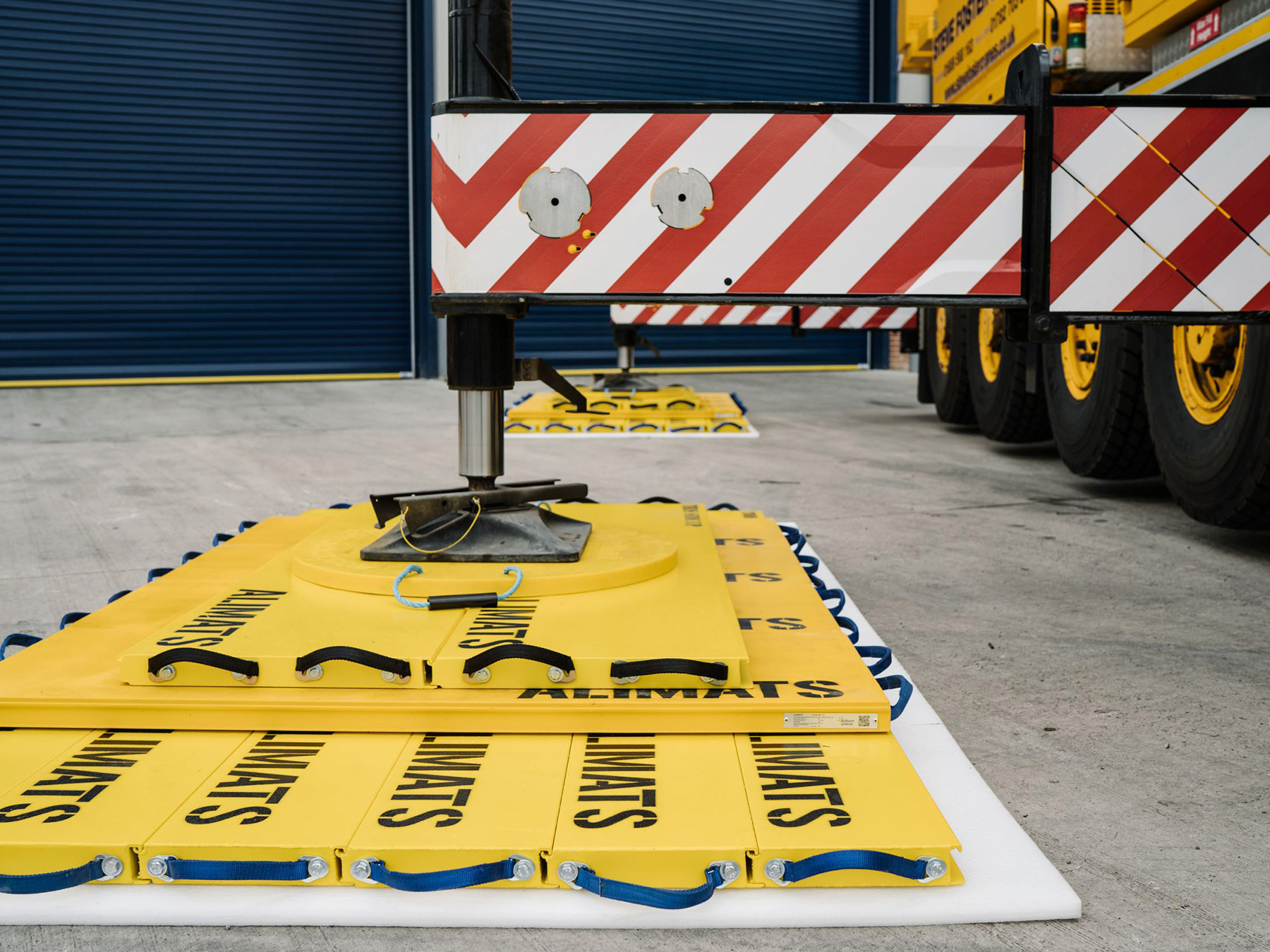
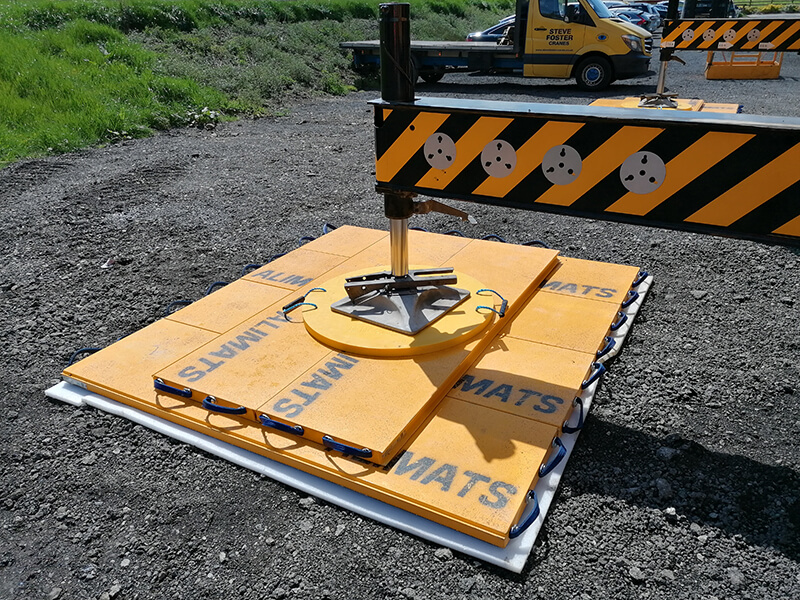
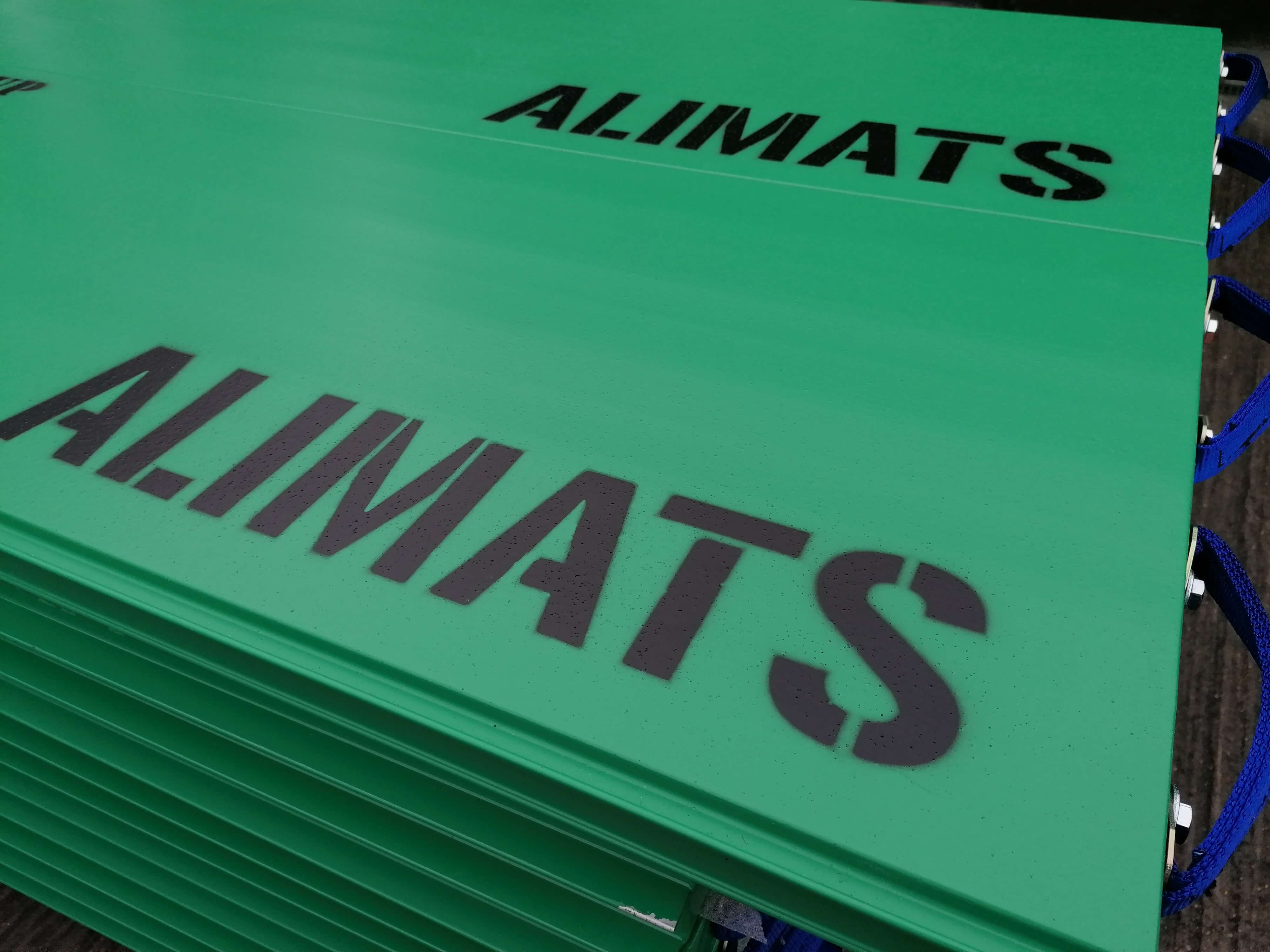
ALIMATS® is the system we built to answer exactly that. It's a patented, modular aluminium mat made from 6005A alloy, and for a hire decision the part that matters is availability — we hold configurations from 1.34m2 right up to 8.07m2 ready to go, and we hire them out by the day, by the week, or for the length of a contract.
What hiring actually gets you
Buying ground protection outright is a capital decision — pallets of aluminium mat sitting in a yard between jobs, a maintenance regime to run, storage to find. Hiring from us sidesteps all of that. You get the full configuration range, built from five module sizes — from the 13kg Mini module up to the 48kg Long and Extra Long modules, and our aluminium crane mats page sets out the sizing logic if you want it — without owning a single mat.
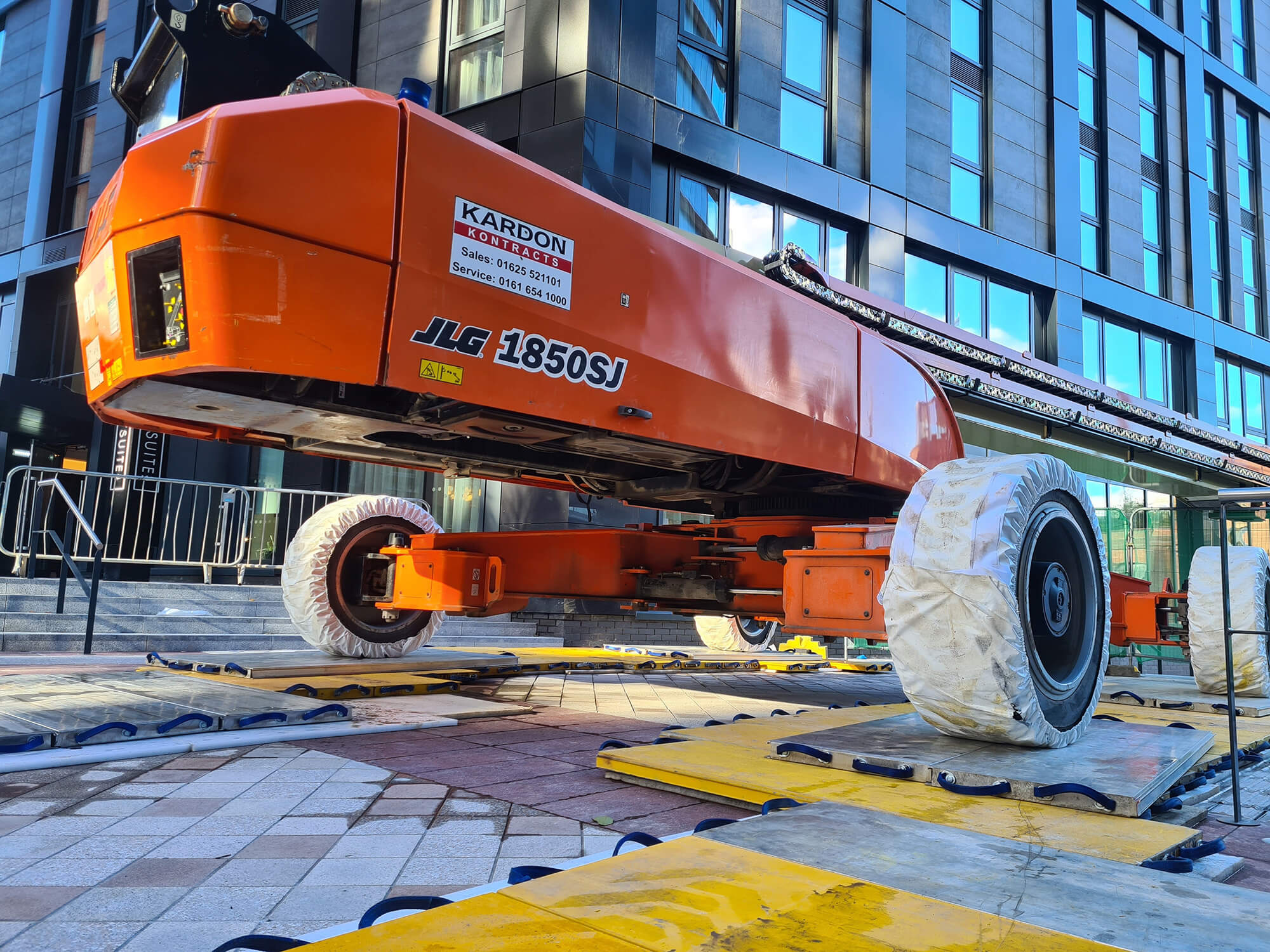
Sites rarely need the same footprint twice, which is why that range earns its keep. A 1.34m2 pad might suit a mobile crane's outrigger on firm ground; a 7m2-plus spread is a different job entirely — soft ground, a heavier class of crane, or a temporary access road that has to bear repeated passes rather than one static load. Every configuration we supply is rated to a safe working load of up to 80 tonnes and sits comfortably under cranes up to 150 tonnes, and every one of those figures has been independently checked by a Fellow of the Institution of Structural Engineers. Hire, and you're not gambling capital on which configuration to commit to — you tell us what the lift needs and we supply it.
Single day, weekly, or long-term
Our hire terms run from a single day, through weekly, to long-term contract hire — which covers just about everything that happens on a real site: a one-off lift that needs matting for an afternoon, a multi-week piling programme, or a temporary crane pad that stays down for months. We don't impose a minimum contract length, so a short job never gets forced into a longer commitment.
If a hire turns into something more permanent — a recurring requirement across several sites, say — moving to outright purchase is straightforward. Mats bought outright can also be painted in your corporate colours, which we can't offer on hire stock, because it has to come back into the general fleet afterwards.
Inspected, cleaned, and checked before it goes out again
Every mat is inspected, cleaned, and quality-checked before we send it out on the next hire. Site mud, hydraulic fluid, the odd knock from a previous job — all of it gets dealt with before a mat goes back into circulation, and the inspection is what catches any mat that's taken damage serious enough to affect its rating, so it gets pulled rather than passed on.
For you, that means the configuration turning up on your site has been checked against the same standard every time — not just whenever it last happened to be looked at. It's the difference between hiring equipment and hiring a maintained system.
Delivery decides whether the crane starts on time
This is where a hire lives or dies. A mat system is only any use if it's under the crane before the crane needs it, and that's a logistics problem, not an engineering one. We deliver 24 hours a day, seven days a week, on our own fleet — vehicles under 3.5 tonnes, FORS Bronze-accredited — driven by our own staff, most of them CPCS certified. That last point matters more than it looks: we don't hand this to a subcontracted haulier, so the people bringing the mats understand what they're delivering and how it gets used on site.
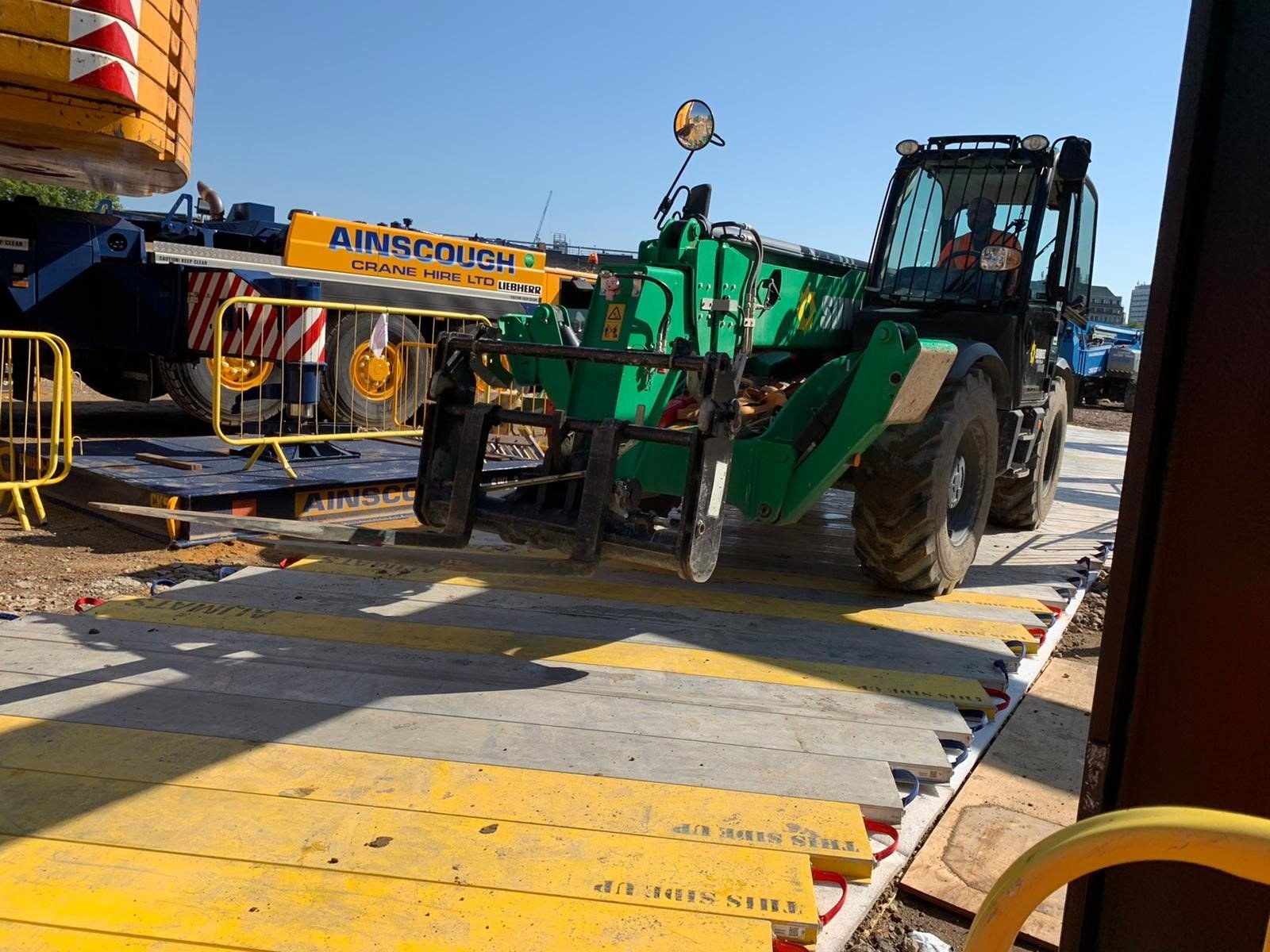
The clearest illustration of what that setup does happened at Grangemouth Refinery. Ainscough Crane Hire needed a 7.06m2 mat configuration on site with next to no notice. The order came in at 2.50pm; the mats were on the ground in Grangemouth at 8.02am the next morning — eighteen hours, door to door, including an overnight drive to a refinery. In Ainscough's own words: "When we needed a quick turnaround on mats, the Brilliant Ideas team delivered. The 7.06m2 mat configurations we hired were ordered at 2.50pm and arrived on site in Grangemouth at 8.02am, all within 18 hours. The mats are handleable and easier and quicker to set-up than steel mats, which are heavy."
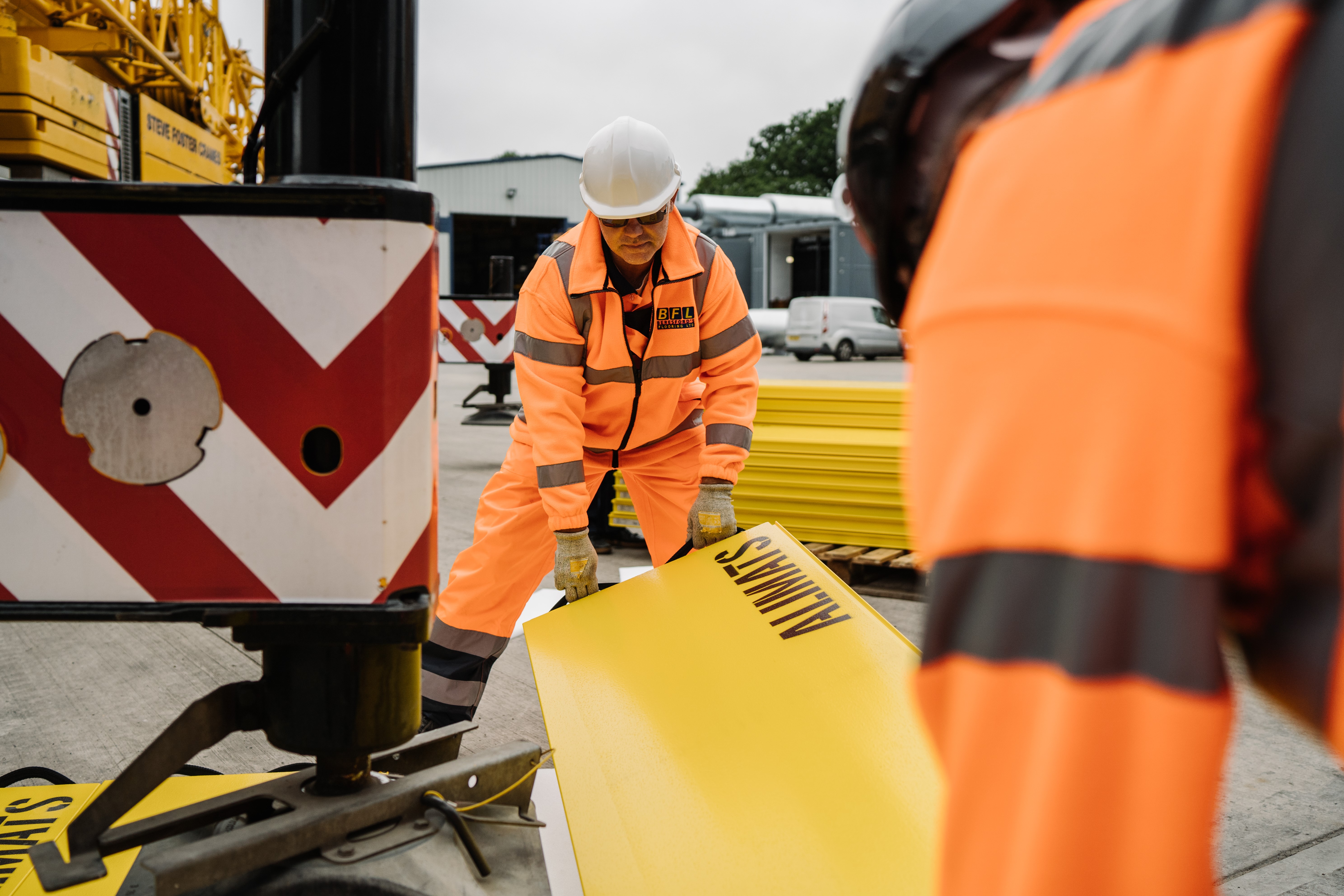
That combination — genuine 24/7 dispatch, a fleet we run ourselves, and mats light enough for a two-person team to lay with no heavy plant — is why over 80% of the UK's top twenty Tier 1 contractors already use ALIMATS, and why they've turned up on sites including HS2, Hinkley Point C, Heathrow, Gatwick, Google's King's Cross HQ, Euston Station, London Bridge, the Co-op Live Arena in Manchester, and Scottish wind farm developments.
Getting to the right configuration before you call
The one thing worth having to hand before you order is the crane's imposed load on the ground, and some idea of what that ground is — even an informal assessment tells us whether you're looking at a compact pad or a wider spread across the outrigger footprint. We cover the maths properly in our load spread calculation guide; the short version for a hire decision is that the outrigger load, the ground's bearing capacity, and the configuration size are three numbers that all have to agree with one another — get that right before delivery and the mat never turns up in the wrong size.
Most hirers already have this from their lift plan or a geotechnical survey, and it's a five-minute conversation to turn it into a configuration between 1.34m2 and 8.07m2.
Hire or buy?
For a one-off lift or a defined contract, hiring is almost always the more sensible route — no storage, no maintenance liability, and the configuration changes with the job. Purchase starts to make sense once matting becomes a recurring cost across several sites or several years, at which point the sums shift towards ownership. It's enough of a question to deserve a proper answer — our Crane Mats: Hire vs Buy guide sets out the full comparison.
Frequently asked questions
How fast can hired crane mats actually be delivered?
We deliver 24/7 on our own FORS Bronze-accredited fleet, and turnaround can be very quick when it needs to be — a 7.06m2 configuration Ainscough Crane Hire ordered at 2.50pm was on site at Grangemouth Refinery by 8.02am the next day, 18 hours later. Most jobs aren't that urgent, but we run the fleet and the drivers precisely for the ones that are.
What's the minimum hire period for crane mats?
You can hire for a single day, by the week, or on a long-term contract, so a one-afternoon lift and a months-long piling programme are both catered for without either being forced into the other's terms.
What crane mat configuration do I need for my lift?
It comes down to your crane's outrigger or track load and the bearing capacity of the ground it's standing on. Our configurations run from 1.34m2 up to 8.07m2, rated to a safe working load of up to 80 tonnes and suitable under cranes up to 150 tonnes — give us a rough ground assessment alongside the crane's imposed load and we can usually specify the right size over the phone.
Do hired mats arrive clean and undamaged?
Every mat is inspected, cleaned, and quality-checked before we redeploy it, so any unit that's taken damage affecting its rating is pulled from circulation rather than sent out again. It's what stops you inheriting the wear from someone else's job.
Can I buy the mats instead of hiring if my needs change?
Yes — we offer outright purchase alongside single day, weekly, and long-term hire, and it's a straightforward switch if a hire arrangement turns into a recurring or permanent requirement. Mats bought outright can also be painted in your corporate colours, which we can't do on hire stock since it returns to the general fleet.
Who actually delivers the mats — is it subcontracted?
No. We deliver on our own fleet of FORS Bronze-accredited vehicles under 3.5 tonnes, driven by our own staff, most of whom hold CPCS certification. We don't hand it to a third-party logistics firm, which is a large part of why turnarounds like the Grangemouth delivery are achievable.
Is hiring or buying crane mats cheaper?
For a single lift or a fixed-length contract, hiring almost always works out more sensible, since there's no storage or maintenance liability once the job ends. Once matting becomes a recurring need across several sites or years, purchase starts to make more financial sense — it's worth reading our dedicated hire vs buy comparison rather than judging it off one job.
Are the mats easy to handle on site during setup?
Yes — it's one of the practical advantages hirers mention most often over steel matting. As Ainscough Crane Hire put it after their Grangemouth delivery: "The mats are handleable and easier and quicker to set-up than steel mats, which are heavy." Individual modules can be carried and laid by a two-person team with no lifting plant.