What a crane mat actually does
Ask any crane supervisor for their worst near-miss and it rarely involves the crane. It involves the ground. An outrigger carrying sixty or seventy tonnes through a steel foot the size of a dinner table finds a patch of made-up ground nobody tested properly — old foundations backfilled with rubble, a soft run over a services trench, three months of rain nobody budgeted for — and the leg settles. Not dramatically. A few centimetres, unevenly, one corner going faster than the others. That is usually enough. Cranes rarely go over because the machine failed — they go over because the ground moved a few degrees under one leg while the load was out at full radius.
That is the whole reason crane mats exist, and it is worth being precise about the physics because so much of the industry isn't. An outrigger reaction is a point load — a lot of force through a small area — and ordinary site ground can only take so much force per square metre before it starts to give. A mat's job is to take that point load and spread it across a much larger footprint, so the pressure reaching the ground underneath drops to something the ground can actually carry without moving. Load spread, in other words — load transfer from a small foot into a large area. It sounds almost too simple to need explaining, which is probably why it gets treated as a formality on some sites: put a mat down, tick the box, crane it in. It isn't a formality. It's a bearing-pressure calculation with a lift plan attached, and in the worst case a toppled crane sitting behind it.
Where people come unstuck is assuming any flattish piece of material under an outrigger counts as matted. It doesn't. What separates a mat that genuinely spreads load from one that only looks the part comes down to stiffness, sizing, and the material it's made from — and every one of those is worth getting right.
Handleable vs non-handleable — the distinction that costs you time
Every conversation about crane mats eventually splits into handleable versus non-handleable, and it is tempting to file that under nice-to-have. It isn't. It's a programme decision.
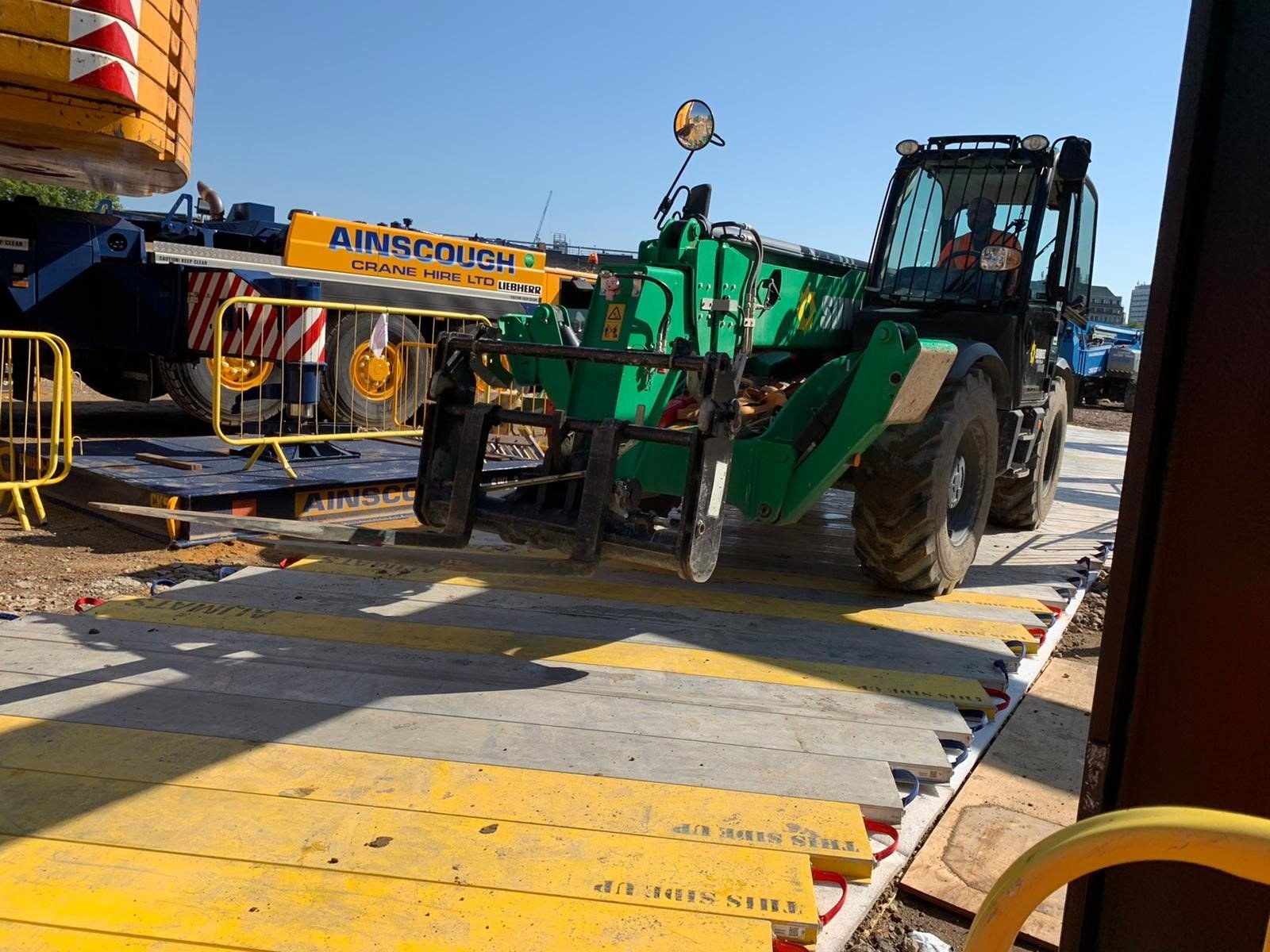
A non-handleable mat — a full timber baulk, a heavy steel plate, a large single-piece composite — needs plant to move it. That means a telehandler or a second crane on site before the first crane can even set up, an extra banksman, and a sequencing problem: the machine that's supposed to be lifting is now waiting for its own footing to be built. On a tight programme, on a site with restricted access, or on a job where the crane is only there for a few hours, that dead time adds up fast — and it adds up every single time the crane moves position.
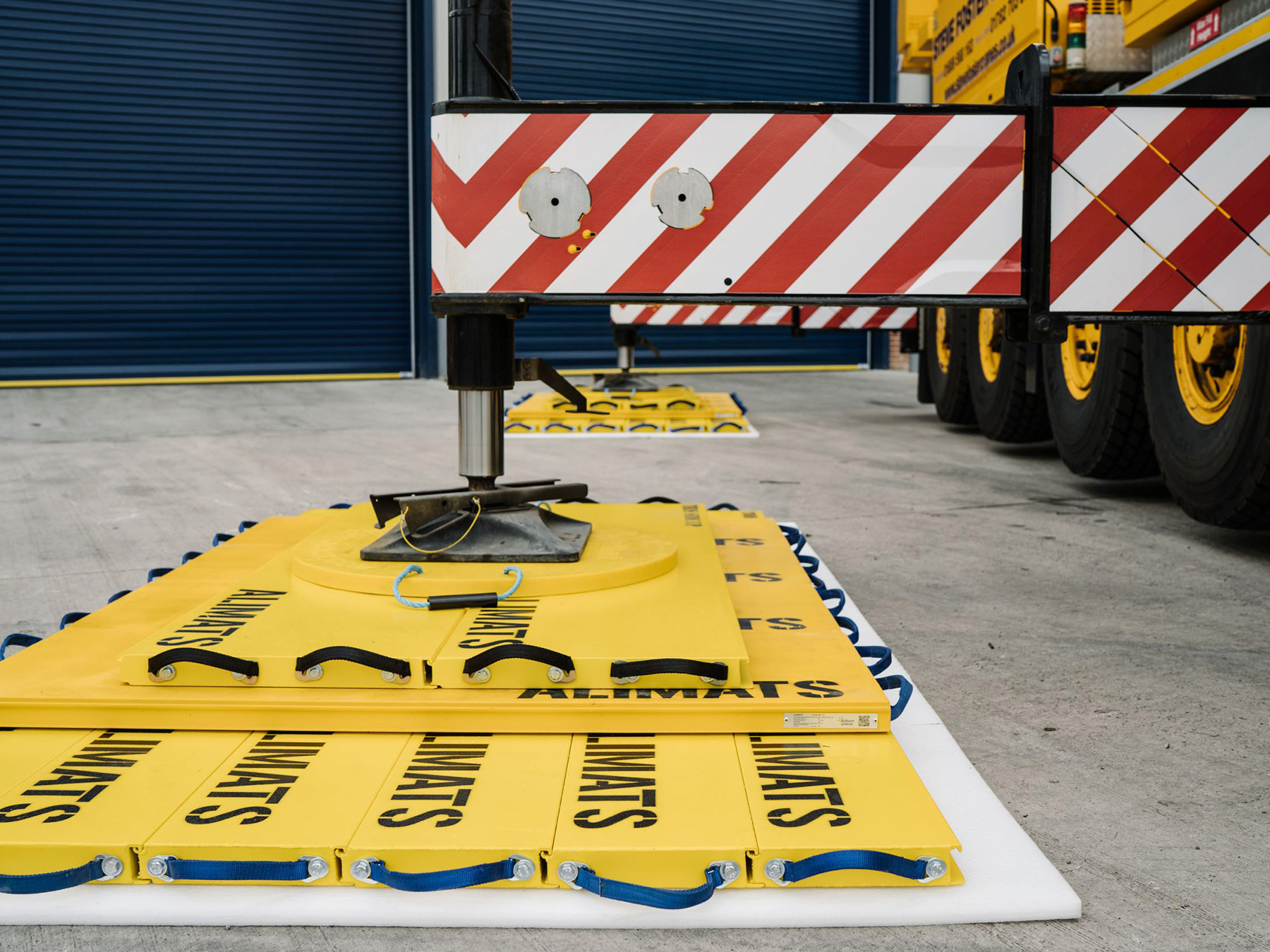
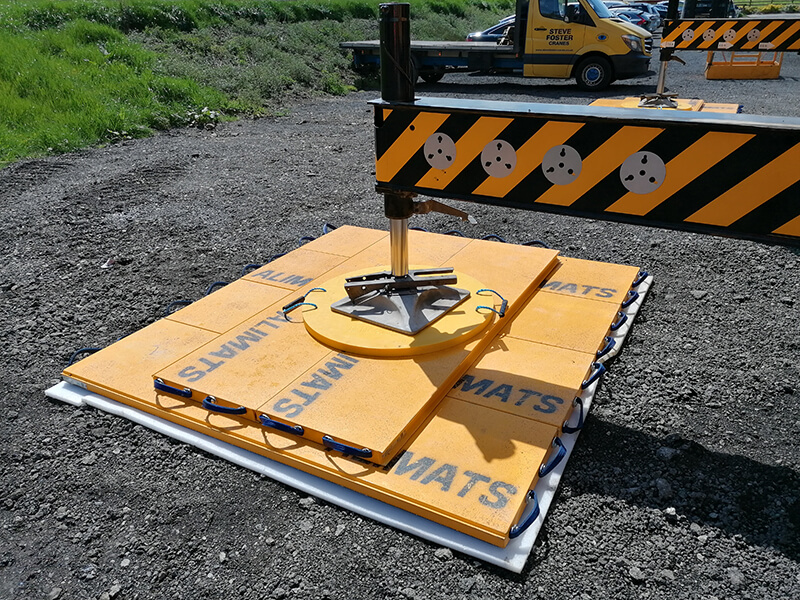
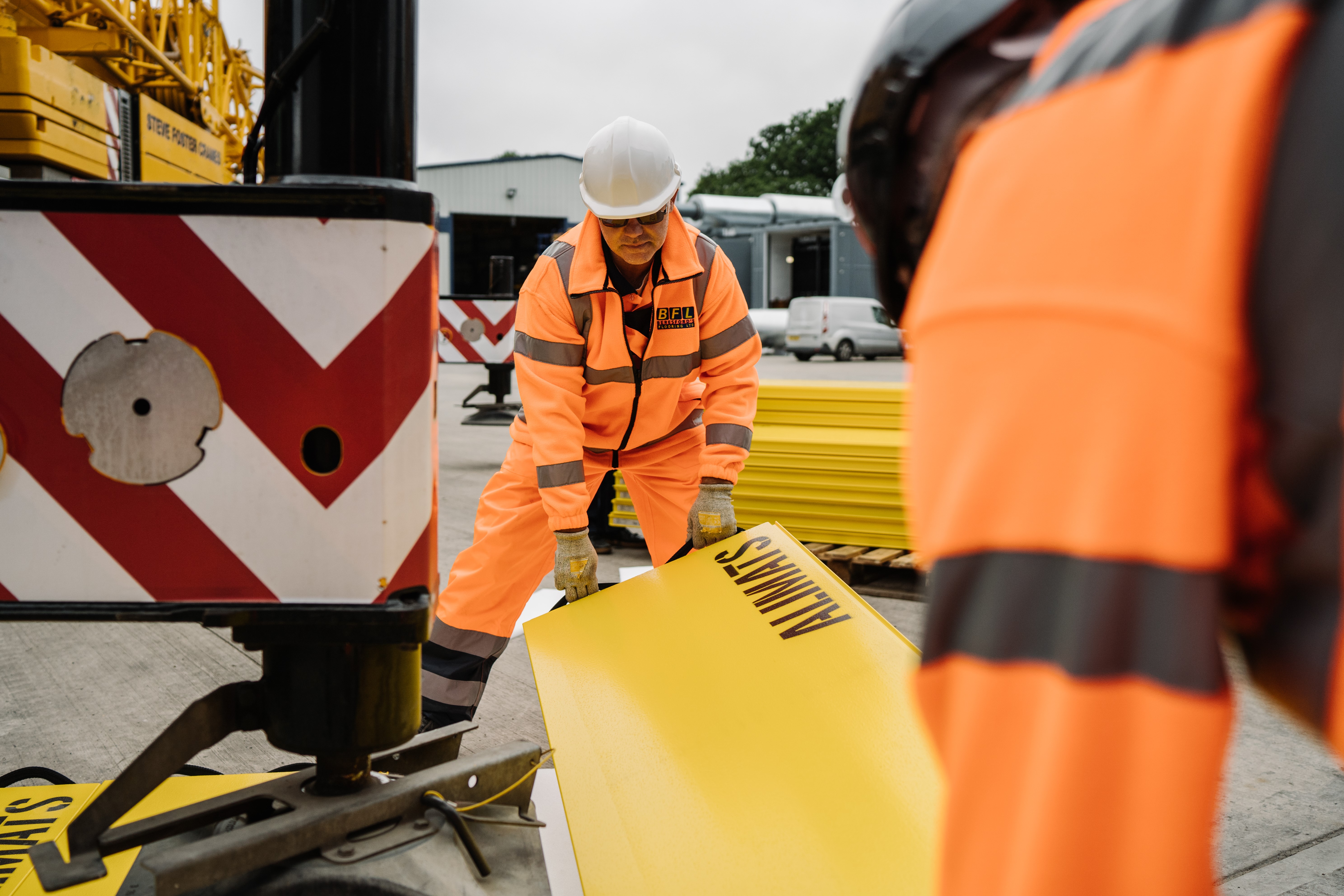
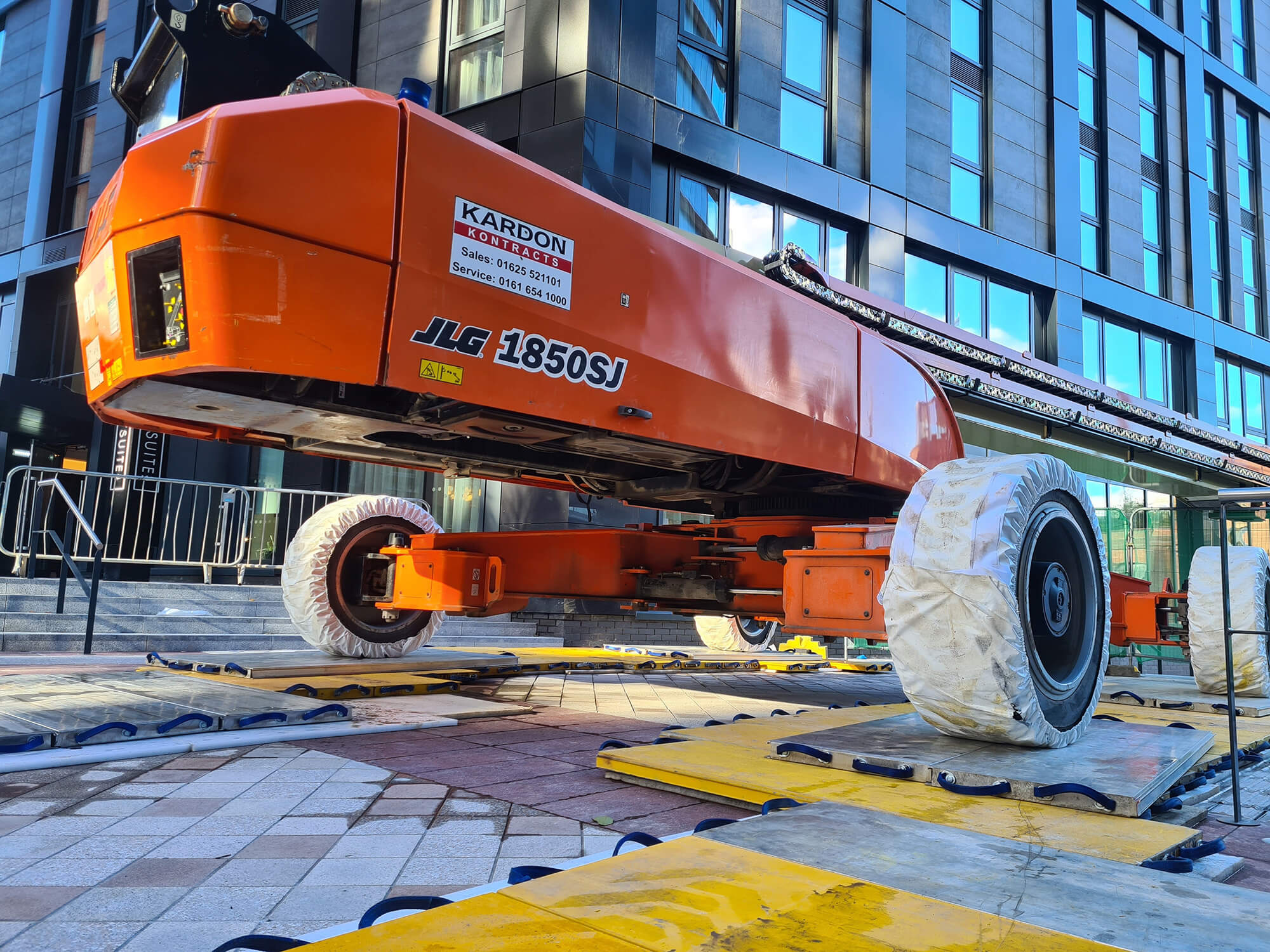
Our ALIMATS system is a patented, modular aluminium crane mat sized so two people can lift and position it without any of that. Modules run from a 0.58 by 0.58 metre Mini piece weighing 13kg up to a Long module at 48kg — heavier than a bag of cement, lighter than most people's idea of "needs a machine." They interlock into configurations from 1.34 up to 8.07 square metres, built up on the ground exactly where and how the temporary works design says they need to be, then taken apart and moved to the next position the same way, no heavy plant needed. As Portakabin's temporary works team put it: "The ALIMATS system works well, we use them on 9/10 jobs. Our temporary works team look at the ground, do the calculations and there's never a problem with specifying these mats to spread the load. They interlock and are easy to set-up without heavy plant." That last point is the whole programme argument in one sentence — no heavy plant, no extra sequencing, no waiting.
None of this says handleable always beats non-handleable on principle. A single enormous steel plate under a static tower crane base that goes down once and stays put for eighteen months doesn't need to be handleable — it needs to not move. The distinction matters most where a crane is repositioning repeatedly, where access is tight, or where the mats need to travel between several outrigger positions in a day. That describes most mobile crane work, which is why we would always rather have the conversation before it becomes a site problem than after.
Strength and stiffness are not the same thing
Every material used under a crane outrigger has genuine strengths, but here is where we part company with much of the industry: strength and stiffness are not the same property, even though marketing copy routinely treats them as interchangeable.
Compressive strength is how much force a material can take before it crushes or cracks. Stiffness — its modulus of elasticity — is how much it deflects, how much it bends, under a given load before it fails. A material can have perfectly respectable compressive strength and still be far too flexible to do the actual job of a crane mat, because if it bends under load the load doesn't spread evenly across the mat's footprint — it concentrates directly under the point of contact and triangulates down into a much smaller patch of ground than the mat's full area would suggest. The 2014 design guide Construction Ground Condition for Plant makes exactly this distinction, and it is one of the more useful pieces of engineering literature on the subject that most people specifying mats have never read.
Steel sits at the top for both compressive strength and stiffness — on paper, the best-performing material here. It is also why steel mats are almost always non-handleable: the density that makes it stiff makes a useful-sized plate too heavy for two people to move. Aluminium — specifically the 6005A alloy we make ALIMATS from — comes second in both, close enough to steel's stiffness to spread load properly at roughly a third of the density, which is exactly what makes it liftable by hand. Timber, in the right species, performs respectably on stiffness, but its real-world behaviour swings enormously with species and condition — a dense hardwood like Ekki (Azobe) behaves nothing like a piece of oak, and neither behaves anything like a piece that's been left out in the weather for two years and started to split. Nylon and standard plastic (UHMWPE) mats bring up the rear on stiffness, and that is where the numbers get genuinely interesting.
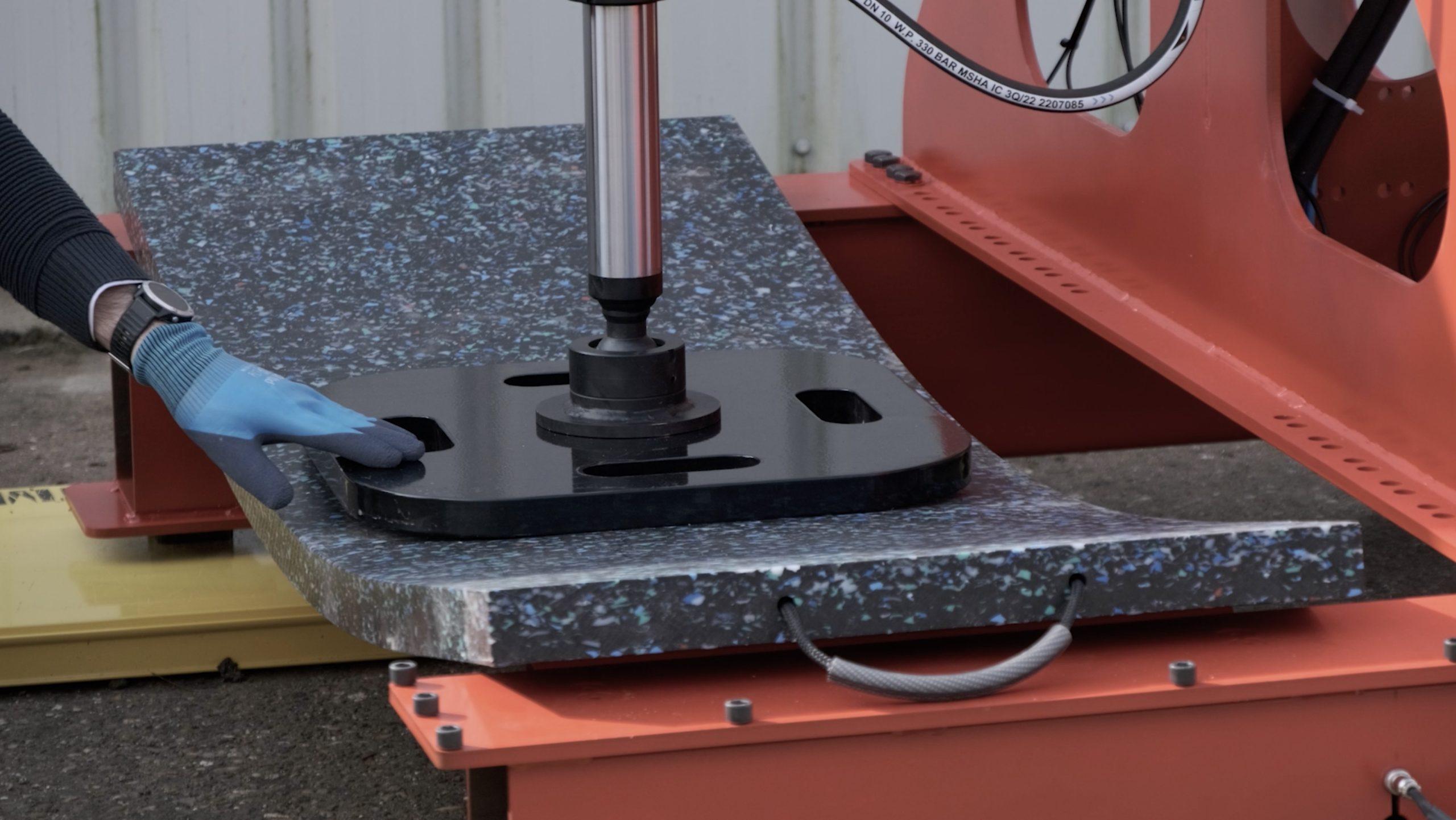
So we put it to the test on a purpose-built bending rig, loading ALIMATS against a competing UHMW-PE plastic mat its own manufacturer rates for 54 tonnes. Under a one-tonne test load, the plastic mat deflected 102mm; ALIMATS deflected 2mm — and the gap widened, not narrowed, as the load increased. The full rig setup, all three test loads, and a caveat worth knowing about how manufacturer ratings get tested are in Aluminium vs Plastic Crane Mats: The Bending Test — worth reading in full before you trust a bare SWL number in isolation.
That gap isn't a fluke of one bad plastic mat. It illustrates the point precisely: a mat rated for 54 tonnes that visibly bends under a fraction of that load isn't lying about its compressive strength — it genuinely may not crack. But it is not spreading that load the way a stiffer material would, and a rating that only describes the point at which a material fails, with no reference to how far it deflects getting there, tells a specifier much less than it appears to. In our opinion that is misleading the industry, and it isn't safe.
Here is how the key material properties actually compare, tested to the same standards:
| Property | Nylanite | Plastic (UHMWPE) | Ekki/Azobe Timber (D70) | Oak Timber (D40) | ALIMATS Aluminium (6005A) |
|---|---|---|---|---|---|
Compressive Strength (MPa) | 123 | 21 | 34 | 26 | 280 |
Tensile Strength (MPa) | 78 | 28 | 42 | 24 | 270 |
Modulus of Elasticity (MPa) | 3,000 | 1,350 | 20,000 | 13,000 | 69,000 |
Material Density (kg/m³) | 1,380 | 960 | 1,080 | 660 | 2,700 |
Property:
Nylanite:
Plastic (UHMWPE):
Ekki/Azobe Timber (D70):
Oak Timber (D40):
ALIMATS Aluminium (6005A):
Property:
Nylanite:
Plastic (UHMWPE):
Ekki/Azobe Timber (D70):
Oak Timber (D40):
ALIMATS Aluminium (6005A):
Property:
Nylanite:
Plastic (UHMWPE):
Ekki/Azobe Timber (D70):
Oak Timber (D40):
ALIMATS Aluminium (6005A):
Property:
Nylanite:
Plastic (UHMWPE):
Ekki/Azobe Timber (D70):
Oak Timber (D40):
ALIMATS Aluminium (6005A):
How sizing and SWL are actually worked out
Sizing is the part most guides skip, because it is genuinely engineering rather than product description — and it is the part that actually keeps people safe.
It starts with the crane, not the mat. The crane's load chart, at whatever radius and configuration the lift plan calls for, gives an outrigger reaction load — the actual force each leg will put into the ground, taken from the crane's own manufacturer data rather than a guess. Separately, a site investigation — or at minimum a competent assessment of the ground — establishes the allowable ground bearing pressure, how much force per square metre that particular ground, in its current condition, can take without settling. Divide the outrigger reaction by the allowable bearing pressure and you have the minimum footprint the mat needs to cover. That's the arithmetic. Getting a mat configuration that actually delivers that footprint reliably is where material choice stops being academic.
Because here is the catch: a mat's footprint on paper only spreads load evenly across its full area if the mat itself doesn't flex enough to concentrate that load back down under the point of contact — which is precisely the failure mode those bending-test numbers expose. A mat that's technically large enough but too soft under load leaves you with a bearing-pressure calculation that looks fine on paper and isn't happening on the ground. That is why stiffness, not just rated capacity, belongs in the conversation from the start, and why the order Portakabin describe — look at the ground, do the calculations, then specify — is the right way round, rather than lift first and hope.
We treat this as a temporary works item in its own right: designed, checked, and given a permit to load before the crane sets a single leg down — the kind of process a competent temporary works coordinator runs as a matter of course rather than an afterthought. ALIMATS configurations run from 1.34 up to 8.07 square metres, built from module sizes between the 0.58m Mini and the 3.48m Extra Long — the latter sized in part for powered access equipment, not just mobile cranes — and the range carries a safe working load up to 80 tonnes, comfortably accommodating mobile cranes up to 150 tonnes across appropriately sized configurations. Every one of those SWL figures has been independently checked with a Fellow of the Institution of Structural Engineers rather than taken on our own word — and we would say ask any supplier whether their numbers have had the same scrutiny, because plenty haven't.
Crane mats vs crane pads — a distinction the industry gets wrong constantly
"Send us some pads for the crane" and "send us some mats for the crane" get used interchangeably on site more often than they should, and the confusion isn't harmless — it is the difference between adequately spread load and a specification gap nobody notices until something sinks.
Pads are the smaller category: single round or square units, generally covering up to around a square metre, used where the outrigger load and ground conditions genuinely don't demand more coverage. Not every pad is equal here either — only certified Nylacast Big Foot pads, made from Nylanite, belong in this category, not the generic HDPE pads sold under the same description that don't carry the same tested performance. Mats take over once you are above roughly that square-metre threshold, where a single small pad simply can't provide enough footprint to bring bearing pressure down to a safe level, whatever its own material properties.
The two aren't always an either/or, either. We frequently see a Nylacast pad used sitting on top of a full mat configuration — the pad protecting the mat's surface from point wear and helping optimise the transfer of load from the outrigger foot into the mat below, rather than replacing the mat's job of spreading that load into the ground. Knowing which one you actually need — and that you might need both — is a basic spec question that gets skipped surprisingly often.
Hire or buy?
The full comparison sits in its own guide — Crane Mats: Hire vs Buy — but the headline logic is straightforward. One-off lifts and short-term programmes almost always favour hire — day rate, weekly, or longer-term, with no storage or maintenance liability once the job's done. Contractors running crane work continuously, or wanting matting available at short notice across multiple sites, tend to land on purchase, sometimes specifying their mats painted in corporate colours as part of an owned plant fleet. Either way, every mat coming back through hire gets inspected, cleaned, and quality-checked before we redeploy it — not just wiped down and sent back out, which matters more than it sounds once you are relying on a mat's stiffness holding up load after load.
Where you'll find crane mats on site
The clearest way to understand where this equipment earns its keep is to look at where it has actually been specified, rather than take anyone's word for it in the abstract.
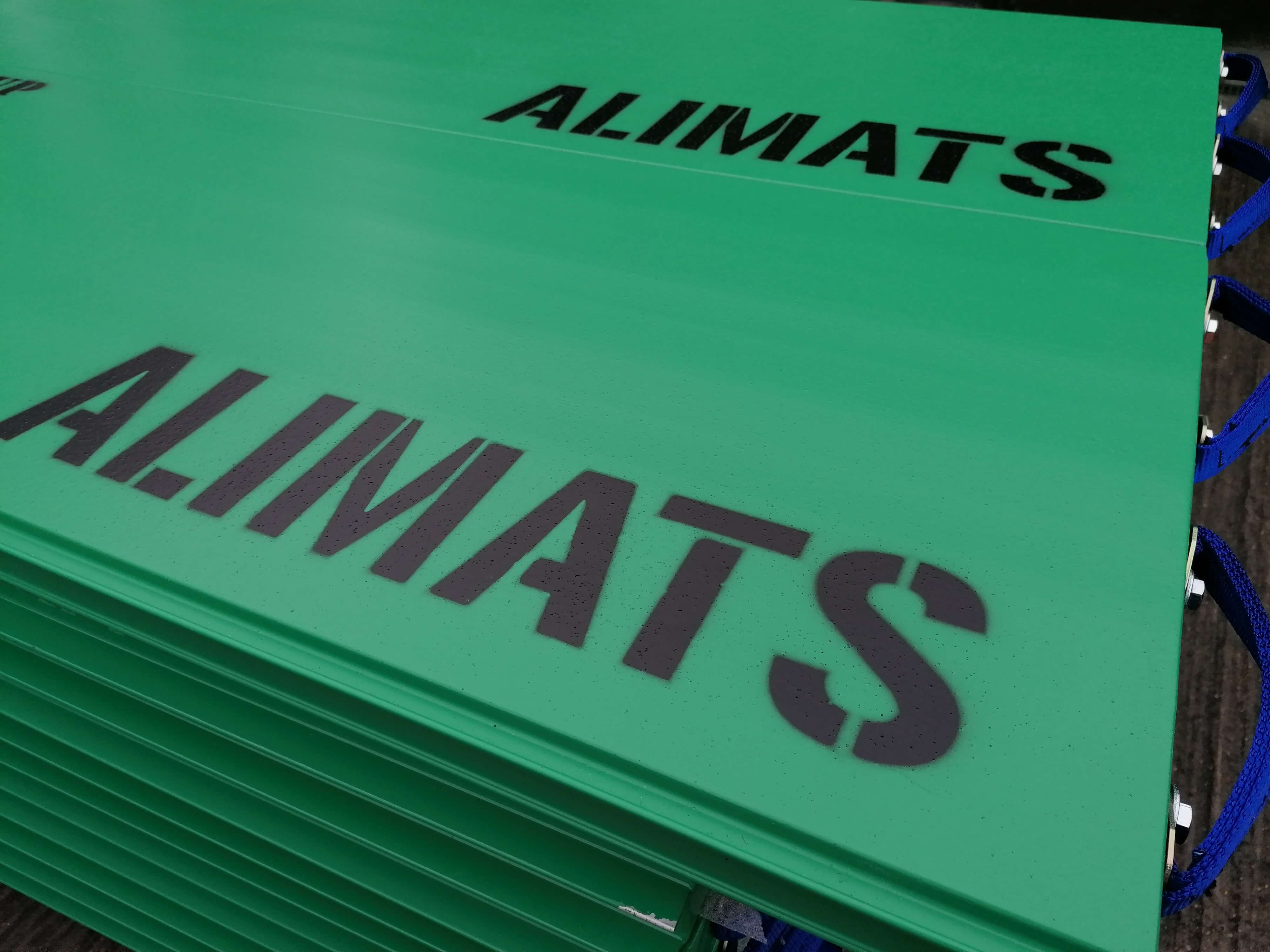
ALIMATS has been named on projects across the full range of scale and sector: HS2, Hinkley Point C, Heathrow and Gatwick airports, Google's UK headquarters at King's Cross, Euston Station, Grangemouth Refinery, London Bridge, Manchester's Co-op Live Arena, several major Scottish wind farm developments, and — at the smaller end entirely — a residential build featured on a well-known national homebuilding television series. That spread, from nuclear new-build to a single self-build plot, tells you something important: the underlying problem — a concentrated load meeting ground that can't take it undressed — doesn't scale down or disappear just because the crane is smaller.
One of those jobs is worth reading on its own terms. We delivered a 7.06 square metre configuration to Ainscough Crane Hire at Grangemouth Refinery within eighteen hours of the order coming in, on a 24/7 UK delivery fleet running mostly CPCS-certified drivers — the full story is in our crane mats for hire guide. On a live site, a crane sat idle waiting for matting is a crane costing money for nothing, and that kind of turnaround is as much a part of what we do as the aluminium itself.
What to ask a supplier before you hire or buy
A few direct questions separate a genuinely engineered solution from a product sheet with good photography.
Ask who verified the SWL figures, and how — an independent structural engineer's sign-off is a different thing entirely from a manufacturer's own internal testing. Ask for deflection data alongside the rated capacity, not just the capacity on its own; as those bending-test numbers show, a high rated SWL with no stiffness data attached tells you far less than it appears to. Ask what the ground assessment and temporary works process looks like in practice, and whether their technical team can talk it through or just assumes your engineer will sort it separately. Ask whether the job actually needs pads, full mats, or both — a supplier who doesn't ask about your outrigger loads and ground conditions before quoting a configuration is guessing. Ask about handleability specifically: can it be installed without hired-in plant, and does that change your programme? Ask what happens to a hired mat between jobs — is it inspected and cleaned, or just sent straight back out? And ask about delivery lead time and vehicle certification if the job is time-critical, because on a live site the difference between matting arriving in eighteen hours and matting arriving in three days is often the difference the whole lift plan hinges on.
Ground Bearing Capacity Calculator
Get an indicative required mat area for your load and ground type, matched against real ALIMATS configurations.
Indicative only. This tool uses general published bearing-pressure reference ranges, not project-specific ground investigation data. Always confirm ground bearing capacity and mat selection with a qualified temporary works engineer, or request full specs from our technical team before specifying for a live project.
Frequently asked questions
What's the difference between a crane mat and a crane pad?
Pads are the smaller category — typically single round or square units covering up to around a square metre, used for lighter outrigger loads on reasonable ground. Mats cover a larger footprint and take over once a single pad can't bring bearing pressure down far enough. The two are often combined, with a certified pad sitting on top of a mat to protect its surface and help transfer load evenly.
How is the SWL of a crane mat actually calculated?
It starts with the crane's outrigger reaction load at the relevant radius, taken from the manufacturer's own load chart, then compared against the allowable ground bearing pressure from a site assessment to determine the footprint needed. A mat's rated SWL should reflect both its material's compressive strength and how little it deflects under load — and we would always want that figure verified independently, not just asserted by the manufacturer.
Are aluminium crane mats as strong as steel?
Steel has the highest compressive strength and stiffness of any material commonly used under crane outriggers, with aluminium alloys like the 6005A we use in ALIMATS ranking second in both. The practical trade-off is weight: steel's density makes most steel mats non-handleable, while aluminium's much lower density is what lets two people lift a mat by hand while still spreading load effectively.
Can crane mats be used on soft or uneven ground?
That is precisely the situation they are designed for, provided the configuration is sized correctly against a proper ground assessment. Undersized matting, or matting made from a material too flexible to hold its shape under load, can still let a crane settle unevenly even with mats nominally in place.
How many crane mats do I need under a mobile crane's outriggers?
It depends entirely on the crane's outrigger reaction load at the working radius and the ground's bearing capacity at that specific location — there is no fixed number of mats per tonne of crane. ALIMATS configurations range from 1.34 up to 8.07 square metres per outrigger position, built up from individual modules to match whatever footprint the calculation demands.
Is it better to hire or buy crane mats?
One-off or short-term work generally favours hire, since it avoids storage and maintenance liability once the job ends. Contractors running crane work continuously, or needing matting available at short notice across several sites, more often land on purchase. See our Crane Mats: Hire vs Buy guide for the full comparison.
Does specifying crane mats require sign-off from a temporary works engineer?
In practice, yes, on any job where a crane is putting significant load through the ground — it is normally treated as a temporary works item with its own design check and permit to load, not something decided informally on the day. A competent temporary works coordinator will want the outrigger loads, ground conditions, and mat SWL data before signing anything off.
Can crane mats be installed without a telehandler or second crane on site?
Handleable systems like ours are designed so two people can lift and position individual modules by hand, without extra plant just to build the crane's own footing. Non-handleable options like full steel plates or large timber baulks generally need machinery to move, which adds time every time the crane repositions.
What's the largest crane that crane mats can support?
ALIMATS configurations carry a safe working load up to 80 tonnes and comfortably accommodate mobile cranes up to 150 tonnes when sized correctly for the outrigger loads and ground conditions involved. The right configuration is a calculation specific to each lift, not a single number that applies to every job.
Are crane mats cleaned or inspected between hires?
They should be, and ours are. Every mat returning from hire is inspected, cleaned, and quality-checked before it goes back out — because a mat's ability to spread load depends on its physical condition holding up, not just its original rated capacity.
How quickly can crane mats be delivered to site?
Turnaround can be extremely fast when it needs to be — see our crane mats for hire guide for a documented 18-hour, order-to-site delivery. That is not a guaranteed lead time for every job, but it shows what we can do when a programme is genuinely time-critical.