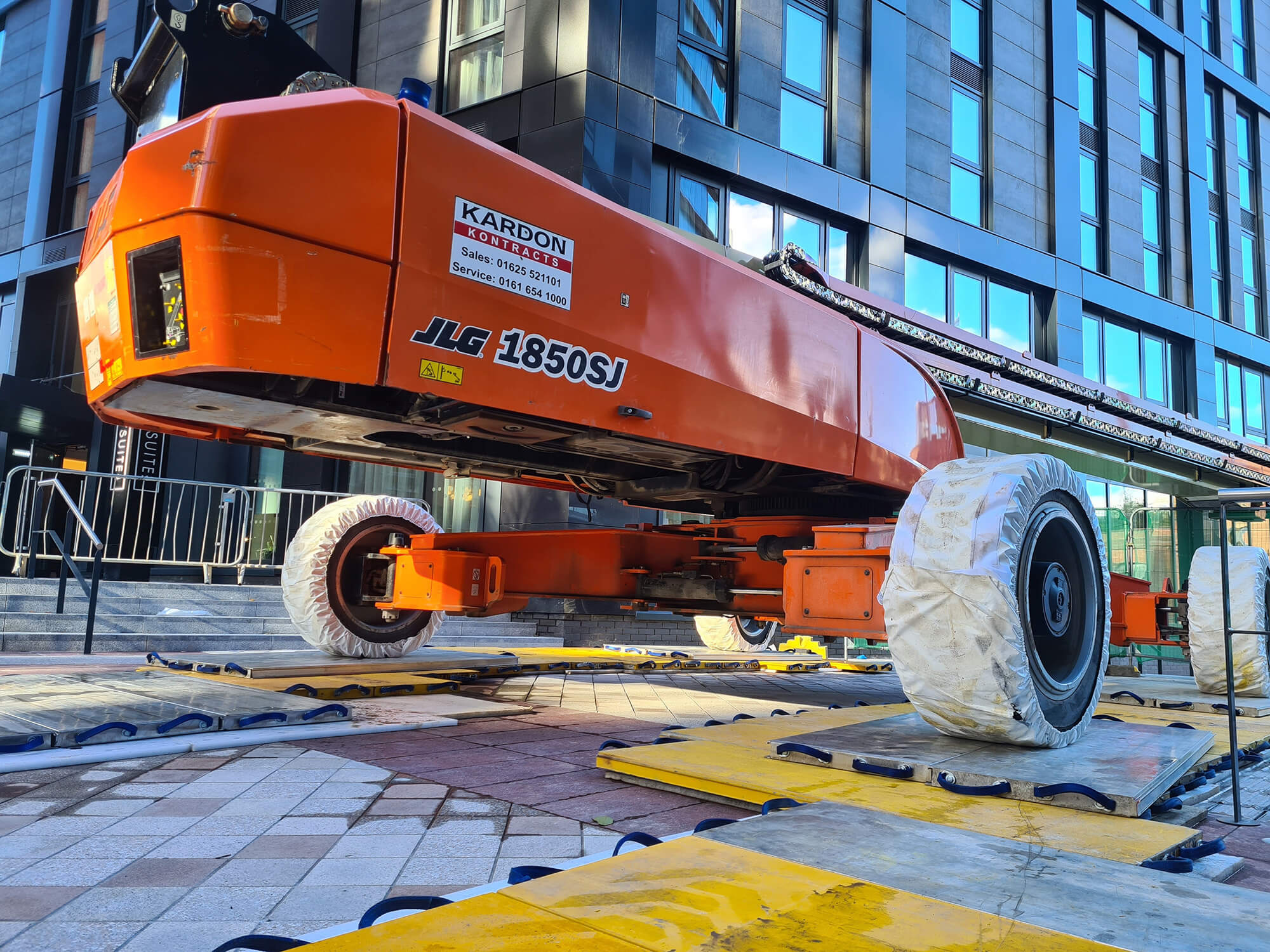
A spider crane gets into places a mobile crane never will — through a fire door, up a goods lift, onto a mezzanine, across a polished lobby floor. That is the whole point of the machine. It is compact, track-mounted and remote-controlled, folds down small enough to pass through a standard doorway, then spreads a set of slim outrigger legs to pick a rooftop plant unit, a glazing panel or a spiral staircase section nobody else could reach. Most models weigh a fraction of even a modest mobile crane — plenty sit well under 10 tonnes all-up, and some far lighter — which is exactly what makes them useful indoors, and exactly what changes the mat conversation.
With a spider crane, or mini crane, the question is rarely "will this sink into the ground." Far more often it is "will this mark, crack or overload the floor it is standing on." Our ALIMATS aluminium mats answer both — but on this kind of job it is the second question that tends to matter most, and it deserves treating on its own terms rather than borrowing the outdoor ground-bearing advice that most crane mat guidance is written for.
A floor problem, not a ground problem
On a construction site, ground protection is about bearing capacity — spreading a crane's point loads over soft or uneven ground so it does not rut, tip or sink. Spider cranes do plenty of that too, on made-up ground, in yards, on stripped subgrade around a building going up. But a large share of spider crane work happens somewhere altogether different — inside a finished building, on a polished concrete slab, across ceramic tile, over a timber floor, or in a period property with a stone floor nobody wants scored by a steel foot.
There the failure mode is not subsidence, it is a scratched, dented or cracked finish — and once that mark is there, no amount of engineering justification undoes it. Our aluminium construction spreads a leg's point load over a wider footprint, and that load spread keeps a finished floor unmarked just as reliably as it stops a soft verge rutting outdoors. Same physical principle, a very different failure to design out.
Several small mats, not one big one
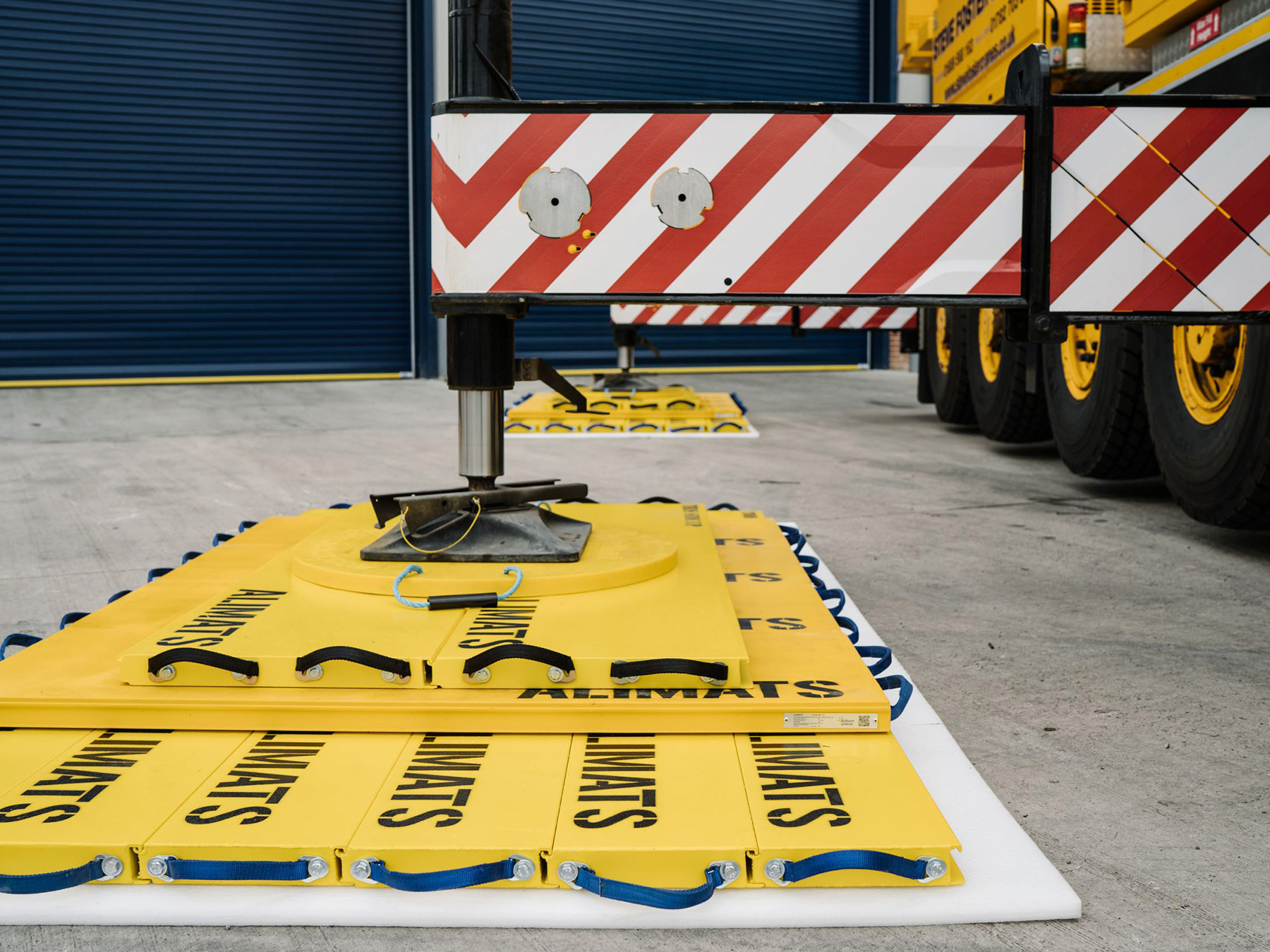
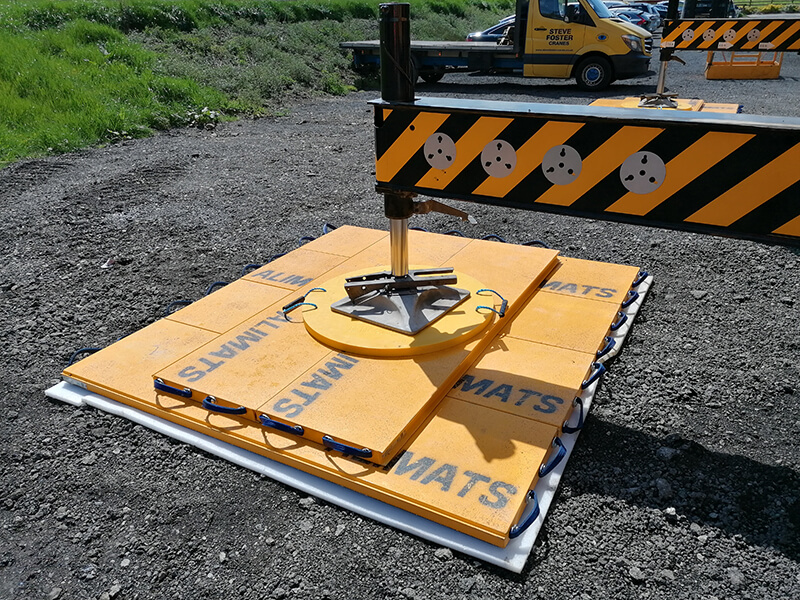
A spider crane's outriggers are not built like a mobile crane's. They sit narrower, closer to the machine body, with smaller individual feet — and because the crane crawls and re-picks its way around a room or a floor plate, there are usually more mat positions to plan across a job than there are on a single mobile crane set-up. That points to several separate small mat positions rather than one large configuration under four widely splayed beams.
It also means getting the mats through the same doorway, stairwell or goods lift the crane itself used. This is where the smaller end of our range earns its keep, because it is handleable in the most literal sense. Our Mini modules, at 580 x 580mm and 13kg, and our Short modules, at 1160 x 580mm and 25kg, both fit through a standard doorway carried under one arm, and both lay out in seconds under a foot that might only stand there twenty minutes before the crane crawls a couple of metres and resets for the next pick.
| Module | Dimensions | Weight | Where it fits on a spider crane job |
|---|---|---|---|
Mini | 580 x 580mm | 13kg | Single outrigger foot, tight doorways, upper floors |
Short | 1160 x 580mm | 25kg | Wider foot or two-mat run in a corridor or room |
Standard | 1740 x 580mm | 38kg | Larger set-ups where floor space allows it |
Module:
Dimensions:
Weight:
Where it fits on a spider crane job:
Module:
Dimensions:
Weight:
Where it fits on a spider crane job:
Module:
Dimensions:
Weight:
Where it fits on a spider crane job:
What about suspended floors and upper storeys?
Here we want to be plain, because it is a safety point and not a marketing one. A mat under a spider crane's foot reduces the point pressure on whatever is directly beneath it — that is real, and it is useful — but a mat has no say in what a suspended floor, a mezzanine deck or an upper-storey slab can carry as a structure.
That is a question for whoever designed or has assessed the floor, and it needs answering before the crane goes up in the lift, not while it is stood on the fourth floor mid-pick. Any work above ground level — a roof terrace, a completed floor plate, a multi-storey car park deck — means someone qualified checks the crane's setup position and reaction loads against that structure's actual capacity first. Our mats protect the surface finish and even out contact pressure on whatever is there. They do not replace that structural sign-off, and nobody should treat them as if they do.
Handling mats where the crane barely fits
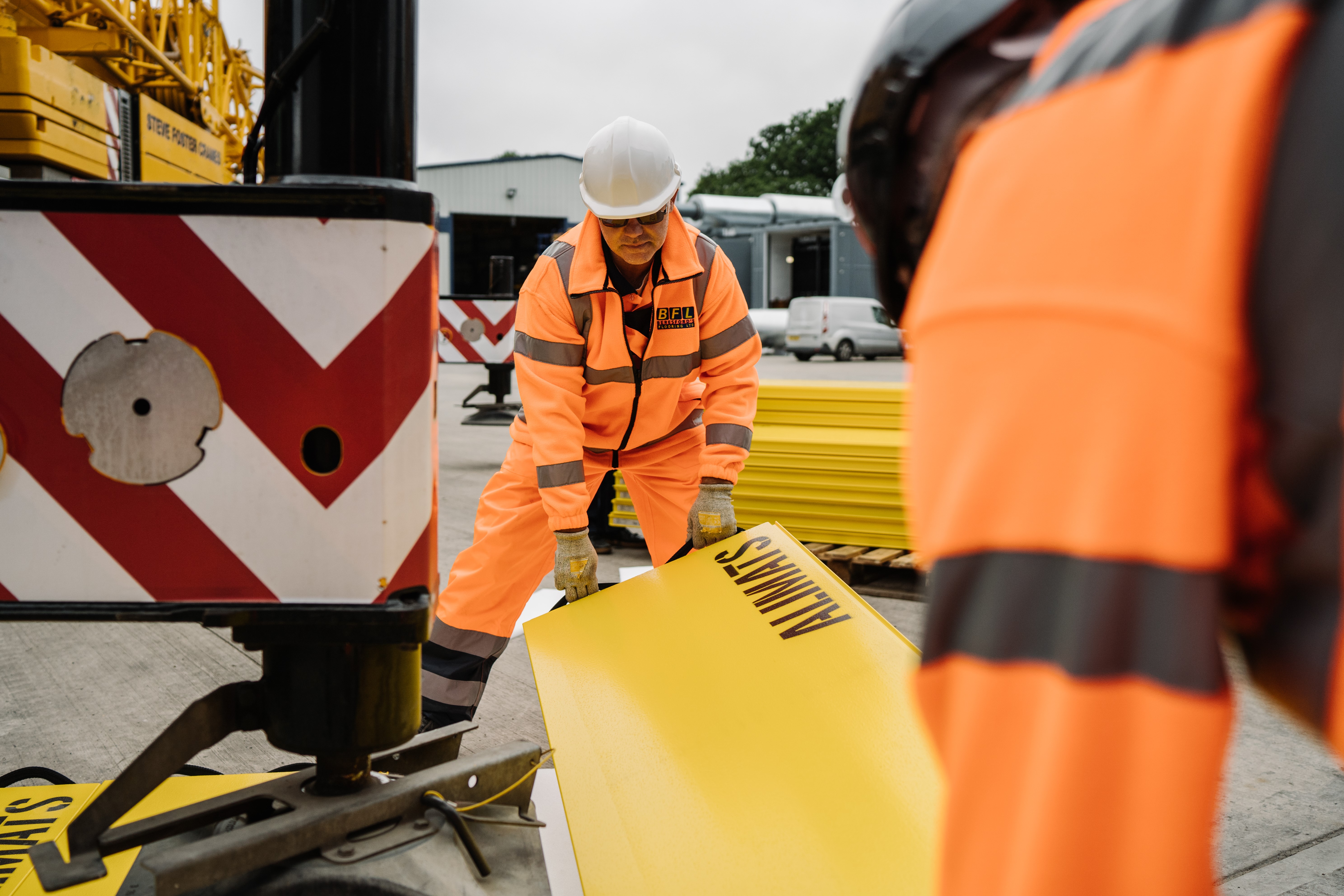
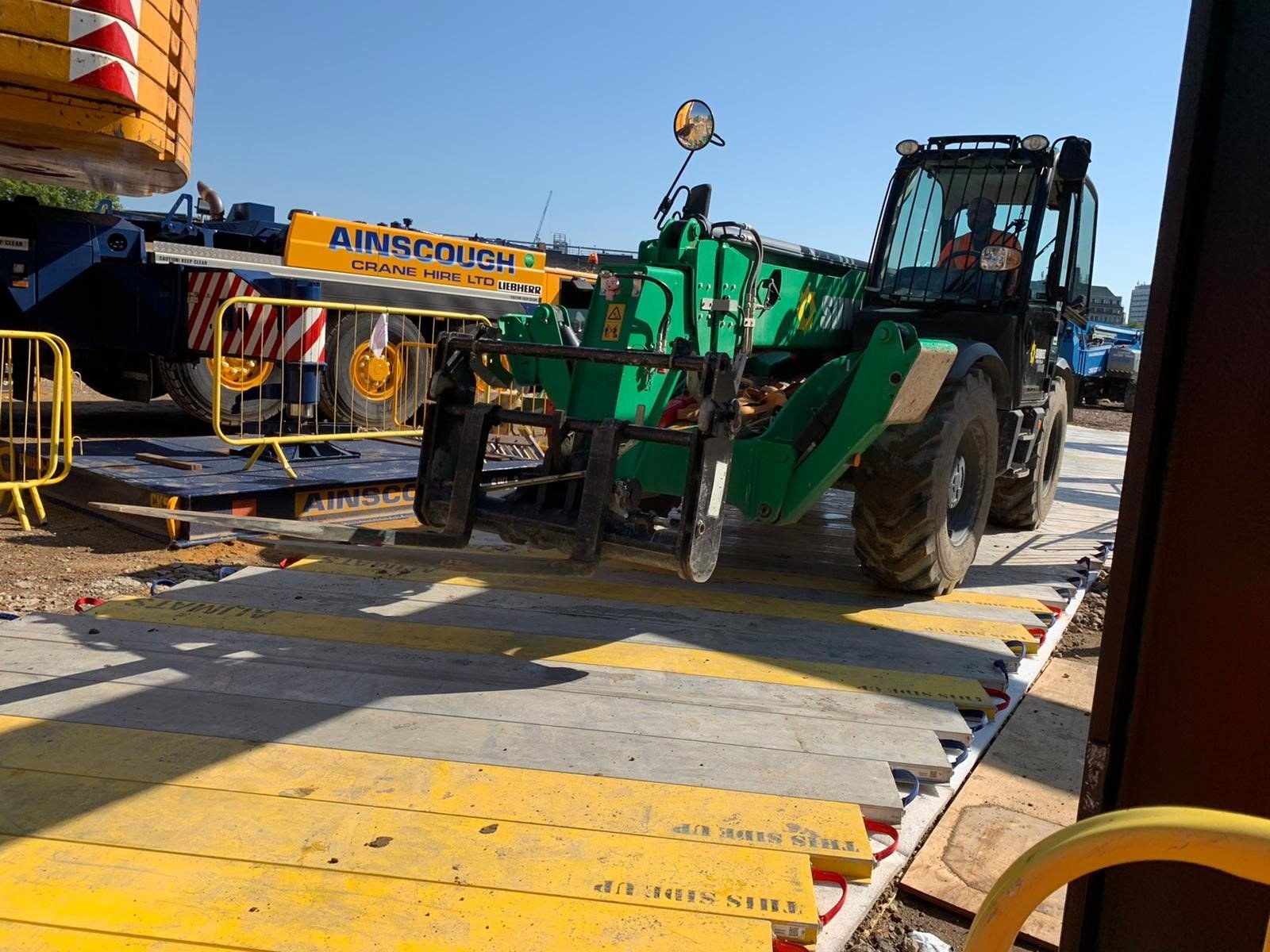
Anywhere tight enough to need a spider crane in the first place is rarely a site with a telehandler standing by to shift ground protection about. We build ALIMATS to be carried by two people with no lifting equipment at all — no heavy plant needed — and that counts for more here than almost anywhere else in the crane mat world. The same lobby, stairwell or lift that took the crane in is what the mats have to go through too, one or two at a time, repositioned every time the crane crawls to its next pick point.
It is the sort of practical detail that decides a job — a heavy timber mat and a narrow stairwell do not mix. It is also why we inspect, clean and check every ALIMATS mat before it goes back out on hire. A mat that is going to be carried by hand into a finished building needs to arrive looking the part, not scuffed from a previous week on a muddy compound.
Enough capacity without over-specifying
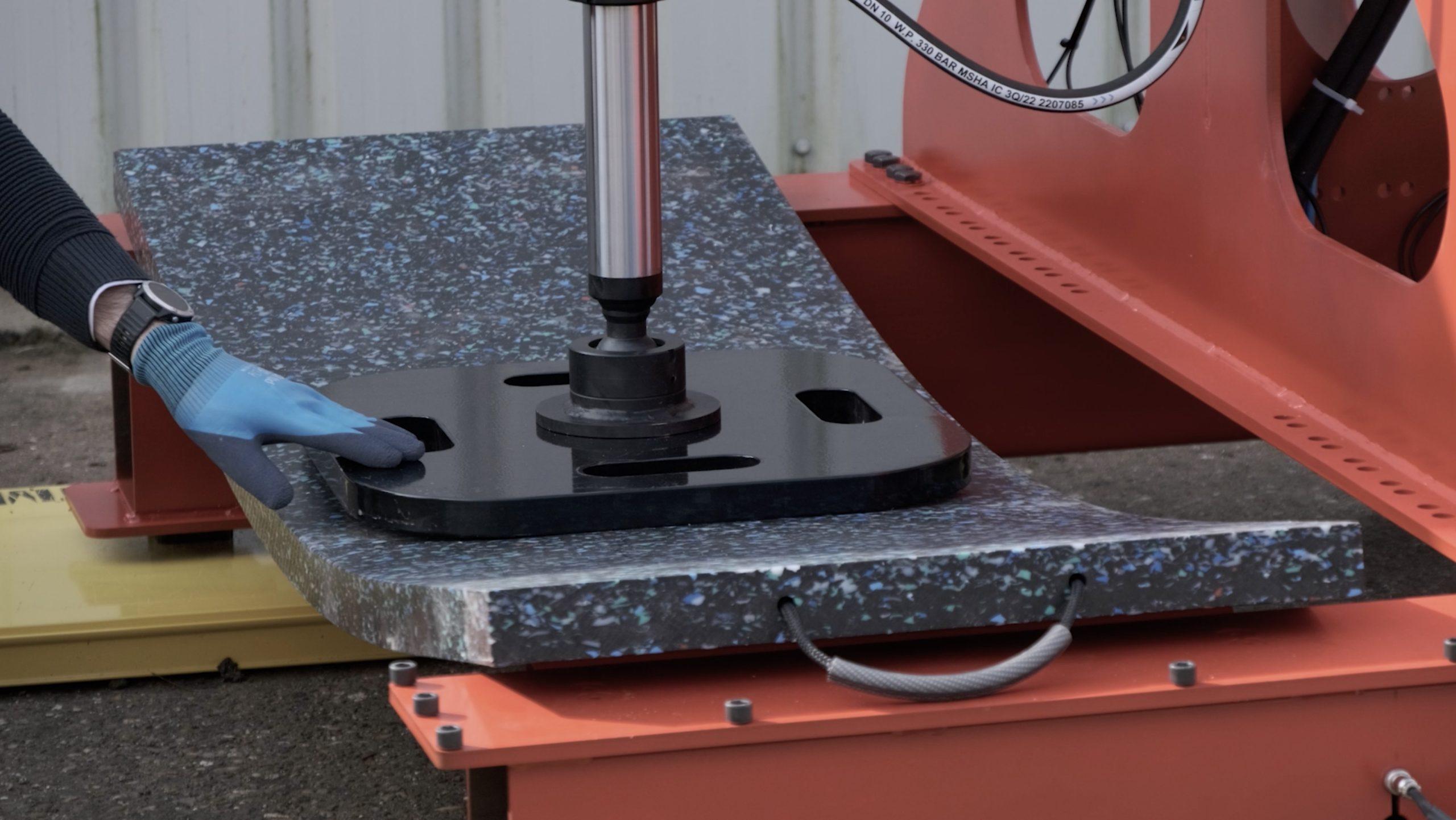
Our ALIMATS system is rated up to 80 tonnes SWL and builds out to configurations of 8.07m2 for the genuinely heavy end of the crane world — none of which a spider crane will ever trouble. What matters for this application is that the same patented aluminium system, in its smaller Mini and Short configurations, comfortably covers the loads a mini crane's legs put down, with every SWL figure independently checked by a Fellow of the Institution of Structural Engineers.
So there is no case for kitting out a spider crane job with mats sized for a heavy-lift crawler. The job is to pick the right module for the floor and the doorway, not the biggest number on the spec sheet. We hire mats and configurations by the day, week or long-term, or sell them outright, and we deliver across the UK 24/7 for the jobs that come together at short notice.
Frequently asked questions
Do spider cranes need ground protection mats even when working indoors?
Yes, though indoors it is a floor protection question rather than a ground-bearing one. A spider crane's outrigger feet put down a concentrated point load that can dent, crack or scratch a finished floor just as it would rut soft ground outside, so we use mats to spread that load and keep the surface intact.
What size ALIMATS modules suit spider crane work?
The smaller end of our range tends to fit best — Mini modules at 580 x 580mm (13kg) and Short modules at 1160 x 580mm (25kg). Spider crane outriggers sit narrower and closer to the machine than a mobile crane's, and the mats often have to go through the same doorways the crane used, so handleable modules matter.
Can ALIMATS protect polished concrete, tiled or timber floors?
Yes. The aluminium construction spreads a crane's point load over a wider footprint, which drops the pressure on whatever finish sits underneath — polished concrete, tile, timber or a period stone floor. It is the same load spread we use to protect ground outdoors, applied to stop a finished surface being marked or cracked.
Will mats stop a spider crane overloading a suspended floor or upper storey?
No, and this is a safety point worth being plain about. Mats spread the point load from a crane's foot across the mat's own footprint, but they cannot tell you what a suspended slab, mezzanine or upper-floor structure can carry. That is a structural assessment for the building, done before the crane goes up, and a mat is no substitute for it.
How many people does it take to move ALIMATS through a building?
Two, with no plant or lifting equipment. That counts on spider crane jobs in particular, because the access tight enough to need a mini crane — stairwells, lifts, narrow corridors — is just as tight for shifting the mats every time the crane is repositioned.
Can ALIMATS be hired for a single day's spider crane job?
Yes. We hire ALIMATS by the day, week or longer term, and we sell outright, with 24/7 UK delivery — which suits the shorter, tightly scheduled jobs spider cranes are usually booked for.
Do spider crane mats need to be as heavy-duty as mobile crane mats?
Not usually. Our system is rated up to 80 tonnes SWL for heavy-lift and mobile crane work, far beyond what a spider crane's outriggers put down, so the smaller Mini and Short configurations cover spider crane loads comfortably without specifying for the top of the range.
How do I know which ALIMATS configuration my spider crane needs?
It comes down to the machine's leg spacing, the floor or ground it is working on, and how tight the access is for getting mats into position. Send us the crane's outrigger footprint and the site details and we will work out a configuration for you rather than leave it to guesswork.