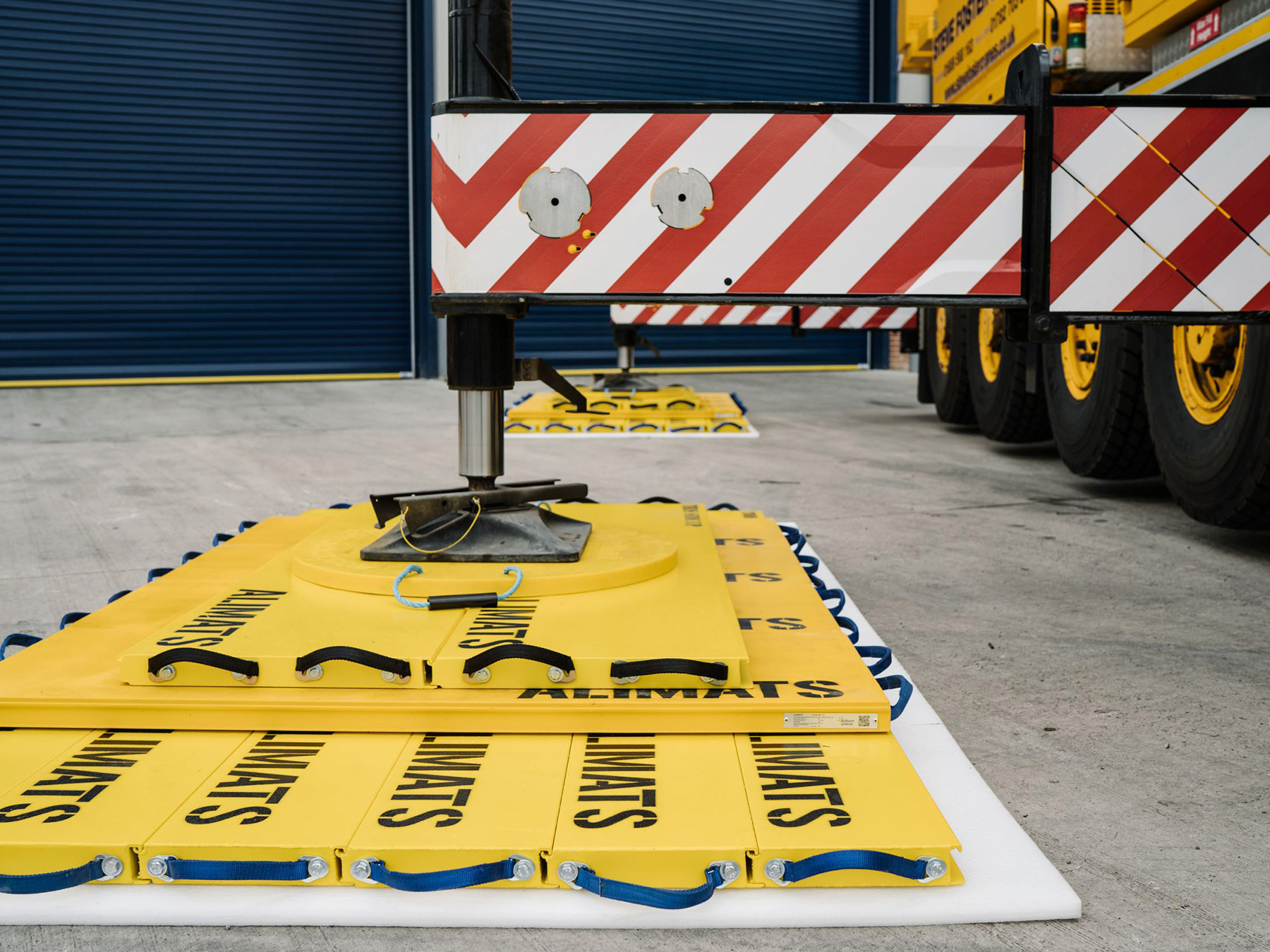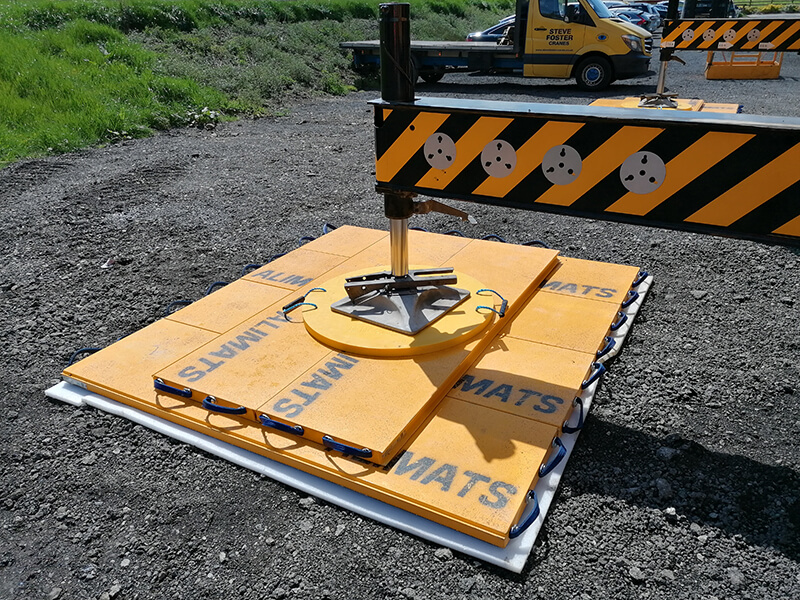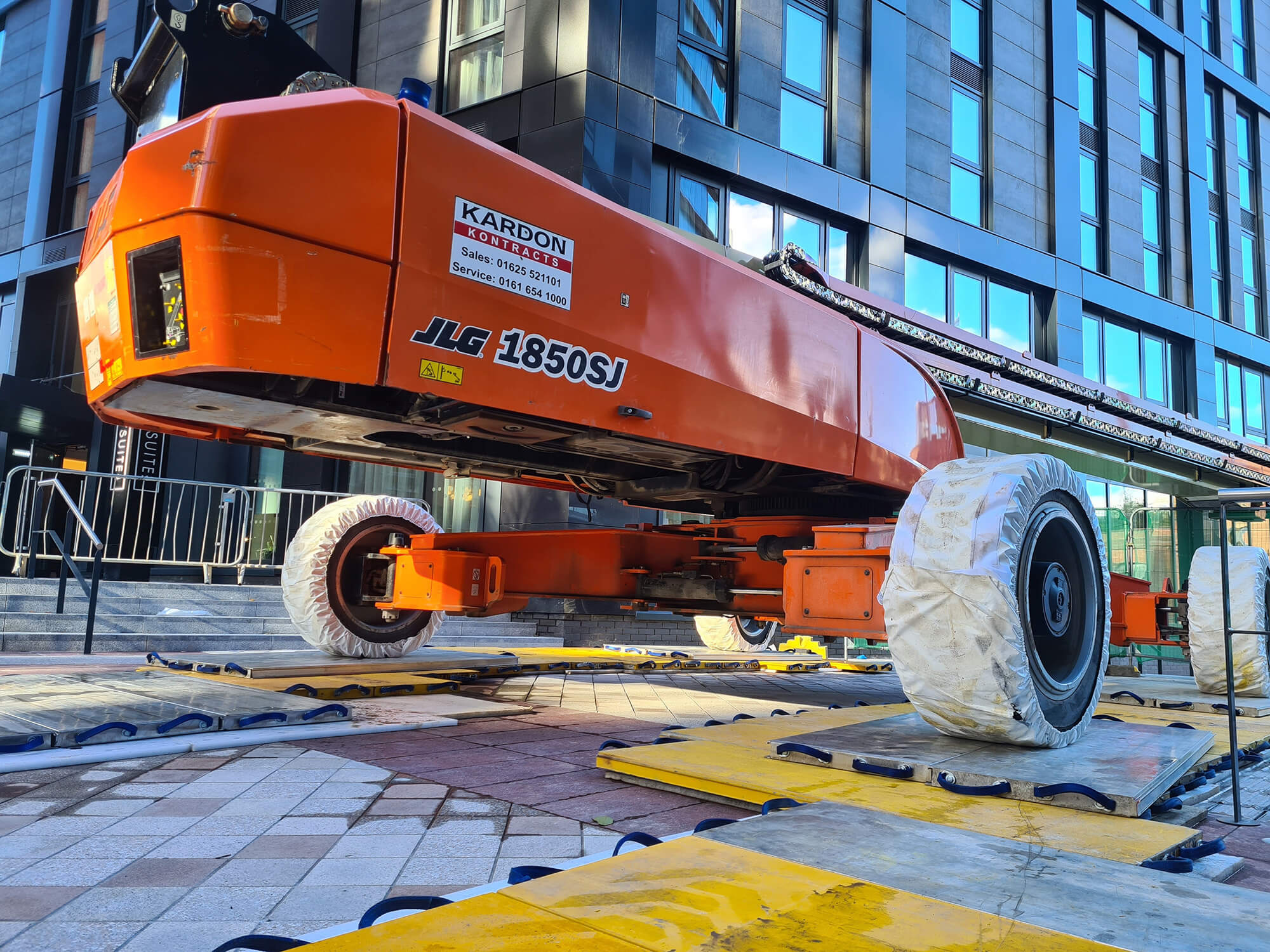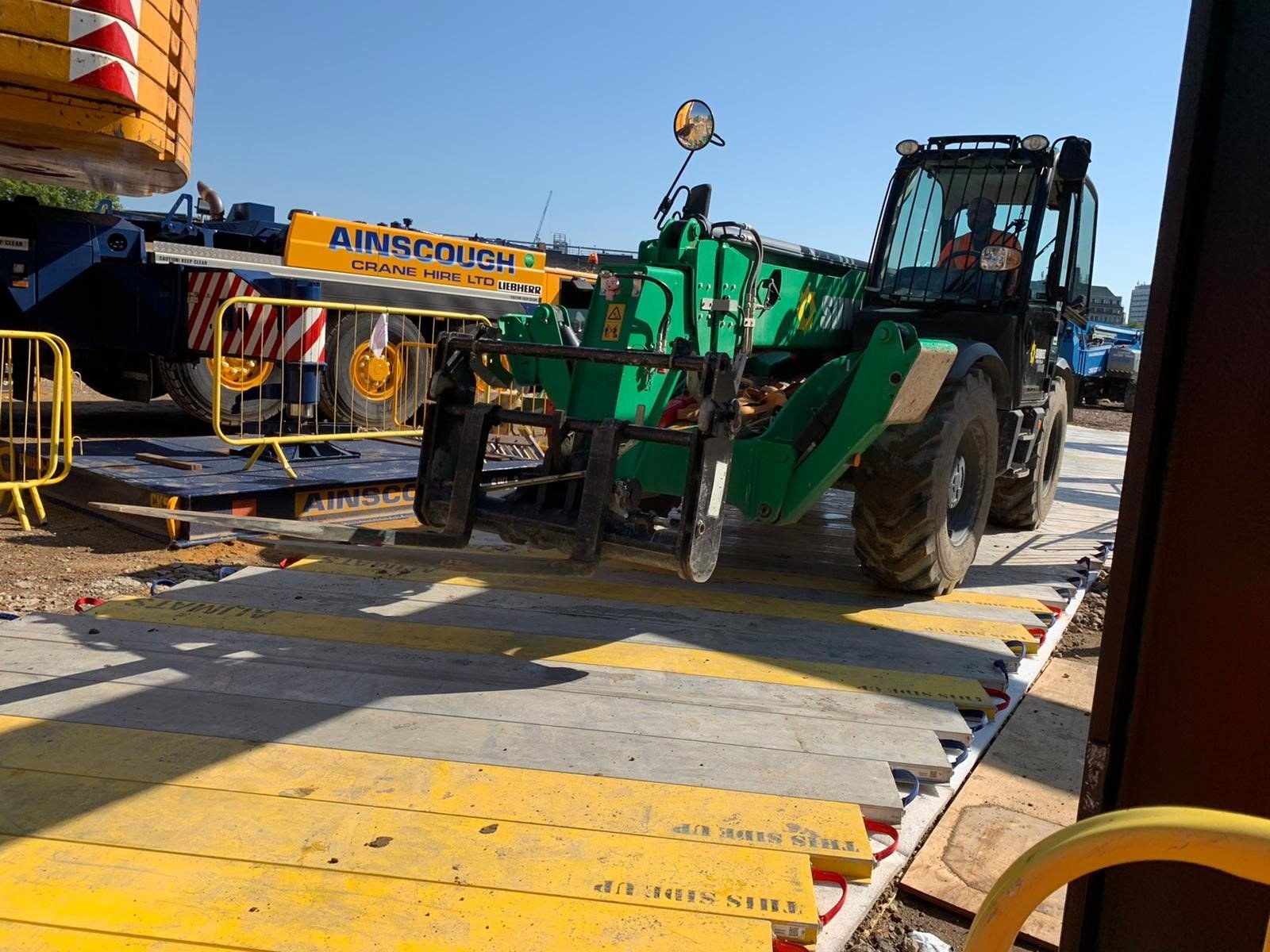
Wind the outriggers out on a mobile crane and four beams slide to their marked extensions, each one ending in a float — a steel pad, square or round, that's the only thing standing between the crane and the ground. What doesn't happen, whatever a quick mental sum might suggest, is four equal shares of the crane's weight landing on four equal patches of ground.
The shorthand that does the rounds on site — take the crane's rated capacity, divide by four, that's what each leg carries — is wrong often enough to matter, and it's wrong in a specific, predictable direction. An 80-tonne crane slewed over one corner with the boom out near full radius can put well over half its total reaction through a single outrigger, while the leg diagonally opposite is barely loaded. Get the matting under that one leg wrong and it doesn't matter that the other three are oversized — if the crane goes over, it goes at the corner that actually needed the help.
Reading the load chart for the real reaction, not the rated capacity
Every reputable mobile crane's load chart, or the duty chart alongside it, states the maximum load the crane can lift at a given radius and configuration — boom length, counterweight fitted, number of outrigger extensions in use. What it also gives, either directly in a reaction table or as figures a competent appointed person can derive from the rigging geometry, is the load each individual outrigger foot has to carry at that radius and slew position. That reaction figure — not the crane's overall lift capacity — is what we size the matting against.
The same crane, on the same job, can need different matting from one pick to the next. A load worked close in over the front spreads more evenly across the front two legs than the same weight worked out at maximum radius over one corner. Pulling the reaction figure for the actual radius and quadrant the crane will work — rather than the nameplate rating — is the step that gets skipped when matting is ordered before the lift plan is finished, instead of after.
From reaction to mat size
Once you know the reaction at the heaviest-loaded leg, sizing the mat underneath it is a straightforward calculation. Find the allowable bearing pressure the ground can take — from a site investigation, or a conservative figure for made ground, hardstanding or backfill where nothing more specific is available — and divide the outrigger reaction by that figure to get the minimum mat area required. The mat you choose then needs to clear that area with a sensible margin, and its safe working load needs to clear the reaction itself, not the crane's total weight.
We build ALIMATS to be sized this way, leg by leg, rather than crane by crane. Individual module safe working loads are verified up to 80 tonnes across the range, independently checked with a Fellow of the Institution of Structural Engineers, and the system sits comfortably under cranes up to 150 tonnes gross — but the number that actually decides the configuration under any one float is the reaction at that leg, at that radius, not the crane's badge.
Matching footprint to the float, not just the leg
Outrigger floats vary across the mobile crane fleet — often under a metre across on smaller and mid-range cranes, larger on the biggest units — and the mat configuration under each one has to seat the float centrally and carry the load out beyond the float's own edge into the surrounding ground, rather than stopping at the float's footprint and leaving the load to punch through just past it. A mat sized only to "cover the float" with no margin isn't doing the spreading job it's there for. So why lay it that way?
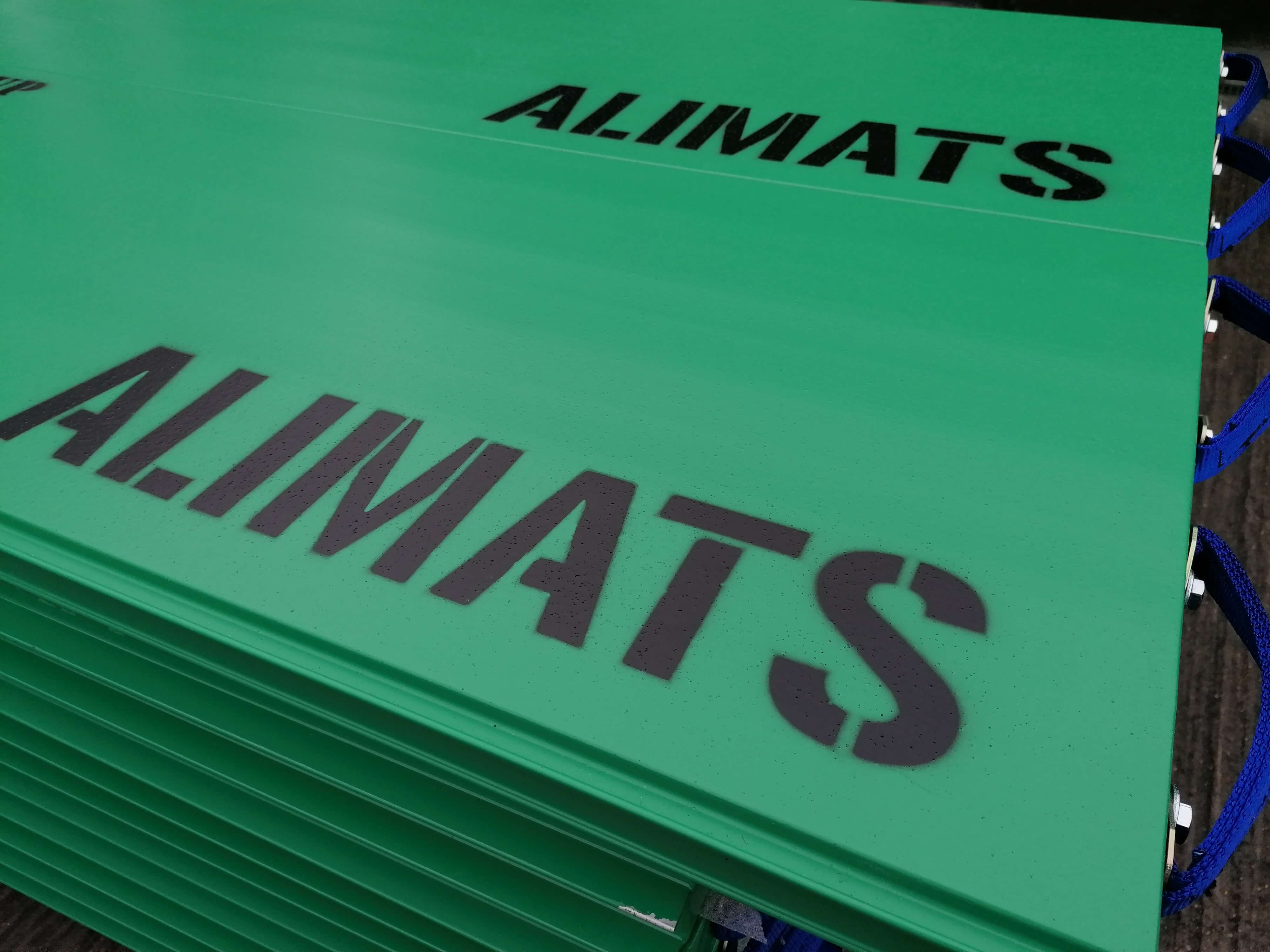
Because ALIMATS is modular — five module sizes from the 0.58m x 0.58m Mini at 13kg up to the 2175mm x 580mm Long and 3480mm x 290mm Extra Long, both 48kg, with configuration areas from 1.34m² to 8.07m² — we can mat each leg to its own reaction and its own float size rather than laying four identical mats because that's what came off the wagon. The heaviest-loaded leg gets the bigger configuration; a lightly loaded leg doesn't need it, and not laying it saves handling time that matters more on this kind of job than most.
| Module | Dimensions | Weight | Typically used for |
|---|---|---|---|
Mini | 0.58m x 0.58m | 13kg | Infill and packing around a compact float |
Short | 1160mm x 580mm | 25kg | Lighter cranes, tighter access between floats |
Standard | 1740mm x 580mm | 38kg | Most common mobile crane outrigger configurations |
Long | 2175mm x 580mm | 48kg | Larger floats or higher outrigger reactions |
Extra Long | 3480mm x 290mm | 48kg | Spanning soft or uneven ground beyond the float edge |
Module:
Dimensions:
Weight:
Typically used for:
Module:
Dimensions:
Weight:
Typically used for:
Module:
Dimensions:
Weight:
Typically used for:
Module:
Dimensions:
Weight:
Typically used for:
Module:
Dimensions:
Weight:
Typically used for:
Same-day, multi-position work: why handleability wins
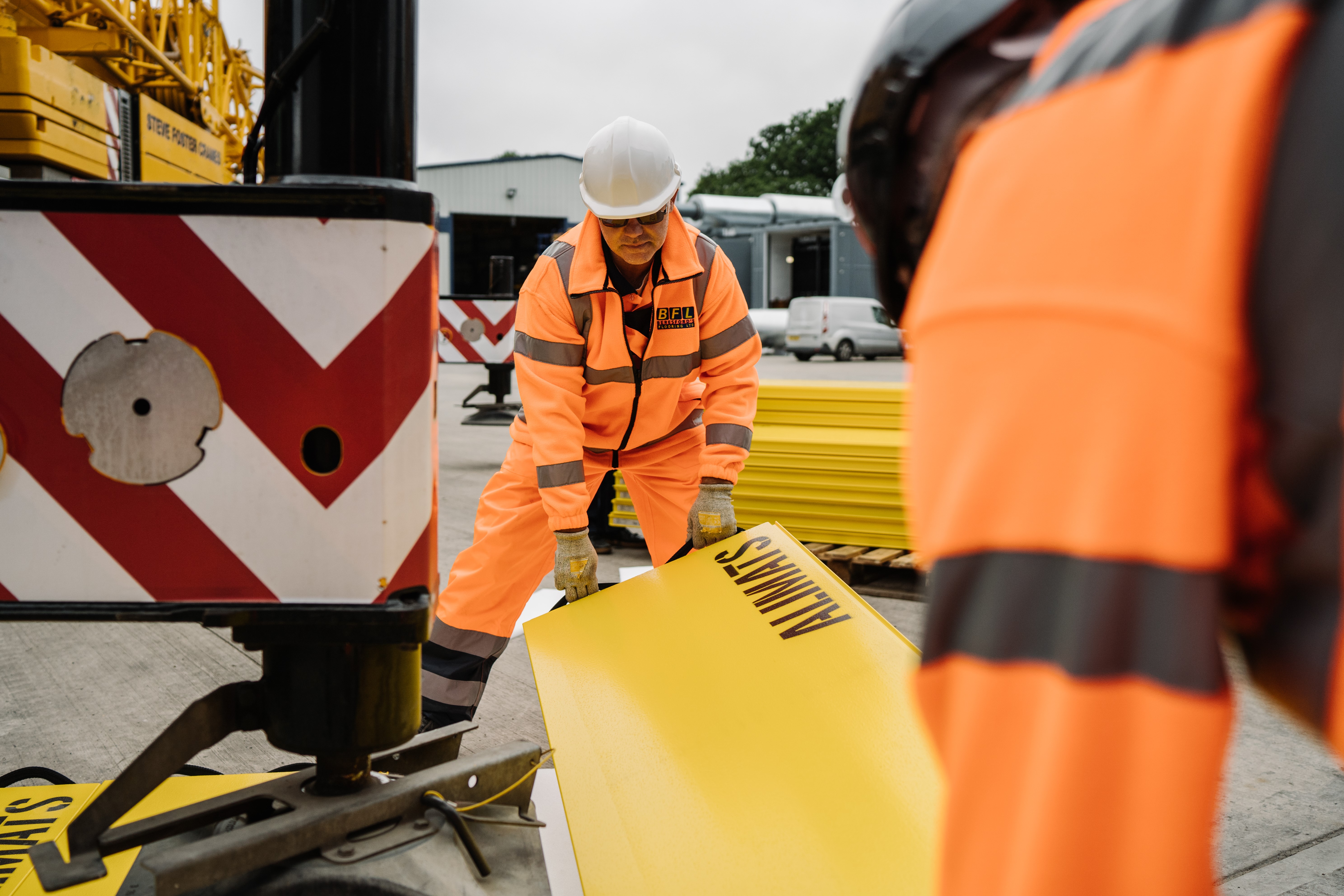
Mobile crane work is defined by movement in a way that tower crane base protection and sustained heavy-lift work aren't. A single mobile crane can make several picks at several different pad positions in one day on the same site, then move to an entirely different job the next morning. Each reposition means physically lifting, walking and relaying the matting — not laying it once for a compound that stands for months, or setting it once for a lift that runs for days under sustained load.
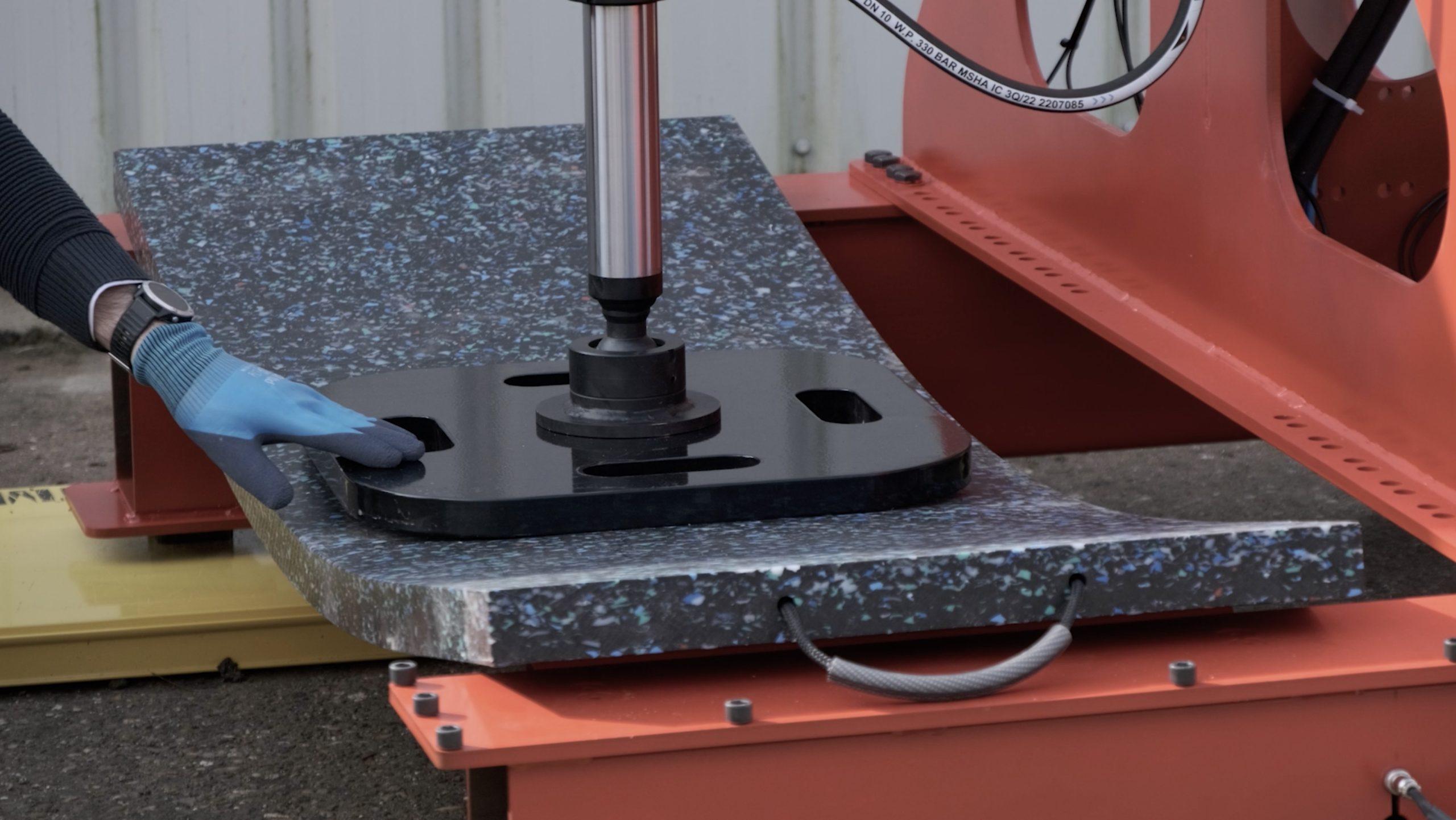
That's what makes handleability the dominant practical factor here, more than anywhere else in our crane mat range. ALIMATS modules run from 13kg up to 48kg and are handleable by two people with no plant needed, so a crew can strike one pad position and relay the next without waiting on a telehandler every time the crane creeps forward. The same modules have proved their stiffness under repeated loading in independent bending tests — deflecting in single millimetres against tens of centimetres for a competing UHMWPE plastic mat under the same loads — which is exactly what you want when the same mats are being picked up and put down several times a week rather than left in one place.
Common mistakes with outrigger matting
The single most repeated error we see is treating all four legs as needing the same mat, regardless of what the load chart says any one of them is actually carrying. Close behind it is sizing the mat to the float's footprint without checking that the mat's safe working load clears the reaction at that leg — a mat can look generously oversized against a float and still be under-rated for the load going through it.
A third mistake is pulling the reaction figure for one radius and quadrant, then slewing the boom through the job without rechecking which leg has become critical. A fourth is simply not accounting for the heaviest leg at all — ordering matting to a rough estimate of crane weight rather than the actual per-leg reaction from the chart. And a fifth, easy to miss on a compound that's seen previous groundworks, is not checking what's directly under a given float — a backfilled trench or a buried service can sit right where the heaviest-loaded leg needs to stand, and no amount of correctly sized matting fixes ground that was never going to hold the load in the first place.
Where the maths gets tested every week
This is the bread-and-butter scenario we supply ALIMATS for across the major UK programmes — HS2, Hinkley Point C, Heathrow, Gatwick, the Google headquarters at King's Cross, Euston Station, Grangemouth Refinery, London Bridge, Co-op Live Arena in Manchester and Scottish wind farm developments — where mobile cranes on outriggers are repositioning dozens of times a week rather than standing in one place for a programme. More than 80% of the UK's top twenty Tier 1 contractors use ALIMATS for exactly this kind of work.
When a job changes shape mid-programme and a different configuration is suddenly needed, turnaround is everything — our crane mats for hire guide tells the story of one Grangemouth refinery job where we had a changed order back on site inside 24 hours. And every mat that comes off a job is inspected, cleaned and checked by us before it goes out again.
Frequently asked questions
Do all four outriggers need the same size mat?
No — and assuming they do is the most common mistake we see when outrigger matting is planned. The leg nearest the load and nearest full boom radius typically carries far more than the others, so it's the reaction at each individual leg, not an even split of the crane's rated capacity, that should decide the mat under it.
How do I work out what size mat I need under a mobile crane's outriggers?
Start with the outrigger reaction for the heaviest-loaded leg at the working radius and slew position, taken from the crane's load chart or a competent person's calculation. Divide that reaction by the ground's allowable bearing pressure to get the minimum mat area, then choose a configuration whose footprint and safe working load both clear that figure with a sensible margin. Tell us the numbers and we'll help you match the configuration.
What's the worst-case load I should plan matting for?
The reaction at the most heavily loaded outrigger, at the radius and boom position where that leg carries the greatest share of the crane's total reaction — not the crane's overall rated lifting capacity divided evenly across four legs. As the boom slews through a pick that critical leg can change, so check the reaction at more than one position if the lift plan involves any slewing.
Can the same mats be used under a 50-tonne crane and an 80-tonne crane?
Potentially, because what matters is the actual outrigger reaction rather than the crane's gross rating. Our ALIMATS module safe working loads are independently verified up to 80 tonnes across the range and the system sits comfortably under cranes up to 150 tonnes, but we'd still check the mat against the specific reaction for each crane and lift rather than assume it carries over from one job to the next.
Why not just use one large mat under each outrigger float instead of a modular configuration?
A single large panel usually needs plant to move it, which slows down exactly the kind of same-day, multi-position work mobile crane outriggers do. Our modular ALIMATS system lets you mat each leg to its own reaction and float size while staying handleable by two people, so a crew can reposition between pads without waiting on a telehandler.
How does aluminium matting compare to timber or plastic under outrigger loads?
In independent bending tests, ALIMATS modules deflected a fraction as much as a competing UHMWPE plastic mat under the same loads — our bending-test guide has the exact figures. Less deflection under a concentrated outrigger point load means less risk of the mat flexing enough to let the float punch through soft ground.
Can outrigger mats be hired for a single day's work?
Yes. We offer ALIMATS on day, week or long-term hire as well as purchase, with 24/7 UK delivery through our own FORS Bronze fleet and CPCS-qualified drivers — our crane mats for hire guide has a real example of same-day turnaround.
What happens to the mats between one crane's job and the next?
We inspect, clean and check every mat before it's redeployed to the next site or the next leg of the same job. That's part of what makes rapid reconfiguration between outrigger positions practical rather than a maintenance risk.