Put a 500-tonne crawler crane on a site and the whole conversation about ground protection changes shape. A mobile crane on a routine same-day pick needs its outriggers supported for an afternoon — the load moves, the crane packs down, and the mats come up. A large crawler assembling a heavy module, or a high-tonnage mobile crane sat at the top of its load chart across a multi-day operation, is a different animal entirely. The reactions under each track or outrigger are far bigger, the load sits there for days or weeks rather than hours, and the ground underneath has far less room for error.
That is the gap we built ALIMATS® aluminium crane mats to close at the sharp end of the market. We cover the alloy chemistry and the module engineering elsewhere — what matters here is how we specify the system once a lift stops being routine and starts being heavy: how much bearing area a position needs, what the safe working load actually has to account for, and what changes on the ground once mats are under load for the long haul rather than a single shift.
The numbers get bigger: configuration size and verified SWL
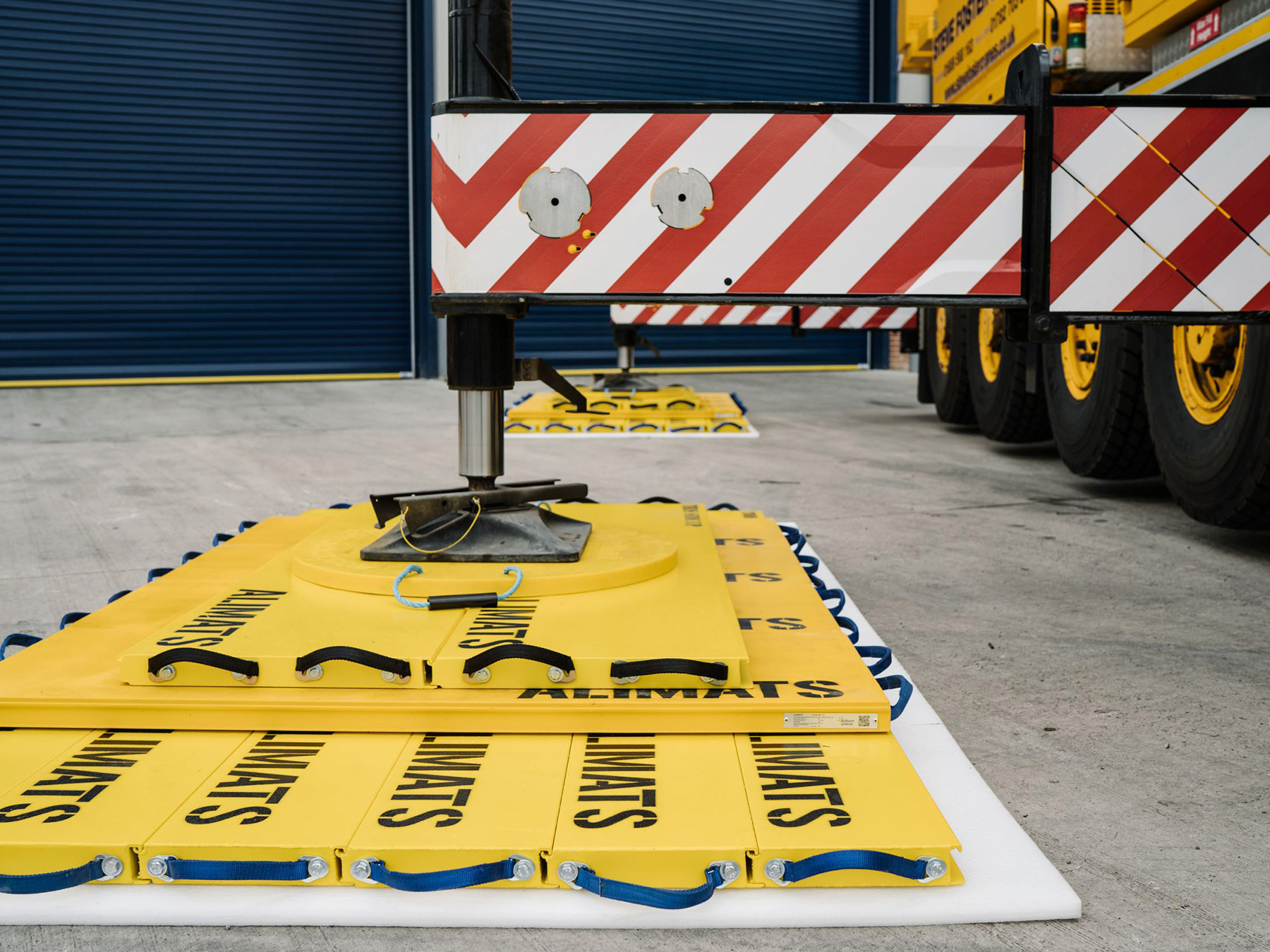
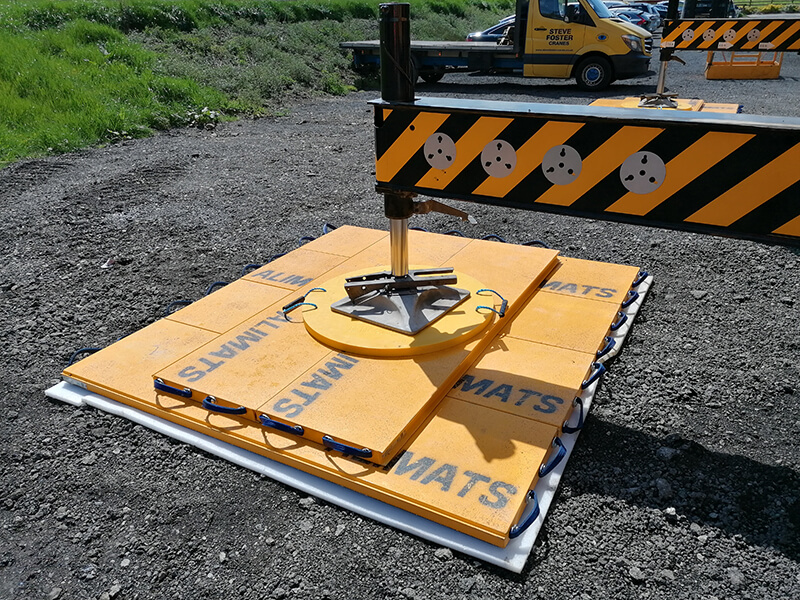
On a heavy lift, the first question we ask isn't which mat to use — it's how much bearing area a single position needs. A large crawler track, or an outrigger float under a mobile crane loaded close to its chart limit, generates a ground reaction that a small mat footprint simply can't spread thinly enough. This is why configuration size matters far more at this end of the market than it does on a routine job — our ALIMATS configurations run from 1.34m² up to 8.07m² per position, and at heavy-lift tonnages it's usually the larger end of that range doing the work.
Safe working load matters just as much, and the detail that counts here is how we arrived at it. ALIMATS carries SWL figures up to 80 tonnes across the range, comfortably covering cranes up to 150 tonnes — and every one of those figures has been independently verified by a Fellow of the Institution of Structural Engineers, not taken on our own word. On a heavy lift, where the temporary works design has to stand up to scrutiny before the crane ever picks anything, that independent sign-off is often the difference between a mat that's merely rated and one that actually makes it into the method statement.
Stiffness, not just capacity, is what holds up over days
A rated SWL tells you a mat won't fail. It doesn't tell you how much it will deflect while it carries that load — and on a heavy lift, deflection is the number that actually matters. A mobile crane doing a quick pick loads and unloads its mats within hours, so any settlement or flex has barely started before the job's finished. A crawler holding a heavy module in place for several days, or a mobile crane parked at full chart load through a multi-day sequence, is asking the mat to hold its shape under sustained load for far longer — and any softening under that load transfers straight into the crane's levelling and stability.
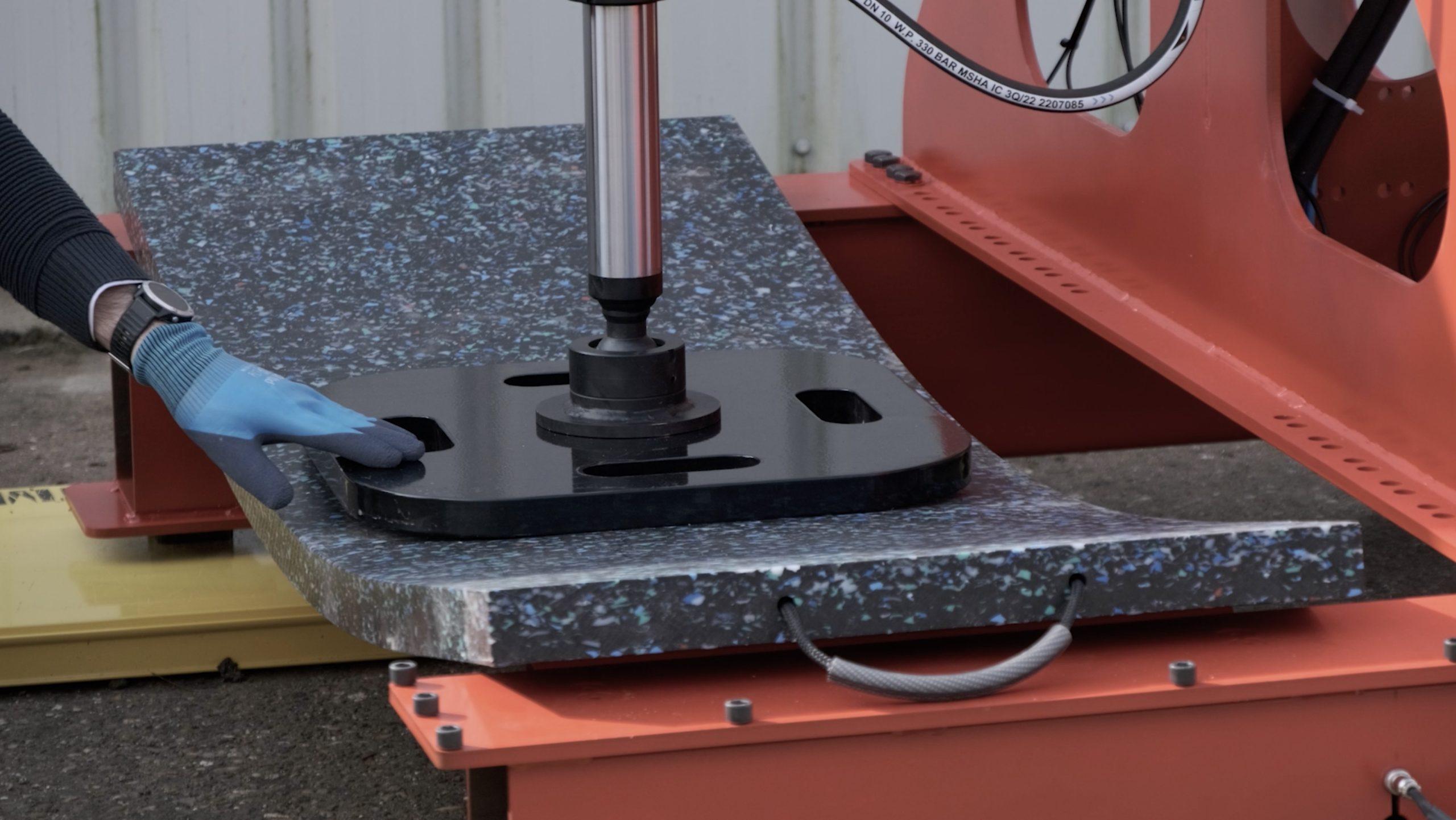
This is where stiffness earns its place alongside capacity. Independent bending tests comparing ALIMATS against a competing UHMW-PE plastic mat found our aluminium system deflected only a few millimetres where the plastic alternative deflected several centimetres under equivalent loads — the full figures sit in our aluminium versus plastic bending test. If a mat flexes by several centimetres on a test bench, how is it supposed to hold a crane level under a fortnight of sustained load? A mat stiff enough to barely move under a quick pick can still creep unacceptably once the load doesn't come off for weeks. Specifying for a heavy lift means asking about sustained deflection, not just a headline SWL.
Building the footprint from the module range
Our larger heavy-lift configurations aren't a separate product — we build them up from the same interlocking module range we use on every ALIMATS job, just combined differently. At the small end, the Mini module (0.58 x 0.58m, 13kg) fills tight infill positions and awkward corners. At the other end, the Long module (2175 x 580mm, 48kg) and the Extra Long module (3480 x 290mm, 48kg) give a configuration its reach, letting a single bearing position stretch across a wide track width or a big outrigger float without a seam running through the load path.
Because the whole range interlocks, we can build a heavy-lift configuration to match the actual reaction pattern on the ground rather than forcing the crane's footprint onto a fixed mat size. That's a meaningful difference from a routine mobile-crane job, where a handful of standard configurations cover most eventualities — a heavy lift more often needs a bespoke combination worked out against the crane's real outrigger or track loading.
| Module | Dimensions | Weight | Typical role in a heavy-lift configuration |
|---|---|---|---|
Mini | 580 x 580mm | 13kg | Infill and awkward corners within a larger footprint |
Long | 2175 x 580mm | 48kg | Core module for wide-reach configurations |
Extra Long | 3480 x 290mm | 48kg | Maximum reach across a single bearing position, up to 8.07m² configurations |
Module:
Dimensions:
Weight:
Typical role in a heavy-lift configuration:
Module:
Dimensions:
Weight:
Typical role in a heavy-lift configuration:
Module:
Dimensions:
Weight:
Typical role in a heavy-lift configuration:
What changes on site for a heavy lift
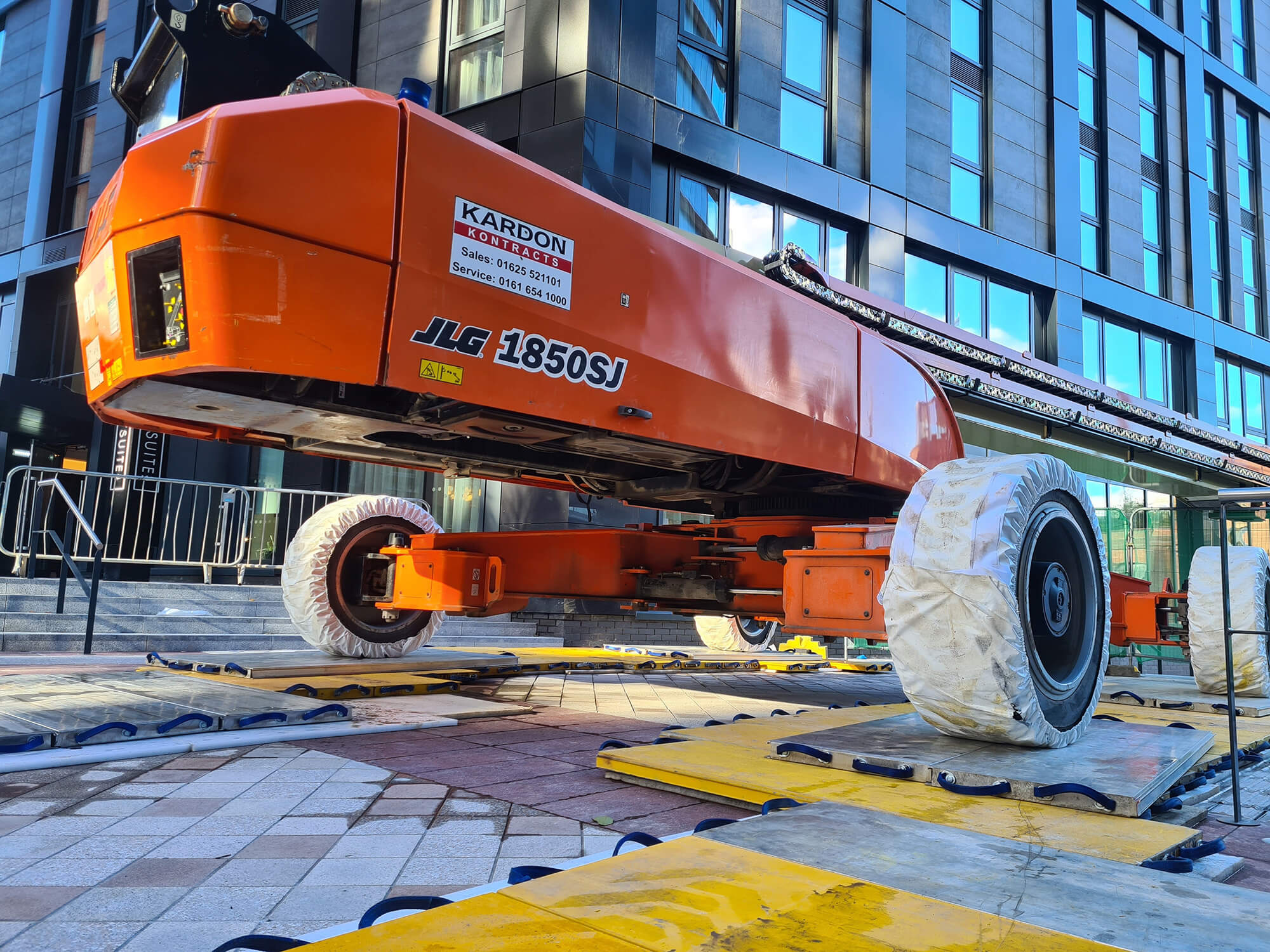
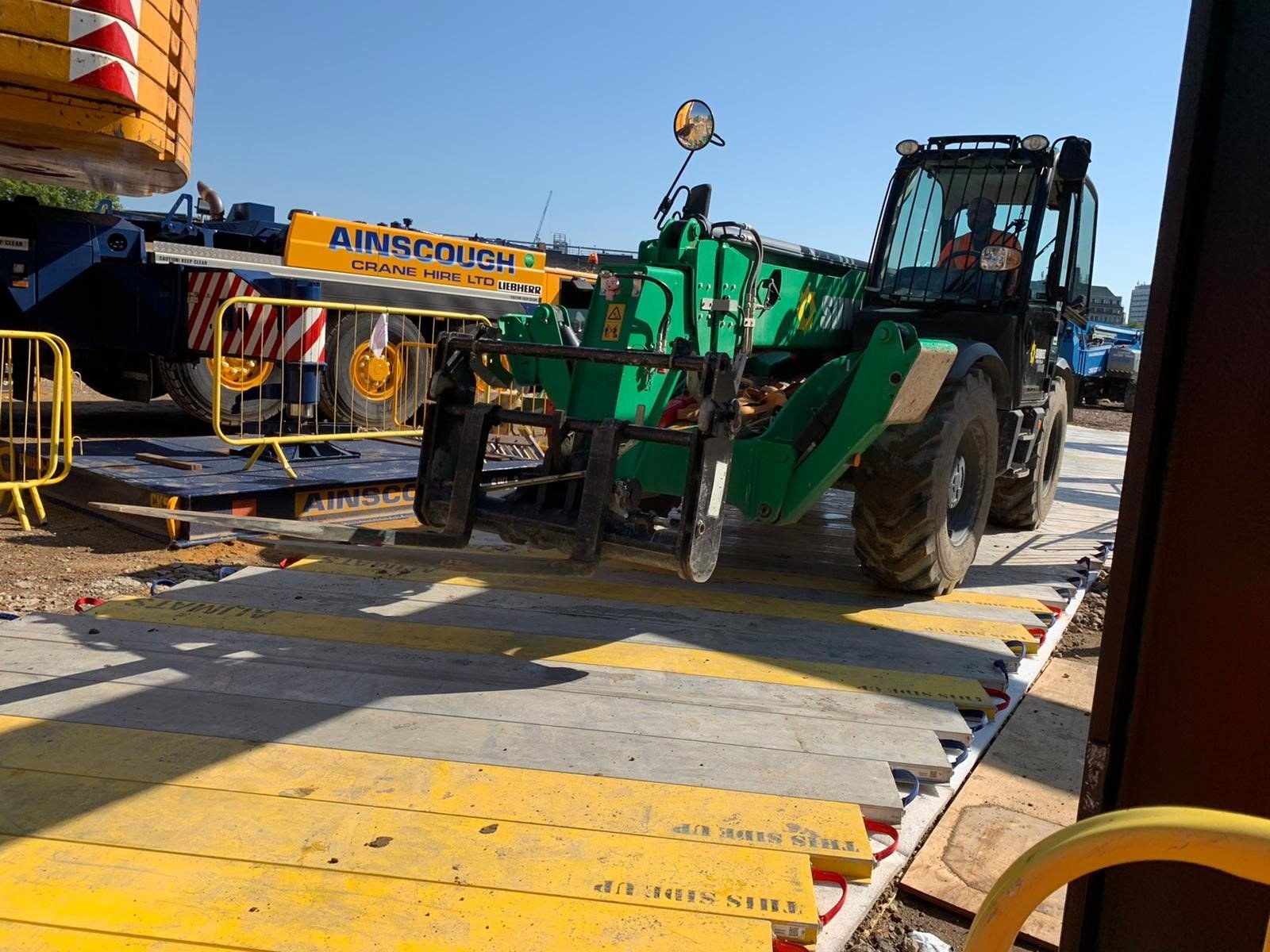
The practical difference on a heavy-lift site isn't more mats — it's fewer, bigger positions, each doing more work. A routine job might scatter several small configurations under a compact mobile crane's outriggers; a heavy lift is more likely to need four or six large-format positions, each built from Long and Extra Long modules, each carrying a much bigger share of the load. Fewer joints in the load path — but every one of them has to be right.
Dwell time changes too. Where a routine pick has mats down for a shift, a heavy lift can have them under load for the length of a module installation, a multi-stage jacking sequence, or a crane standing ready across several days of a wider programme. That longer window is exactly why the stiffness question matters more here than on a same-day job — and it's why mats coming off a heavy-lift site get inspected, cleaned and quality-checked before they go back out, rather than assumed fine because the numbers on paper haven't changed.
We've done this work under some of the UK's largest crane and civils programmes — HS2, the Hinkley Point C nuclear new-build, Heathrow and Gatwick, Grangemouth Refinery and London Bridge — sites where the plant on the ground is rarely light and the tolerance for a ground-bearing miscalculation is close to zero. More than 80% of the UK's top twenty Tier 1 contractors already specify the system, which on a heavy lift matters less as a marketing line and more as a track record a temporary works engineer can actually check.
Beyond a single mat: spreader modules and steel combinations
At the very top of the range, our own product development kept coming back to the same problem heavy-lift planners keep raising — how do you cut ground pressure further without simply adding more mats? The Half-Loader spreader module is our answer. Rather than carrying load itself the way a standard ALIMATS panel does, it sits on top of the configuration and moves a high outrigger load away from the centre of the mat, spreading it across two bearing points instead of one and reducing the pressure reaching the ground beneath. We built it to work with the 6.05m², 7.06m² and 8.07m² configurations, using the 1.740m, 2.175m and 3.480m interlocking modules — designed specifically for the large-format end of the range that heavy lifts already sit at.
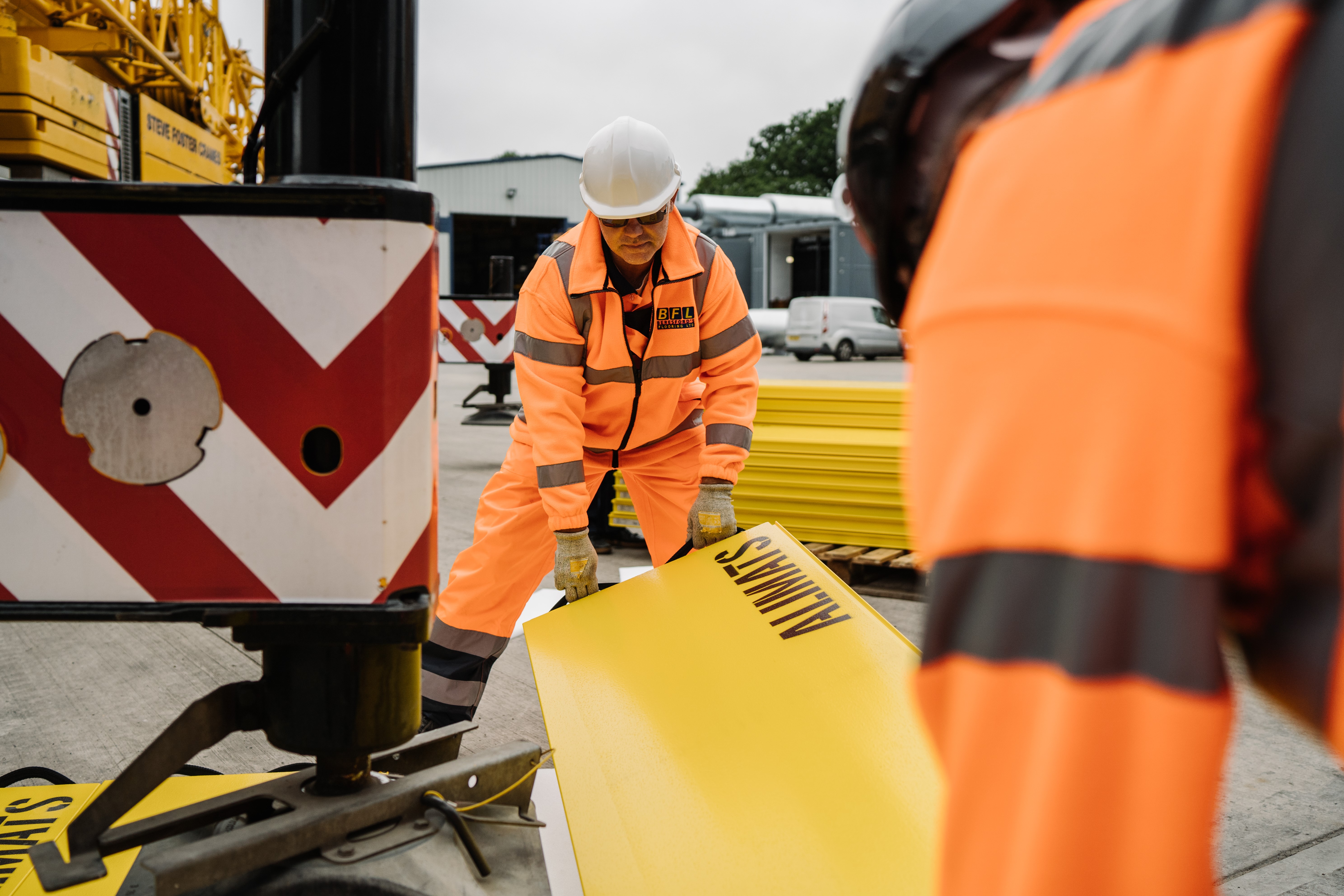
The Half-Loader itself is a patented, tested, extruded aluminium truss made from certified high-grade recycled material, measuring 1.16m long and weighing 48kg — light enough to position by hand, with handles as standard and no extra plant or short rigging needed to fit or lift it out. It's noticeably deeper than the standard ALIMATS profile and roughly three times stiffer, which is exactly what its job demands: taking a concentrated outrigger reaction and spreading it before it ever reaches the mat's bearing area. It forms part of our ongoing work defining safe working loads across the range, and it removes the need for a separate crane pad within the system while supporting higher SWLs — useful not just under cranes but under MEWPs, concrete pumps and scaffolding loading points too.
For cranes and reactions that sit beyond even that envelope, combining ALIMATS with steel crane mats is established practice for us, not an experiment. The principle is straightforward — use steel where the very highest concentrated bearing pressure needs the most localised support, and ALIMATS where lighter weight, faster handling and corrosion resistance matter more, sometimes both across the same lift plan, positioned according to what each part of the crane's footprint actually needs. It's a route worth raising with our engineering team early, rather than after the crane's already been booked.
Frequently asked questions
What's actually different about ground protection on a heavy lift compared with a routine mobile crane job?
The reactions under each track or outrigger are bigger, the load stays in place for days or weeks rather than hours, and there's less margin in the ground-bearing calculation to start with. That combination means the mat has to hold its shape under sustained load, not just survive a brief peak — a different engineering question from a quick same-day pick, and the reason we specify these jobs around deflection rather than a headline capacity.
How do you decide what configuration size a large crawler crane needs?
We start from the actual track or outrigger reaction, not a standard mat size. Our ALIMATS configurations run from 1.34m² up to 8.07m², built from the interlocking module range, so a heavy-lift configuration is worked out against the crane's specific loading rather than picked off a shelf.
Is a high SWL figure enough to know a mat will perform on a heavy lift?
Not on its own. SWL tells you the mat won't fail; it doesn't tell you how much it will deflect while carrying that load for an extended period, and deflection is what affects a crane's levelling over a multi-day lift. Independent testing shows ALIMATS deflects far less than a competing plastic mat under equivalent loads, which is why we ask about stiffness alongside capacity on every heavy-lift spec.
Can ALIMATS be used under cranes heavier than 150 tonnes?
The standard range sits comfortably under cranes up to 150 tonnes. Beyond that, or where a single reaction is unusually concentrated, the Half-Loader spreader module reduces the ground pressure reaching a configuration, and combining ALIMATS with steel crane mats is an established option for the very top end. Either route is one we'll work through with you against the actual crane data.
What is the Half-Loader spreader module and when would you use it?
It's a patented aluminium truss that sits on a configuration and spreads a high outrigger load across two bearing points instead of one, cutting the pressure reaching the ground. We designed it for the 6.05m², 7.06m² and 8.07m² configurations; it weighs 48kg and goes down by hand with no extra plant — useful wherever a single outrigger reaction is the limiting factor, including under MEWPs and concrete pumps as well as cranes.
Do heavy lifts need more mats, or bigger ones?
Generally bigger, and fewer. A routine job often uses several small configurations; a heavy lift more commonly needs a handful of large-format positions built from the Long and Extra Long modules, each carrying a bigger share of the load. Fewer joints in the load path — but each position has to be got right first time.
How long can ALIMATS safely stay under load on a heavy lift?
There's no fixed limit built into the product — it's a function of the specific ground conditions and load, worked out as part of the temporary works design. What does change operationally is that mats coming off a long dwell-time lift go through the same inspection, cleaning and quality check before we redeploy them as any other job, since the loading history is part of what we assess.
Is hire or purchase better for a heavy-lift programme?
We offer both, and the right answer depends on the programme rather than the lift itself — a one-off heavy lift usually suits hire, while a multi-phase programme with repeat heavy positions can make purchase worth costing out. It's a separate conversation from the engineering spec, best had once the configuration and quantities are settled.