A tower crane doesn't get repositioned mid-job. It goes up in one location — sometimes climbing internally or being jumped as the building rises past it — and stays there until the structure tops out, which on a large scheme can run for a year or more. That's the opposite of how a mobile or crawler crane works, picking up and rolling to a fresh pad every few days, and it changes what ground protection actually means once the crane in question is a tower crane.
The mat that matters here isn't the one carried to the next position every afternoon. It's protection for three specific moments around a crane that otherwise just stands still for the length of the job.
Three jobs, three different moments
Ask a site manager where crane mats fit into a tower crane package and the honest answer is: not under the tower itself, and not permanently. On a tower crane job our ALIMATS® aluminium crane mats tend to do three distinct jobs, and it's worth being clear which is which — because conflating them is how ground protection ends up either over-specified or missing from exactly where it's needed.
First, the mobile or crawler crane that erects and later dismantles the tower crane needs the same ground protection it would for any other heavy lift. Second, the compound around the tower crane's base — access roads, laydown, the routes ancillary plant and delivery vehicles use for the length of the build — needs protecting for months, not hours. Third, the ground around the crane's own base or foundation works needs temporary protection while that foundation is being built, before the permanent concrete or ballasted base goes in. None of these is the tower crane itself sitting on mats for the length of the contract — that idea belongs to sustained-load crawler crane work, not to a tower crane standing on its own designed foundation.
Getting the tower up, and getting it down again
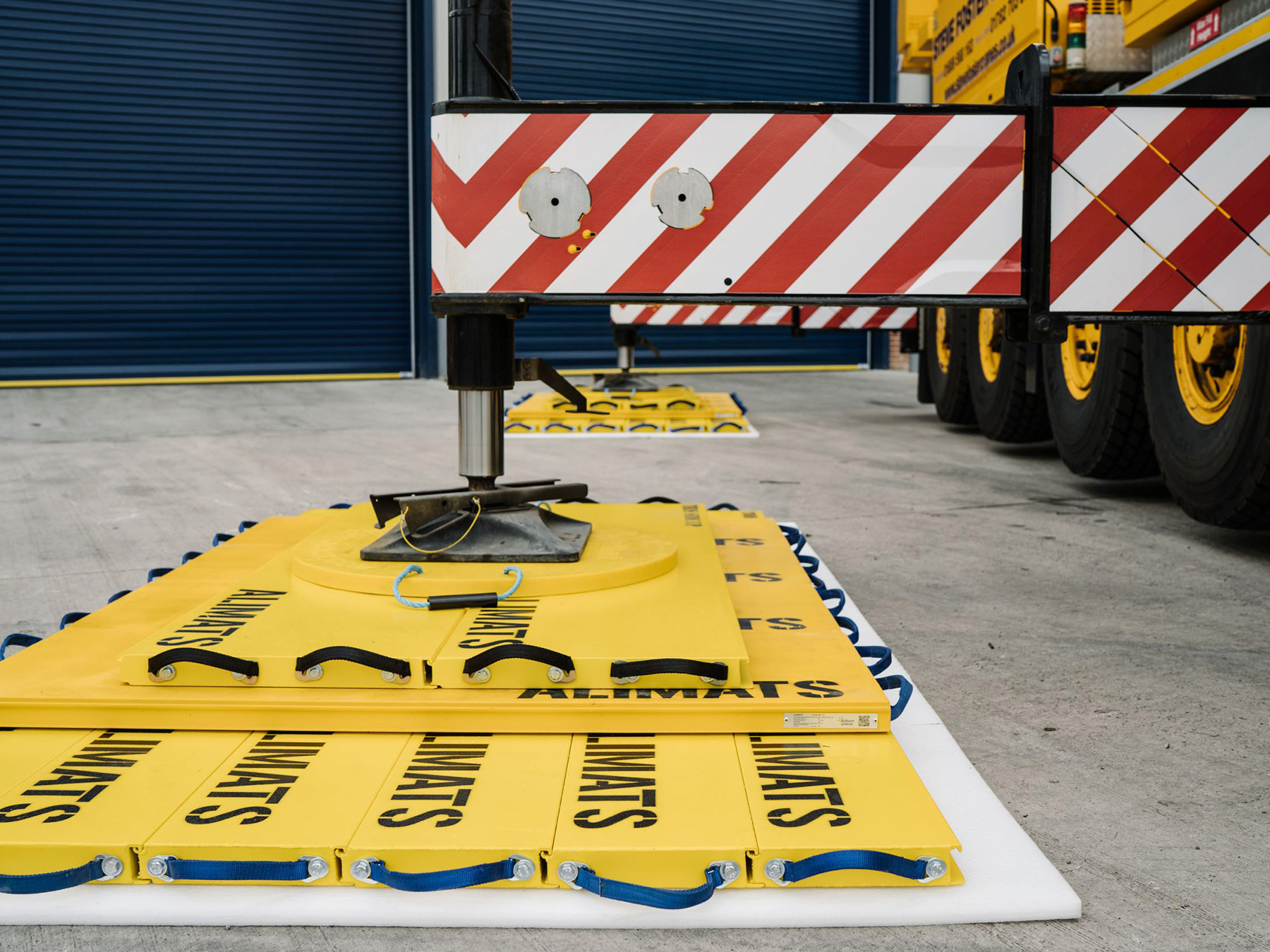
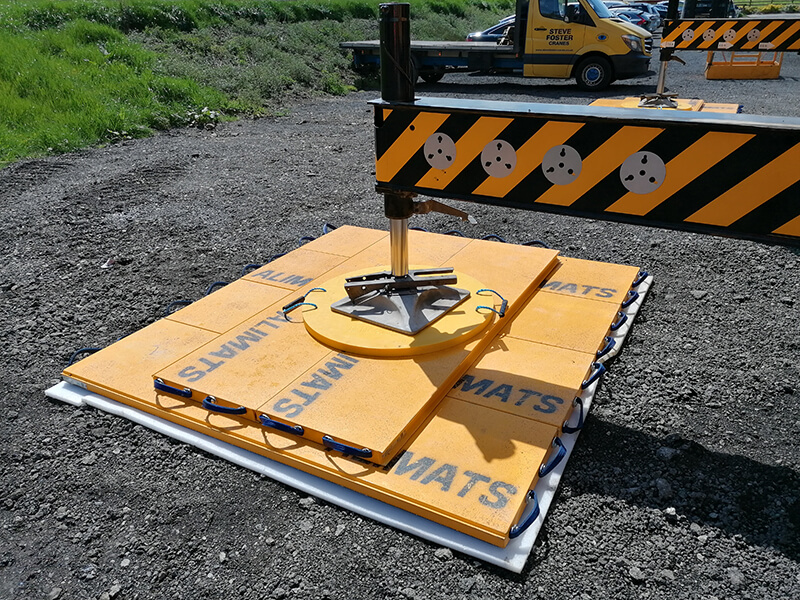
Tower cranes are erected and dismantled by another crane — usually a mobile crane on outriggers, sometimes a crawler on tracks — and that erection crane has to stand somewhere. If the ground is anything other than solid, load-bearing hardstanding, that means temporary matting under the outrigger pads or tracks, exactly as it would for any other mobile or crawler lift on site.
The loads involved in lifting and stacking tower sections, counterweights and the jib aren't small, and the erection crane is often working close to site boundaries, buried services, or recently disturbed ground near the tower's own foundation — precisely where you don't want a point load punching through. Each of our ALIMATS modules carries a safe working load of up to 80 tonnes, and the system has been independently verified — with a Fellow of the Institution of Structural Engineers involved in the assessment — as comfortably supporting cranes up to 150 tonnes, which covers the erection cranes used on the great majority of tower crane installations.
Living with a crane for the length of the build
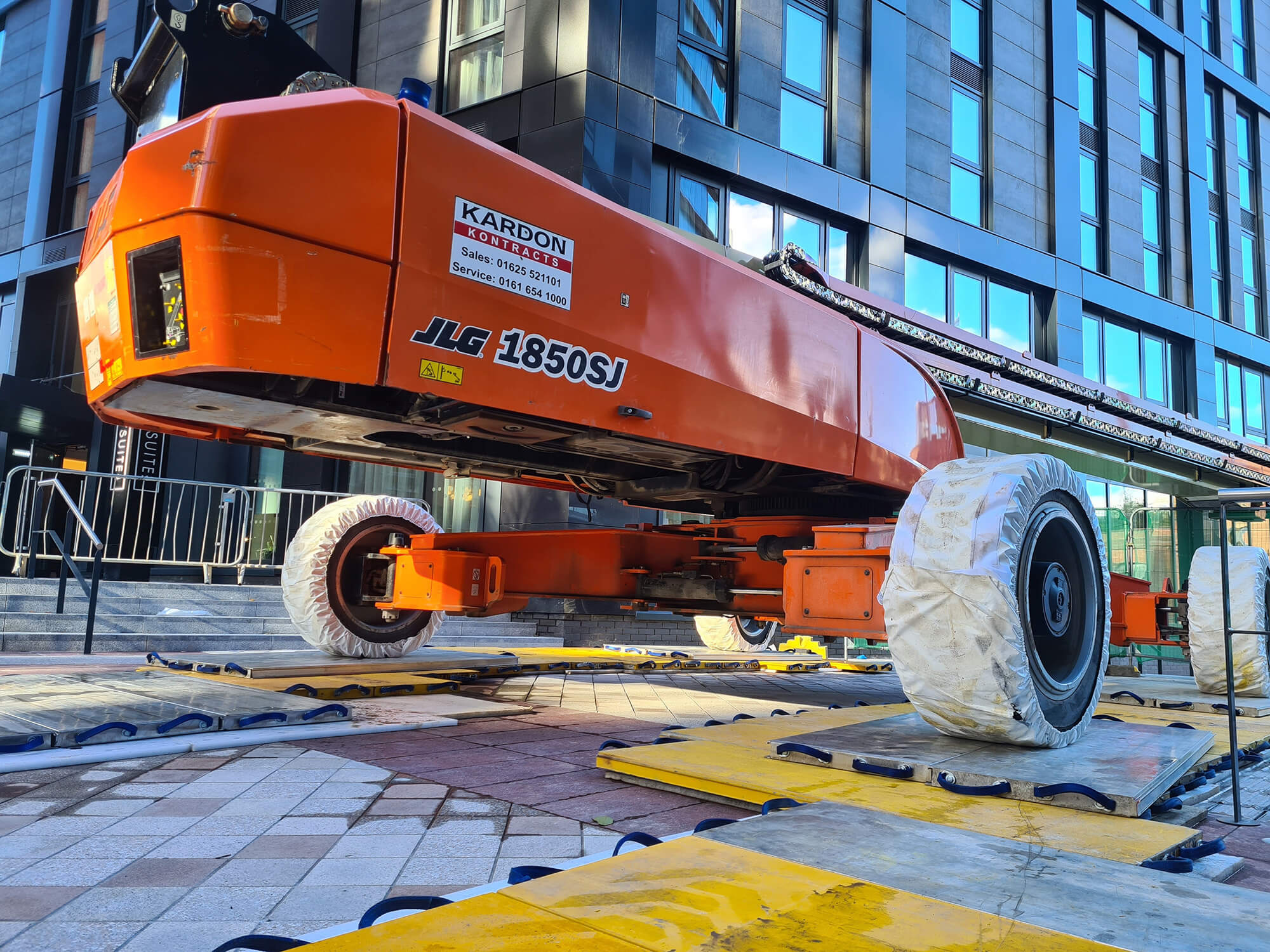
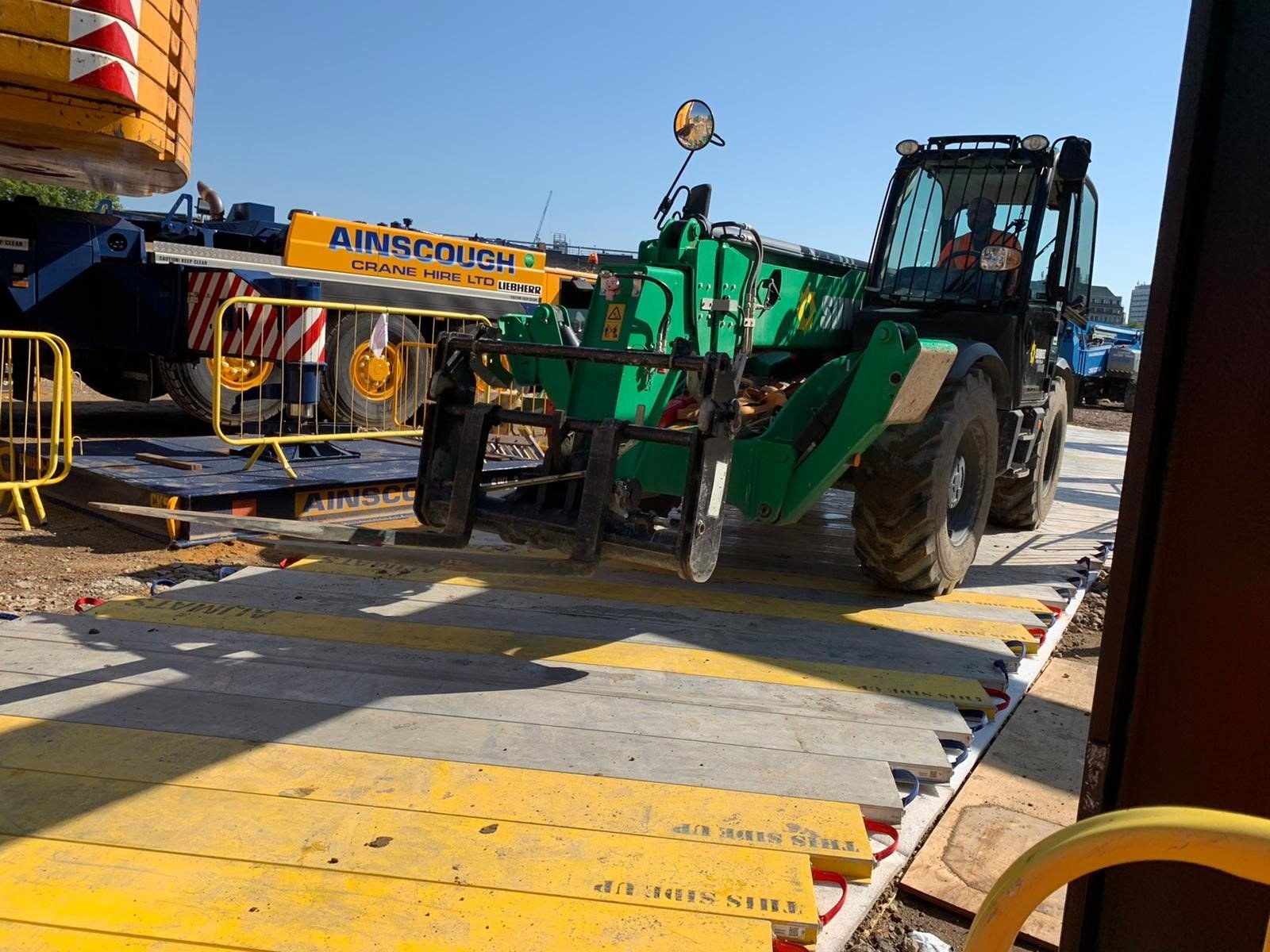
Once the tower crane is up and running, the ground problem shifts from one intense lift to months of routine traffic. The base compound sees deliveries, concrete pumps, telehandlers, welfare units and the crane's own maintenance visits, on top of whatever the wider site is doing nearby. Access routes into and around that compound take repeated trips rather than one big load, and on a site that started as a field, a car park, or made ground with no engineered pavement, it's that repeated traffic that breaks a surface up — ruts, standing water, mud dragged onto the public road.
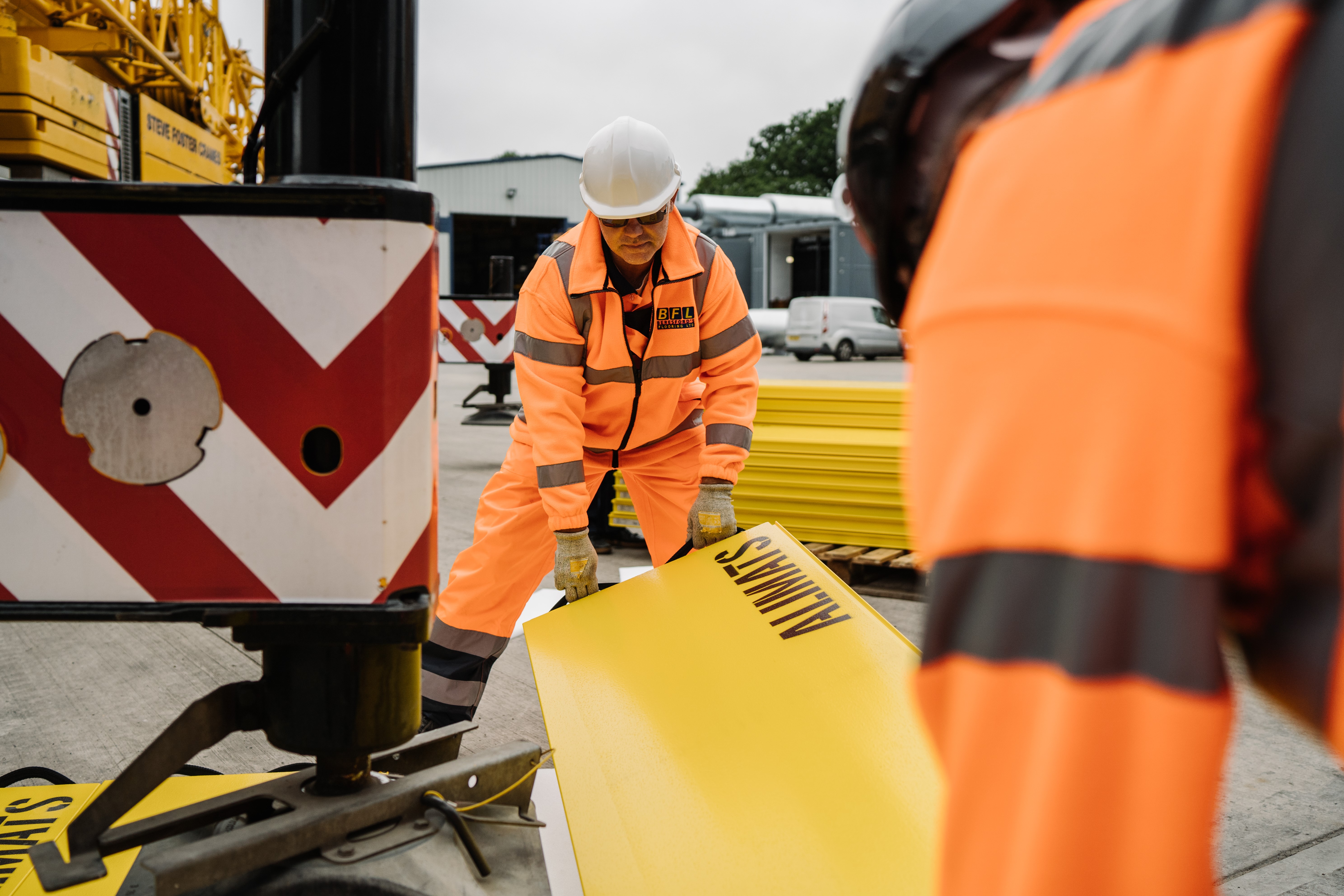
This is where crane mats do a genuinely useful, unglamorous job: keeping the compound and its access routes trafficable for the length of the tower crane's stay, without pouring a temporary road that has to be broken out again at the end of the job. Because our ALIMATS modules are handleable by two people and need no plant to move, reconfiguring the protected route as the compound layout changes — as it often does as a build progresses — doesn't mean bringing machinery back on site just to shift matting around.
Before the concrete goes in
We'll be direct about the limits here. A tower crane's permanent base is a designed concrete foundation or ballasted base, sized and specified by the crane manufacturer or a structural engineer for that specific crane, that building height and that ground. Our crane mats are not a substitute for that foundation design, and aren't meant to be.
What we do get used for on jobs where base construction is involved is temporary ground protection during the works that go into building the foundation — protecting the surrounding ground while excavation plant, concrete deliveries and reinforcement gangs move around the foundation pit before the permanent base is cast. Once that foundation is in and the crane is founded on it, the mat's job there is done — it's never part of the finished structure, and it was never meant to carry the crane itself long-term.
What the mats are doing underfoot
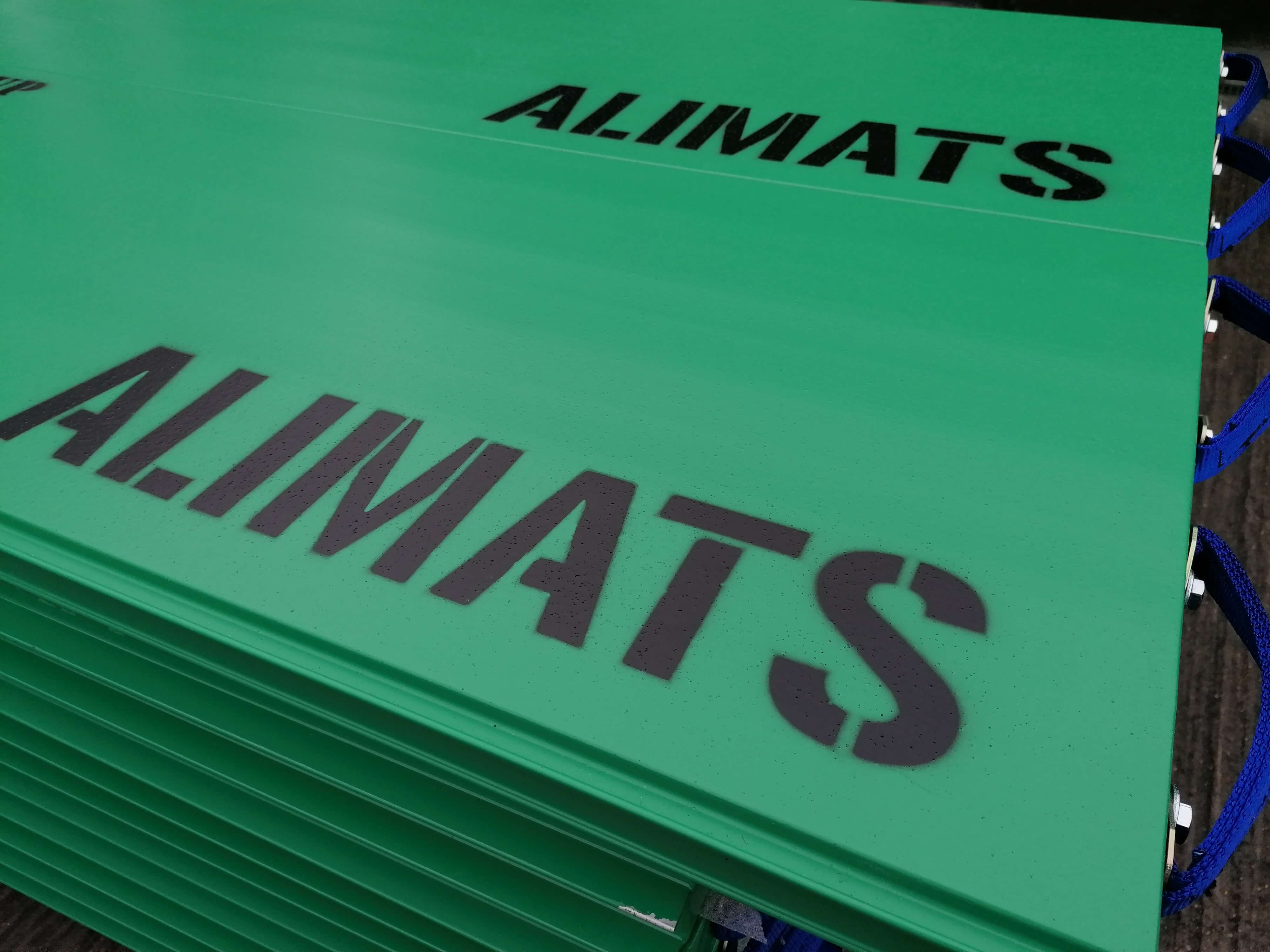
The reason aluminium rather than timber or plastic turns up on this kind of work comes down to the material. Our ALIMATS modules are made from certified recycled extruded 6005A aluminium alloy in a patented modular system, with five module sizes weighing between 13kg and 48kg and individual mat areas from 1.34m² up to 8.07m² — so a compound access route or a foundation working area can be built up to whatever footprint the job needs, rather than to a fixed panel size.
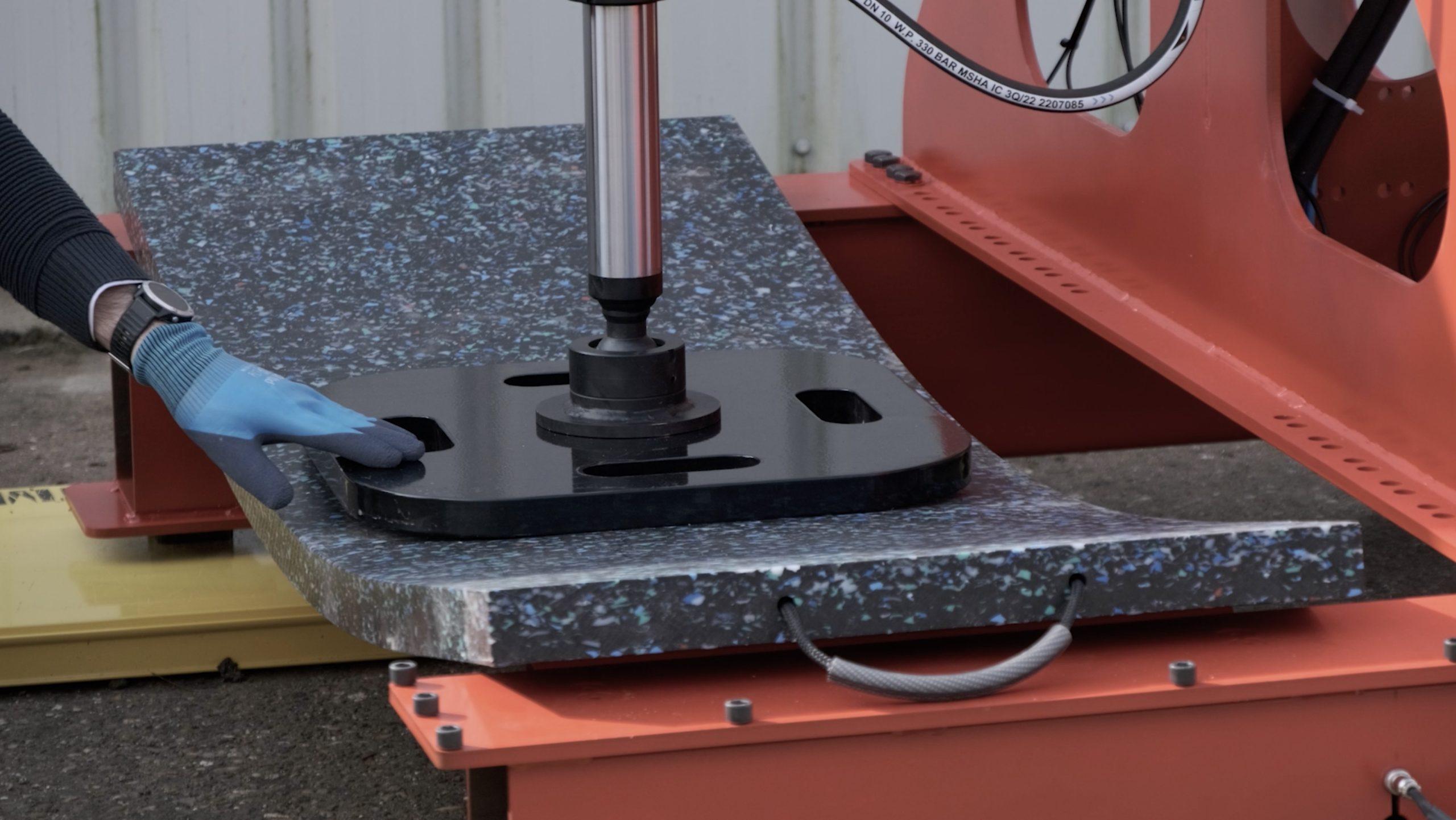
Bending tests tell the story on stiffness: our modules deflect in single millimetres where a competing UHMWPE plastic mat deflects in tens of centimetres, at the same test loads. On ground already softened by a wet winter or by nearby foundation excavation, that difference is what stops a mat flexing enough to let a wheel or pad punch through anyway. Strength spreads the load; stiffness is what stops the mat bending under it — and the two aren't the same thing.
Where it's been specified
We've supplied ALIMATS across major UK construction programmes including HS2, Hinkley Point C, Heathrow, Gatwick, the Google headquarters at King's Cross, Euston Station, Grangemouth Refinery, London Bridge, the Co-op Live Arena in Manchester and Scottish wind farm developments, and we're used by more than 80% of the UK's top twenty Tier 1 contractors. Programmes of that scale almost always involve tower cranes somewhere in the sequencing, alongside the mobile and crawler cranes handling erection, dismantling and general lifting around them.
Hire or buy
For a single tower crane erection and a defined base compound life, hire usually makes more sense than purchase — and we supply ALIMATS either way, with 24/7 UK delivery, so matting lands on site to match your erection date rather than the other way round. Contractors running matting across several tower crane packages on a rolling programme, or across multiple sites in parallel, more often move to purchase once the volumes justify it.
Frequently asked questions
Do tower crane base mats go under the tower crane itself?
No. A tower crane's permanent standing surface is a designed concrete foundation or ballasted base, specified by the crane manufacturer or a structural engineer. We use our matting around that base — on the compound, the access routes, and through the erection, dismantling and foundation construction phases — not as the crane's long-term standing surface.
What's the difference between tower crane base mats and mobile crane outrigger mats?
Matting under the outriggers or tracks of the crane that erects and dismantles the tower crane is the same job as ground protection for any other mobile or crawler crane lift. "Tower crane base mats" usually also covers the ongoing protection of the base compound and access routes for the length of the build, which is a longer, lower-intensity use than a single lift.
How long do tower crane mats need to stay down?
It depends on the phase. Matting under the erection crane is typically down for a matter of days while the tower is built up and later taken down. Matting protecting the base compound and its access routes can stay in place for as long as the tower crane is on site, which on a large building runs into many months.
What load rating do I need for the crane that erects a tower crane?
It depends on the erection crane's outrigger or track loading, which varies by tower crane model and lift plan. Our ALIMATS modules carry a safe working load of up to 80 tonnes, and the system has been independently verified — with a Fellow of the Institution of Structural Engineers involved — as suitable for cranes up to 150 tonnes.
Can the same mats be used for erection, the compound and then dismantling at the end?
Yes. Because our modules are handleable by two people with no plant needed to move them, the same stock can protect the erection crane's standing area, be reconfigured for compound and access route protection through the build, and then be redeployed for the dismantle at the end of the programme.
Does ALIMATS matting replace a proper tower crane foundation design?
No. Our crane mats are temporary ground protection, not a foundation design product. A tower crane's permanent base still needs to be designed and specified by the crane manufacturer or a structural engineer for that crane and that site; we're only there to protect the surrounding ground during the works that go into building it.
Is aluminium matting worth using on a compound access road rather than steel trackway panels?
For repeated light-to-medium traffic over an extended period, aluminium's combination of stiffness and low module weight (13kg to 48kg) means routes can be laid, adjusted and lifted by hand as the compound layout changes — no heavy plant needed every time the route moves, which is usually the case as a build progresses around a static tower crane.