Ask any site team what needs matting under it and the crane comes up first, every time. The concrete pump parked on the access road — boom folded, waiting on the wagon — gets treated as background furniture. It isn't lifting anything, it looks static, and somebody threw a couple of scaffold boards under the legs last time without anyone falling through the ground, so why bother.
That reasoning is exactly how boom pumps end up unstable. A truck-mounted pump with the boom extended and slewed out over a pour is putting a genuinely serious point load through four stabiliser legs, onto whatever ground happens to be under the wheels that day — and the fact that nobody calls it a crane doesn't change the physics underneath it. We spend our working lives looking at what sits under crane and plant outriggers, and the pump is the machine that gets forgotten more than any other.
The boom is a lever, exactly like a crane's
Strip the badge off the side of the vehicle and a boom pump's outrigger arrangement is doing the same job as a mobile crane's — four legs spread out from a chassis, holding up a long arm that's been extended and slewed away from the centre of the machine. Push that boom out and round to one side and the stabiliser nearest the load takes a disproportionate share of the reaction. It's the same leverage that makes crane outrigger loading uneven, and we see it catch people out for the same reason: the plate on the side of the machine gives a static weight, not the loading at full reach.
What a pump adds on top is something a crane never has to deal with — concrete actually moving through the boom under pressure. Pumping isn't a steady, gentle load. It pulses as the piston strokes, and that pulsing runs straight down the boom and into the outriggers as vibration and cyclic loading, on top of the static reach load already sitting there. We've watched ground that would just about cope with a dead weight behave very differently once it's being worked by a machine that shudders slightly every few seconds for the length of a pour.
Why pumps end up on the worst ground on site
There's a structural reason concrete pump stabilisers so often sit on unreliable ground, and it isn't bad luck. A pump is set up close to whatever it's feeding — and what it's feeding is very often a foundation, a basement, a retaining wall, or a slab right next to a trench. That means the stabiliser footprint regularly lands on an excavation edge, a kerb line, made-up ground, or backfill that was compacted last week and hasn't had time to settle.
Compare that with a crane pick, which can often be positioned wherever the ground is best across a wider site. A pump has far less choice. It goes where the pour is, and the pour is usually right next to the one bit of ground on the whole plot least able to take a concentrated load — recently disturbed, poorly compacted, or simply too close to an edge for comfort. In our experience, treating that ground as equivalent to the compacted hardstanding twenty metres away is where overturns start. Ground support failure under plant stabilisers is a well-recognised hazard category in UK construction, and boom pumps sit squarely inside it.
"It's only on for a couple of hours"
Pump jobs tend to be short. A pour might need the machine on site for an hour or two, then it's gone. That short duration creates a particular temptation we see on site again and again — skip the proper ground check because it's not worth the fuss for such a brief job, and just get the legs down and the boom up so the wagon can start feeding.
The load doesn't know how long it's going to be there. A stabiliser leg pressing into weak ground for ninety minutes of active pumping is under exactly the same pressure as one left there for a week — arguably more, given the vibration coming off the pour itself. In our view, short duration is a scheduling fact, not a structural one, and it shouldn't be allowed anywhere near the decision about whether the ground gets assessed and packed out properly.
What goes under the legs
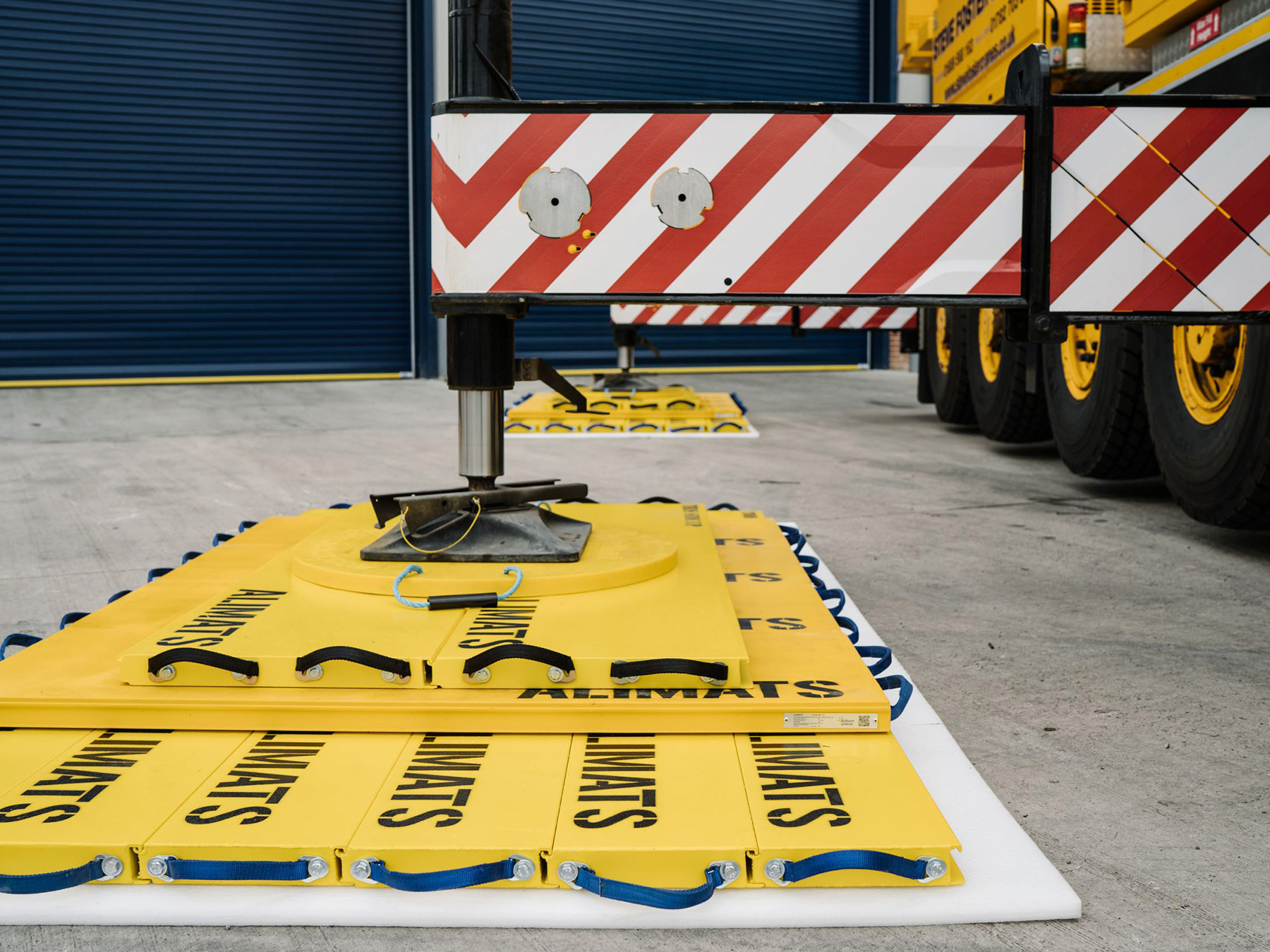
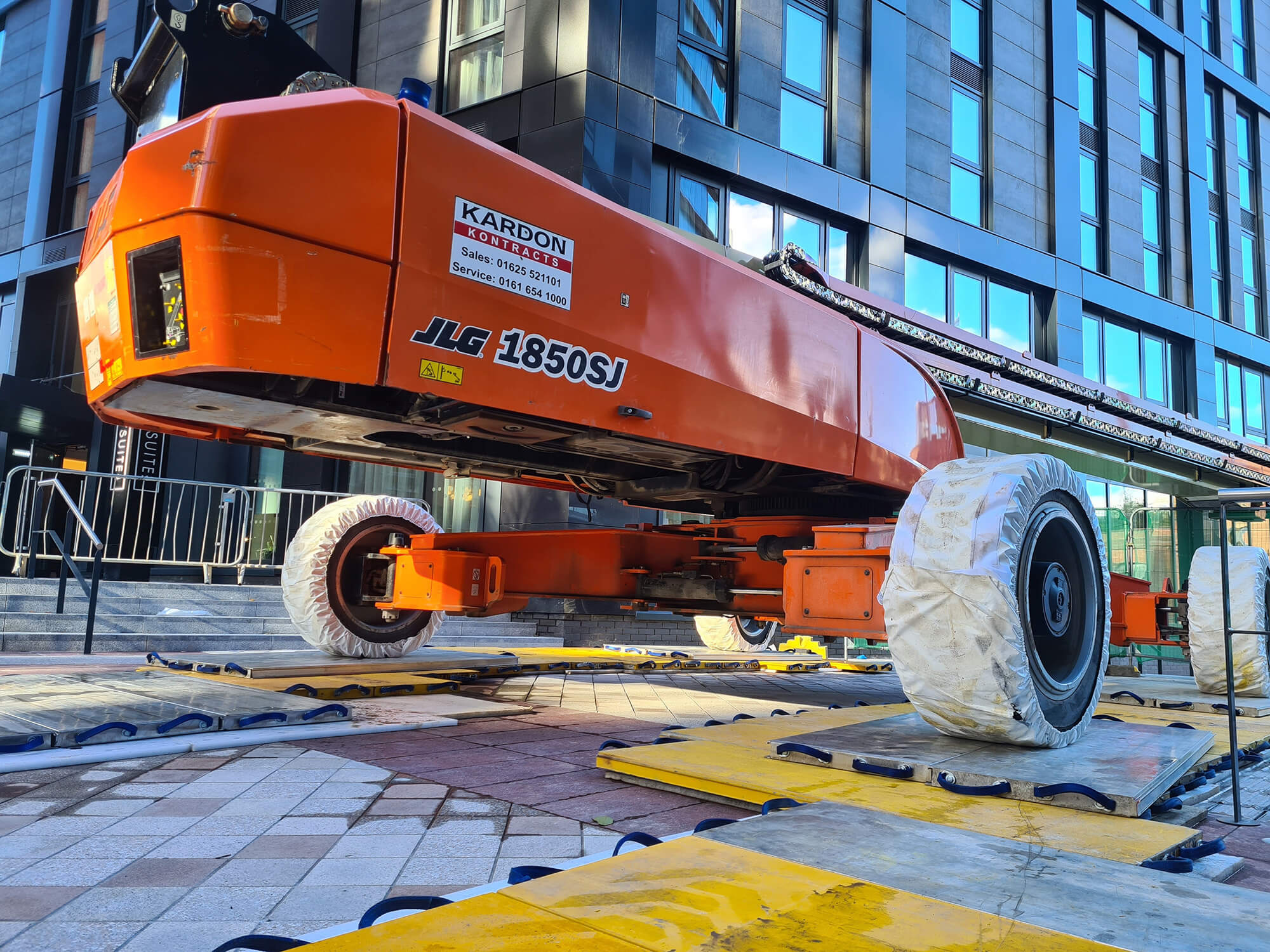
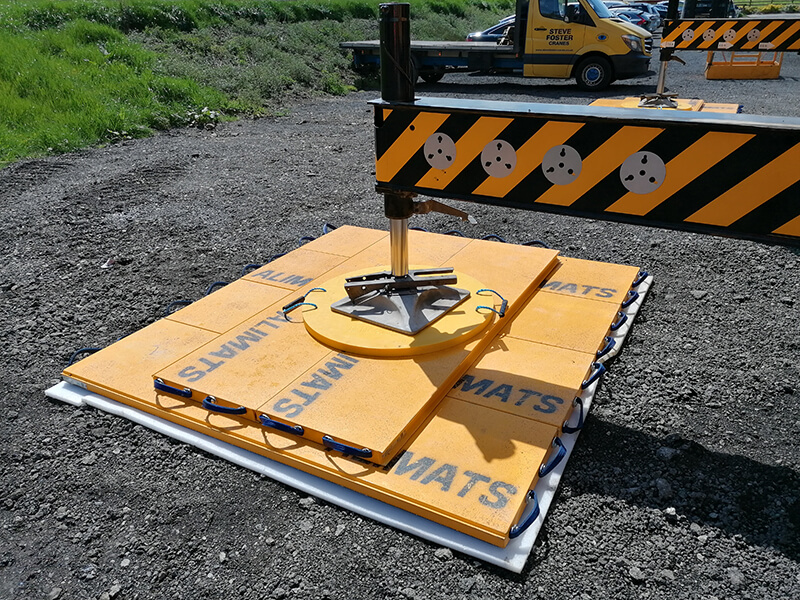
This is the same problem we solve for crane teams every day, and the same fix applies: spread the point load from each stabiliser foot across enough ground that the bearing pressure drops to something the surface can actually take, rather than concentrating it under a single steel pad. Load spread is the whole game here.
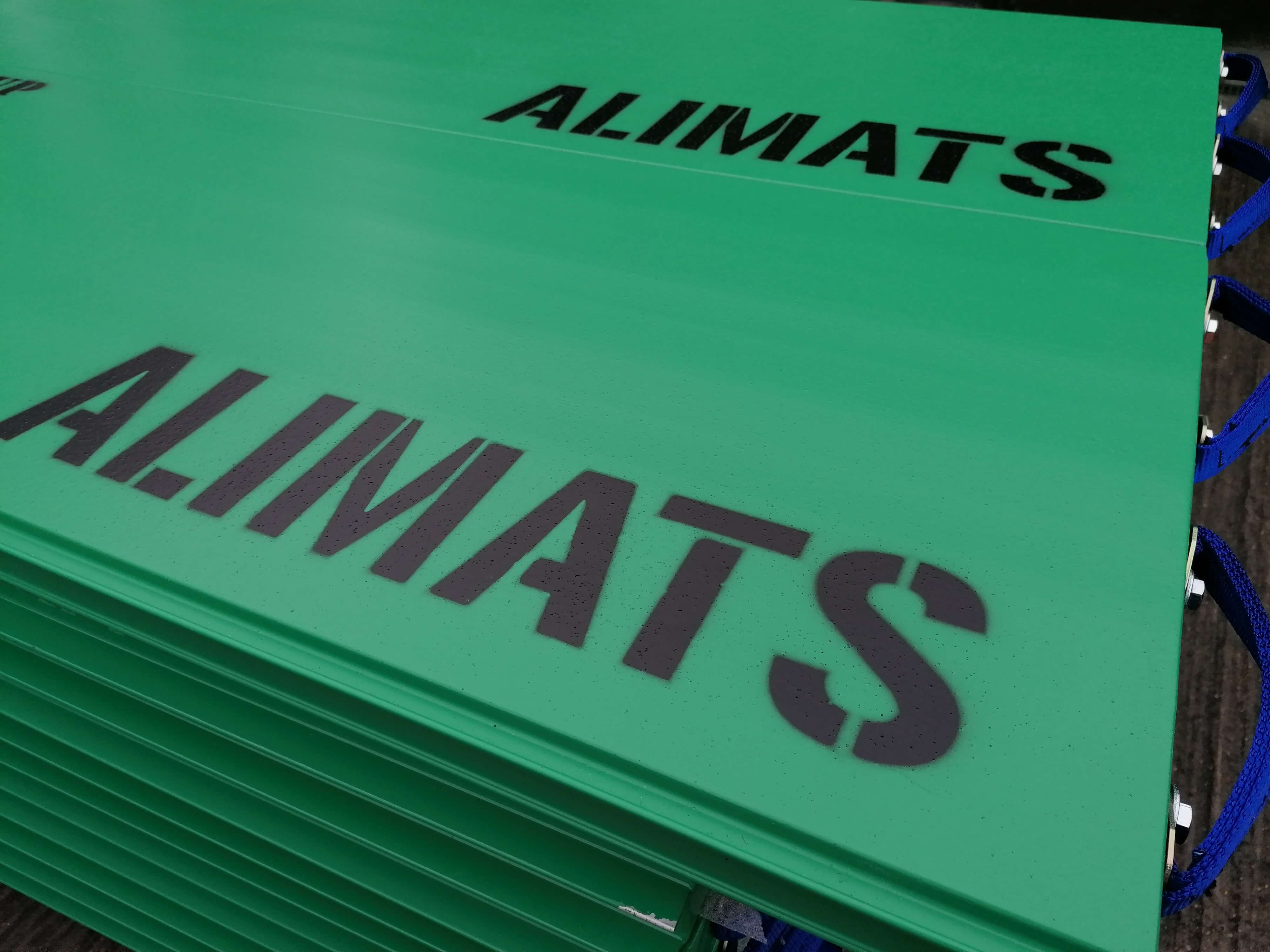
We build ALIMATS® as a patented, modular aluminium mat system in 6005A alloy, designed to sit under exactly this kind of concentrated leg load. Modules run from the Mini panel at 0.58 x 0.58m and just 13kg, through Short, Standard and Long formats, up to the Extra Long 3480 x 290mm module at 48kg — giving configurations from 1.34m2 to 8.07m2 depending on what a particular stabiliser foot needs. Every configuration carries a safe working load rating we've had verified independently by a Fellow of the Institution of Structural Engineers, and SWL across the range runs up to 80 tonnes — comfortably beyond anything a boom pump leg is going to put through it.
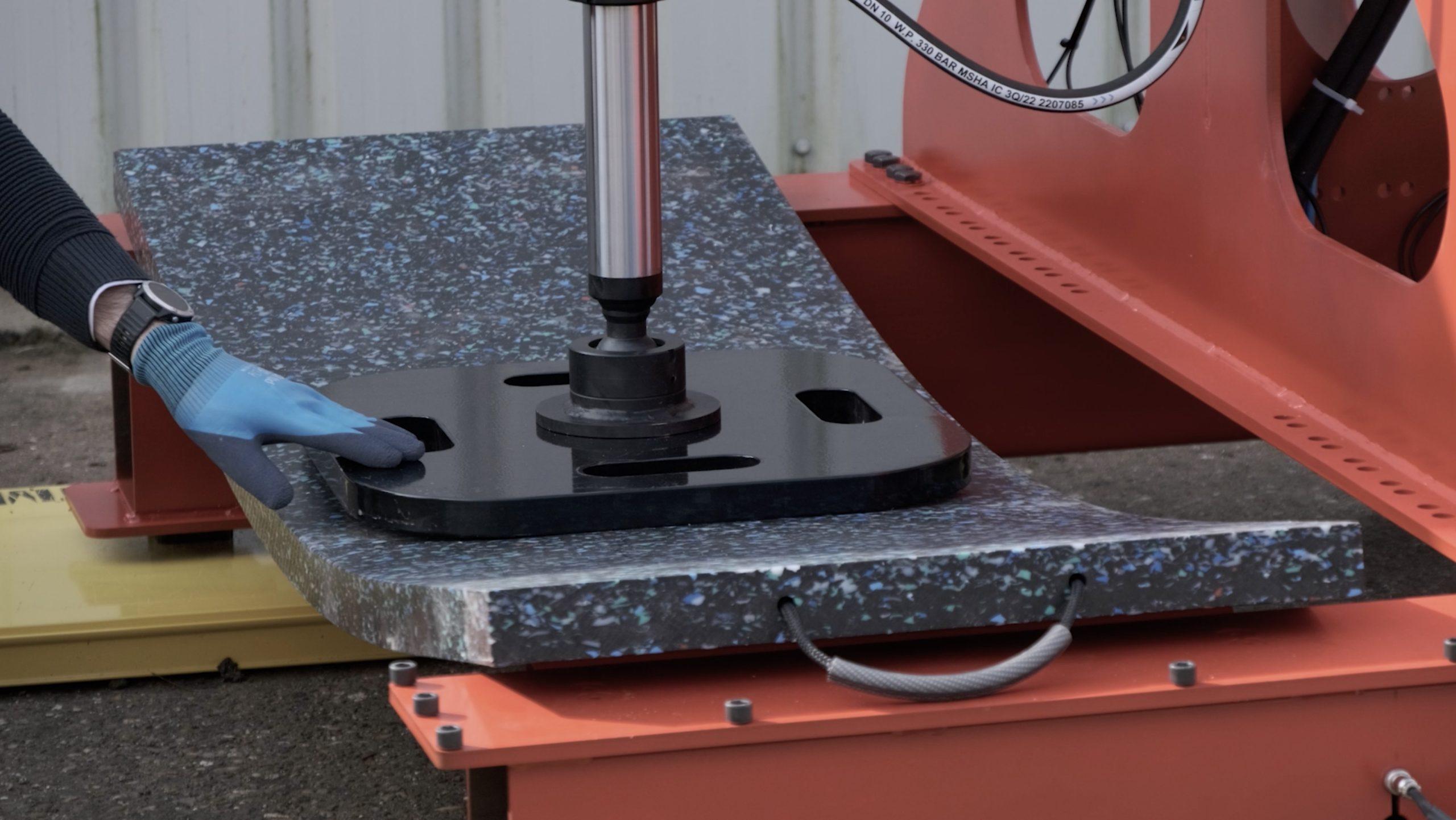
The bending-test figures are the part that matters most under a stabiliser specifically, because a stabiliser foot is a concentrated point load, not a spread one. ALIMATS deflected in single millimetres across the same test loads where a competing UHMWPE plastic mat deflected in tens of centimetres — the full rig and figures are in our aluminium vs plastic bending test. That gap is the whole argument for aluminium over plastic under a pump leg: a mat that flexes tens of centimetres under a point load isn't spreading that load evenly into the ground beneath it — it's funnelling it straight back down through whatever part of the mat happens to be under the foot.
Speed matters when the wagon's already on its way
Pump hire is charged by time, and a pump standing idle while someone hunts for boards to shove under the legs is a pump costing money and holding up a concrete delivery that's already on the road. That commercial pressure pushes hard against anything that needs a forklift, a telehandler, or a delay to fetch extra plant just to get matting in place.
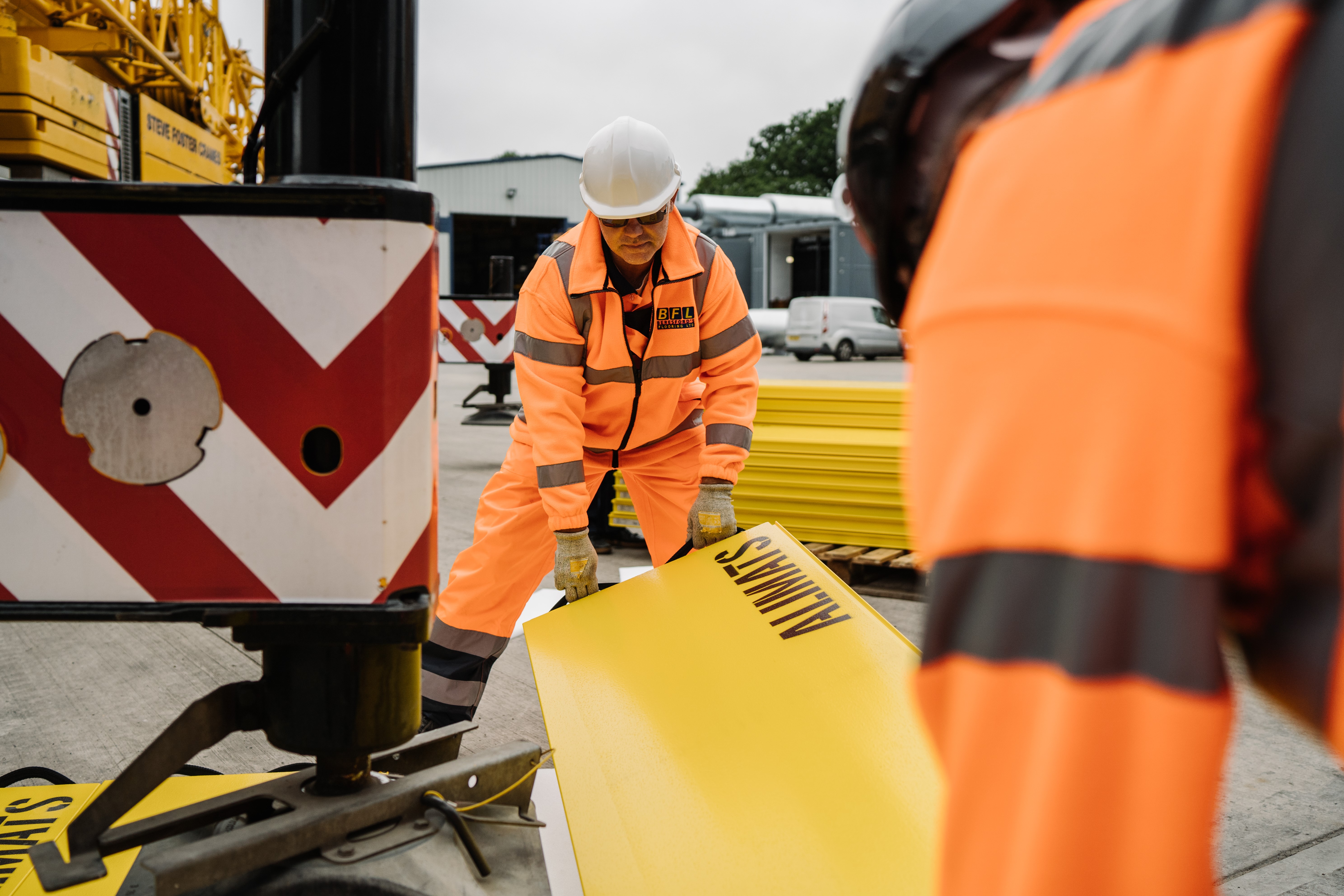
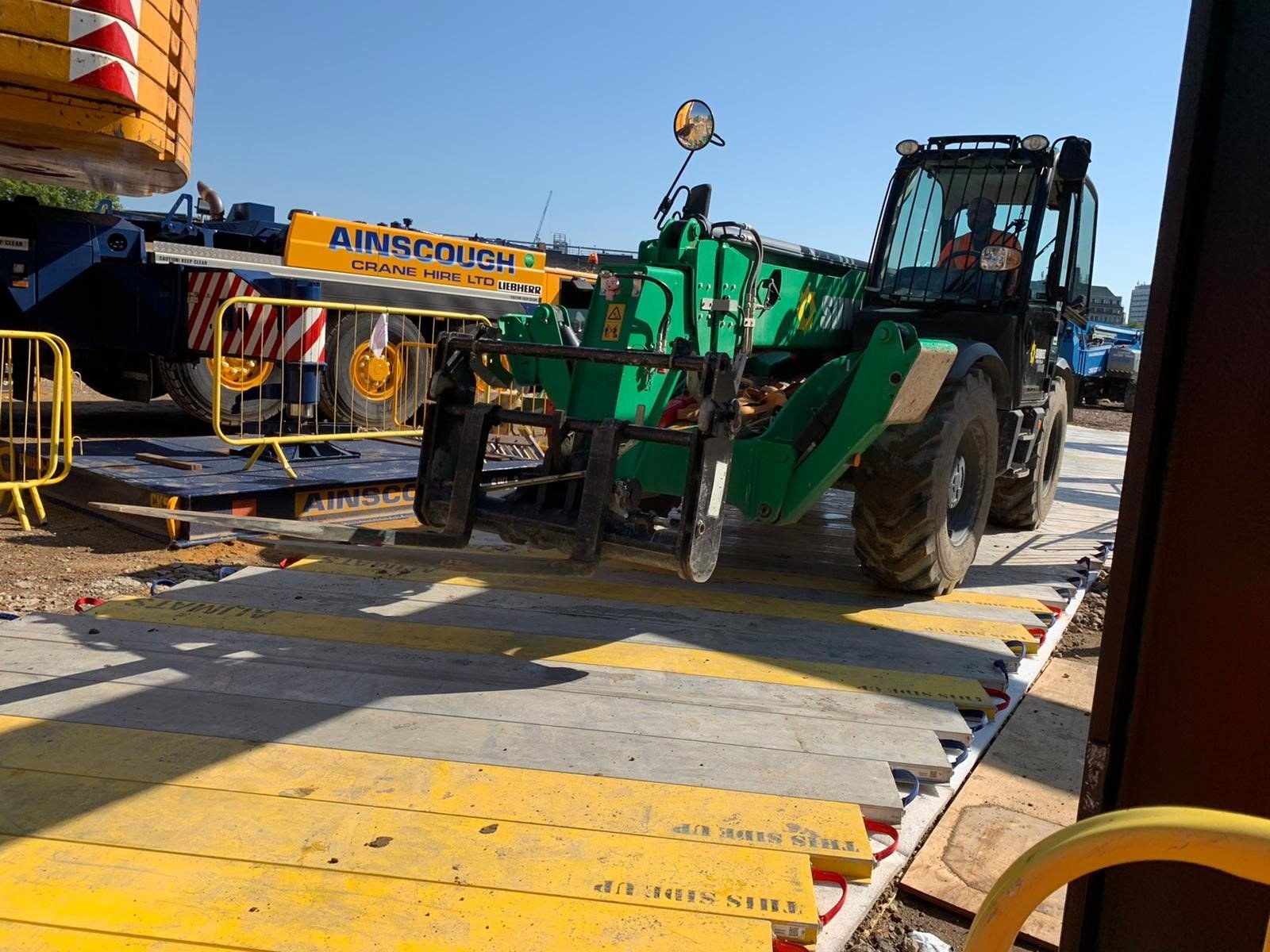
ALIMATS modules are handleable by two people with no heavy plant needed, which is precisely what a pump crew setting up in a tight window wants. Panels go down, the legs come out onto them, the boom goes up, and nothing else has to arrive first. We inspect, clean and check every mat before it goes back out, and we run the range on day, week or long-term hire as well as outright purchase — delivered 24/7 across the UK on our own FORS Bronze-accredited fleet, which earns its keep every time a pour gets pulled forward or pushed back at short notice.
Working out what you actually need under each leg
How much mat you need under a given stabiliser foot comes down to the leg load, the ground's bearing capacity, and how much margin you want against the vibration a working pump adds on top of its static weight. The sizing calculator below runs through those figures and suggests an ALIMATS configuration for your setup — worth a couple of minutes before the pump arrives, not after it's already sinking.
Concrete Pump Stabiliser Sizing Calculator
Enter your stabiliser leg load and allowable ground bearing pressure for an indicative pad recommendation.
Indicative only. Uses general bearing-pressure arithmetic (load ÷ area), not BIL proprietary engineering data. Always confirm pad selection with a qualified temporary works engineer, or request full specs from our technical team before specifying for a live project.
Frequently asked questions
Are concrete pump outrigger pads a legal requirement in the UK?
There's no single named regulation that says you must use one exact pad, but the duty to make sure plant is used on ground capable of supporting it safely runs right through general construction health and safety law and site-specific risk assessment. In practice that means whoever sets up the pump has to be able to show the ground and the stabiliser support were properly considered — not that a particular product was on the ticket.
How is a concrete pump stabiliser load different from a crane outrigger load?
The lever effect is the same — a boom extended and slewed to one side loads the near-side leg hardest, exactly as it does on a crane. The difference is the vibration and cyclic loading from concrete being pumped through the boom, which a static weight figure for the machine simply doesn't reflect.
Do I need matting if the pump is only on site for an hour or two?
Duration doesn't reduce the load on the ground. A short pour puts the same stabiliser leg pressure through the same patch of ground as a long one, so the ground assessment and any packing or matting shouldn't be skipped just because the job is quick.
Which ALIMATS configuration suits a concrete pump stabiliser foot?
It depends on the leg load and the ground bearing capacity on the day, which is exactly what the sizing calculator on this page works through. As a general point, the range spans from the small Mini module up to the Extra Long panel, and SWL ratings across it comfortably cover typical boom pump stabiliser loads.
Can ALIMATS be used on backfilled or recently excavated ground?
ALIMATS spreads the load from a stabiliser foot across a wider footprint, which reduces the bearing pressure the ground has to resist — but it doesn't change the underlying ground condition. Backfill that's genuinely too weak or too recently placed still needs assessing on its own merits. Matting reduces the pressure; it doesn't stand in for a competent judgement on the ground itself.
How quickly can ALIMATS be delivered for a pump job arranged at short notice?
We run our own FORS Bronze-accredited fleet across the UK, 24/7, aimed squarely at jobs like this — where a pour gets brought forward or a pump booking changes with very little warning.
Is it better to hire or buy stabiliser pads for pump work?
For occasional pump jobs, day or week hire usually makes more sense than tying up capital in owned mats. Businesses running pumps regularly, or hiring out ground protection as part of a wider plant fleet, tend to move to long-term hire or purchase once the volume justifies it.
Why do plastic mats deflect so much more than ALIMATS under the same load?
UHMWPE plastic flexes far more under a concentrated point load because the material itself is more elastic than aluminium. Our bending-test guide has the full figures — and that difference bites directly under a stabiliser foot, which is a point load rather than a spread one.