Ask ten people on a piling site what "piling mats" means and you'll get two different answers, and only half of them are talking about the same thing. To a geotechnical engineer or a piling contractor's site agent, "the mats" means the engineered working platform: the compacted granular bed, usually laid over a geotextile membrane, that the rig tracks across and stands on for the whole of the works. To a groundworker signing for a wagonload of aluminium panels, "mats" means something else entirely — portable, modular ground protection laid to keep vehicles and plant off the raw ground around the edges of that platform.
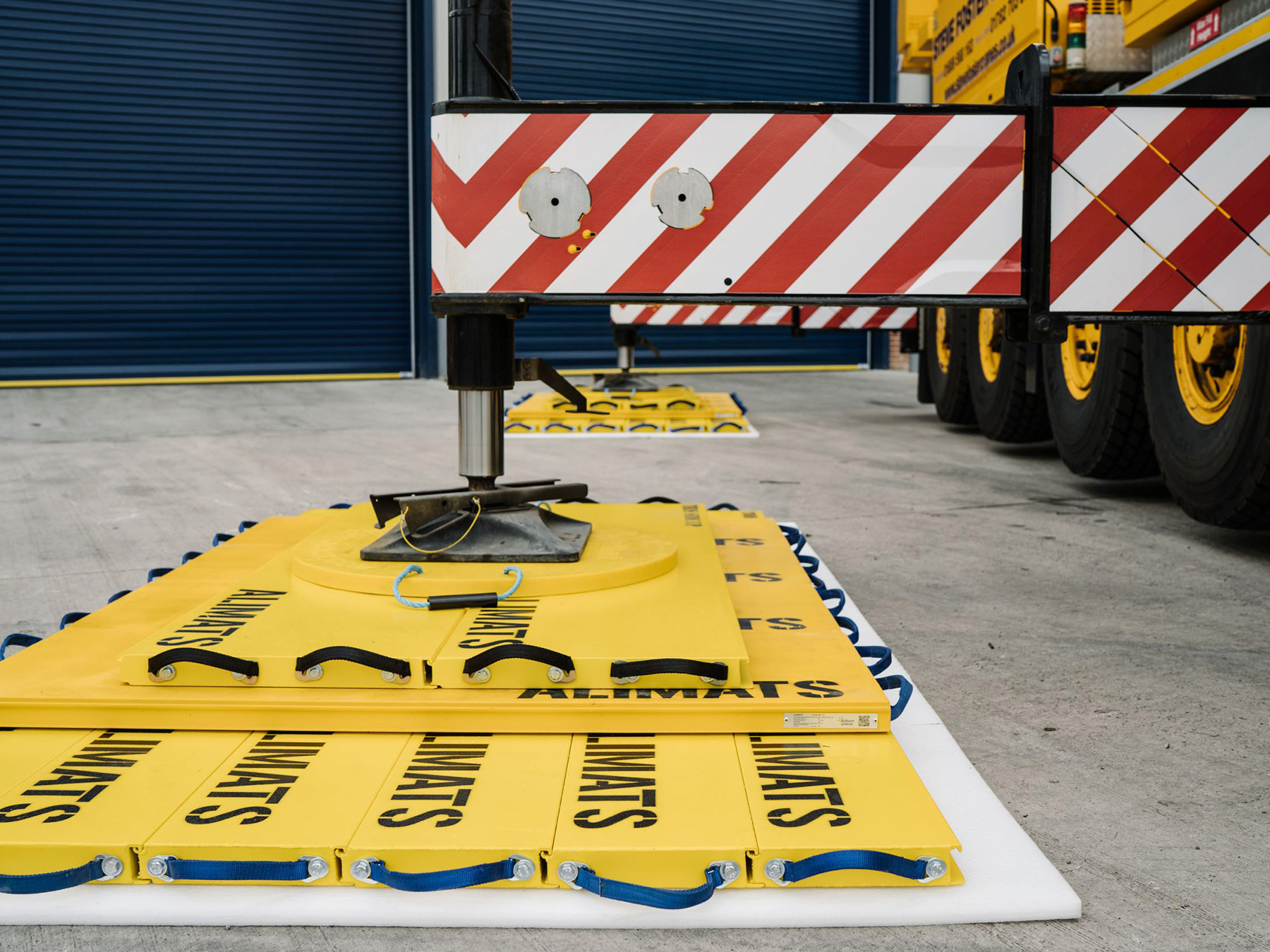
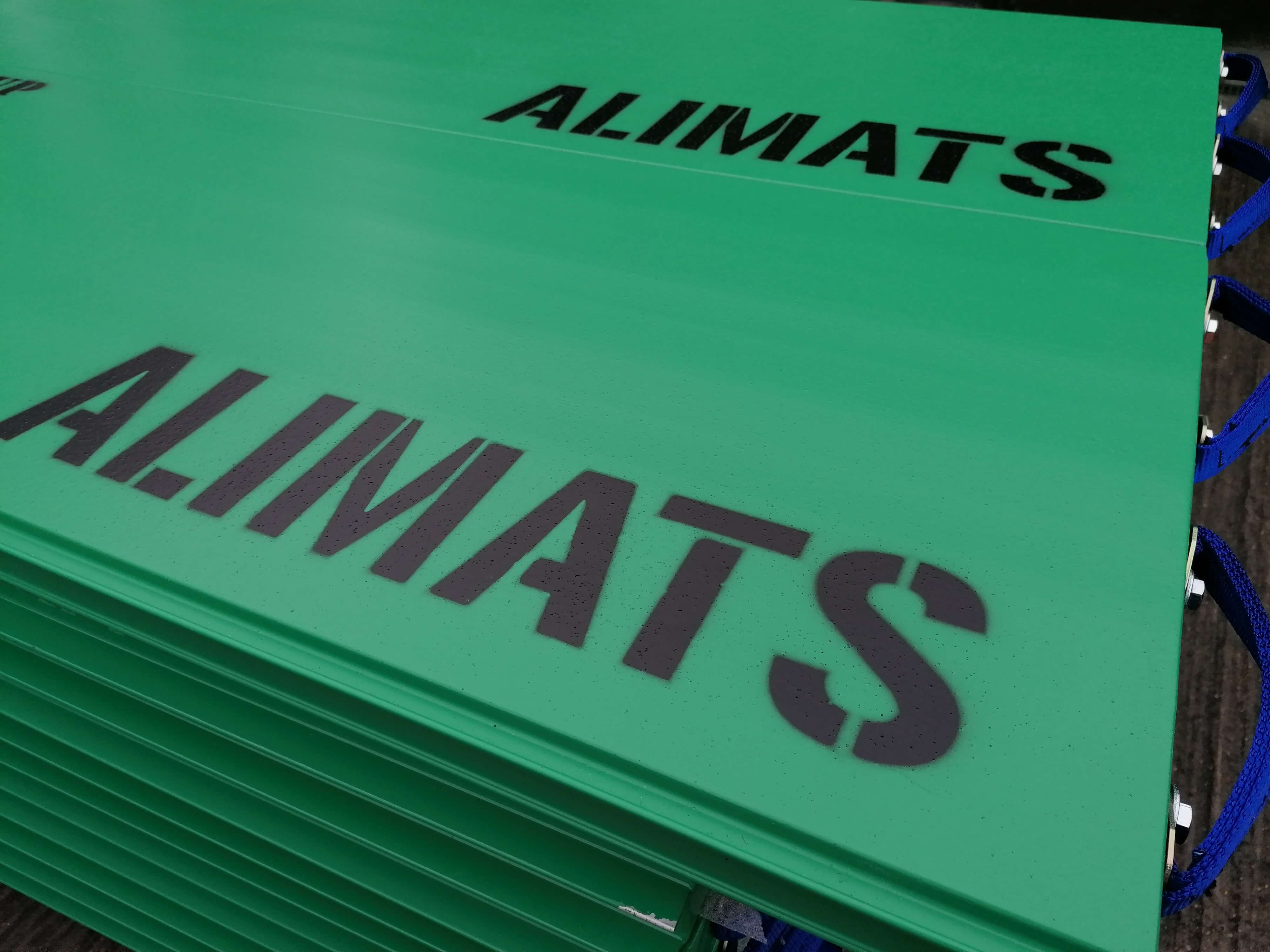
It's the second job we're here to talk about. We manufacture ALIMATS®, our patented modular aluminium crane mat system, and we've built it a genuine, well-proven role on piling sites — protecting the access and plant around the rig. What it is not is a substitute for the rig's own working platform, and anyone who tells you otherwise is either confused about the distinction or careless with the terminology. Getting this right matters, because a tracked piling rig, loaded and travelling with a full mast and kelly bar extended, is not a job for a product we've engineered to spread the point loads of delivery wagons and outrigger pads — and treating the two as interchangeable on a quote or a method statement is exactly where the problems start.
The rig's platform is a groundworks project in its own right
An engineered piling platform is not a mat in any sense that overlaps with a modular aluminium panel. It's a designed layer of imported stone or crushed hardcore, built to a calculated thickness over a geotextile separator and sized to carry the full working and travelling loads of a tracked rig across the entire compound — not just directly beneath the rig but wherever it needs to walk between pile positions. The design has to account for the rig stationary and loaded, the rig moving, and the ground conditions the site investigation reveals, and it's normally sized using guidance published by bodies such as the Federation of Piling Specialists alongside established geotechnical practice.
That makes it a different scope of work altogether, not a bigger version of the same product. Specifying the platform is a civil engineering exercise: ground investigation, a bearing capacity calculation, a compaction specification, and verification testing once it's built. It's designed and installed by a temporary works engineer and a groundworks contractor well before the rig arrives on site, and it stays down for the duration of the piling programme — sometimes doubling later as a working surface for the structure above.
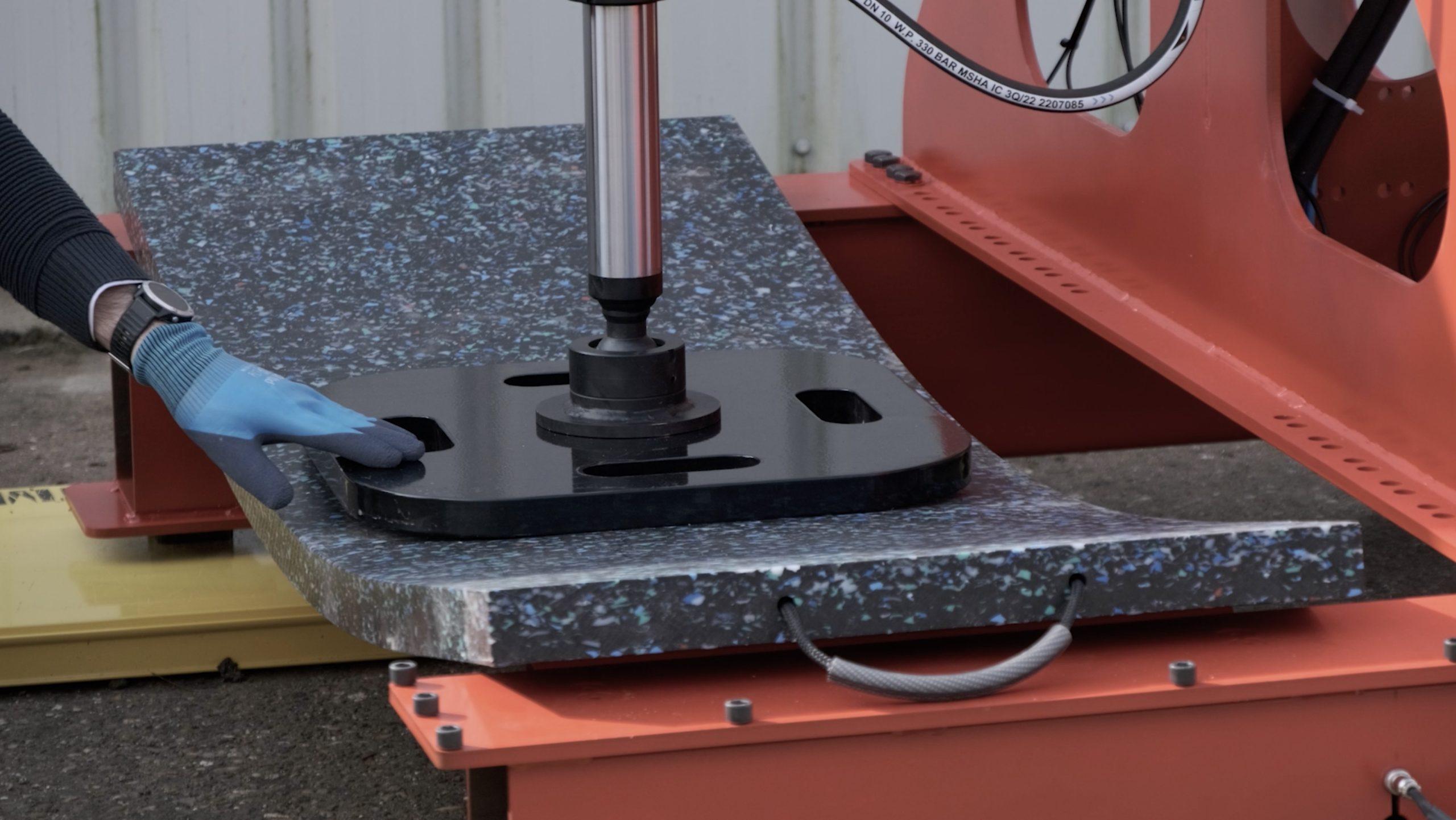
ALIMATS does not replace any part of that, and we would never claim it does. Even at a verified SWL of up to 80 tonnes — independently confirmed with a Fellow of the Institution of Structural Engineers — that figure describes the load a mat spreads from a wheel, track or outrigger pad onto ground that has already been assessed as fit to build on. It has nothing to do with the bearing capacity design of an aggregate platform across a whole compound, and it was never meant to.
Where ALIMATS genuinely fits on a piling site
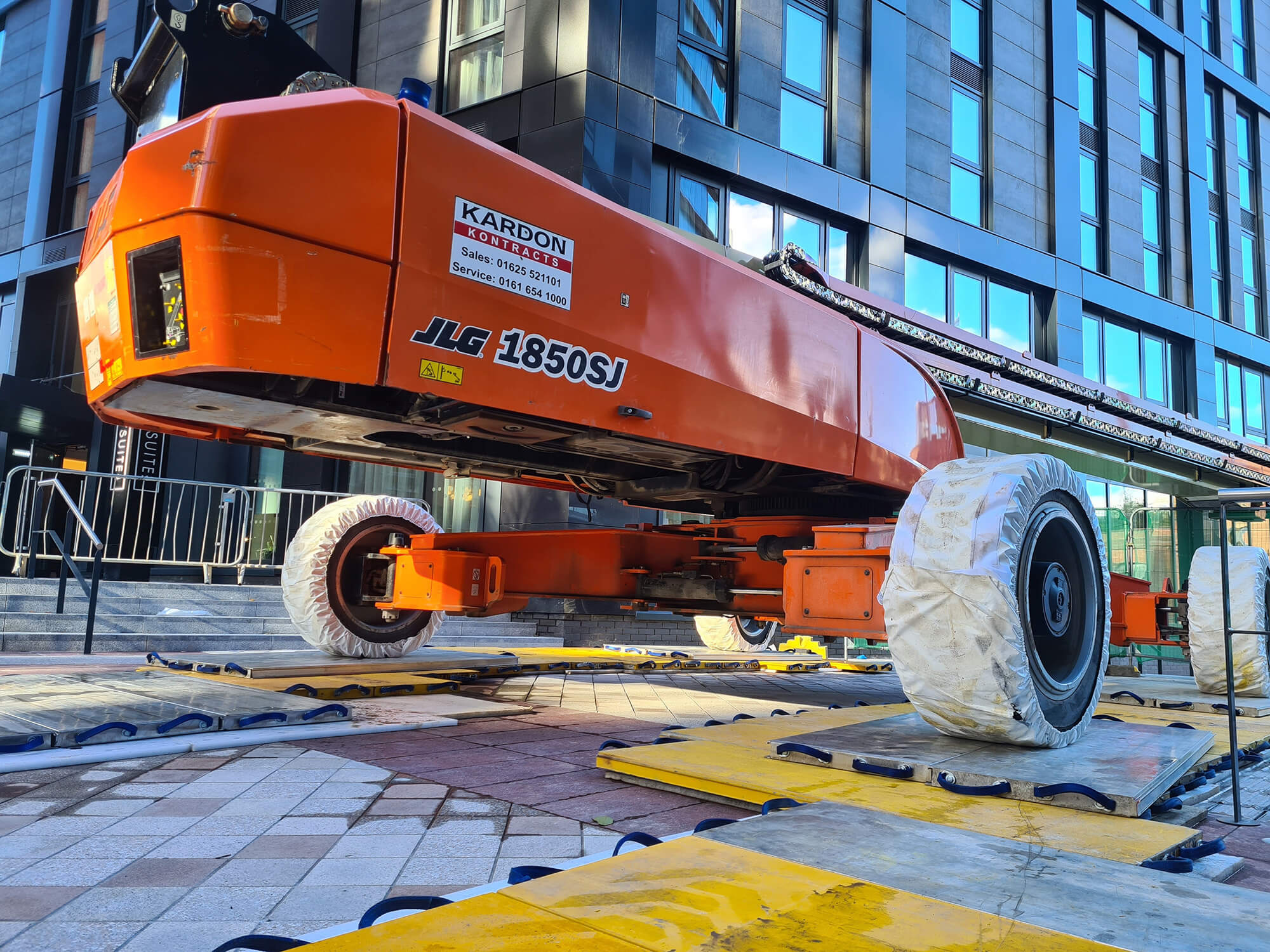
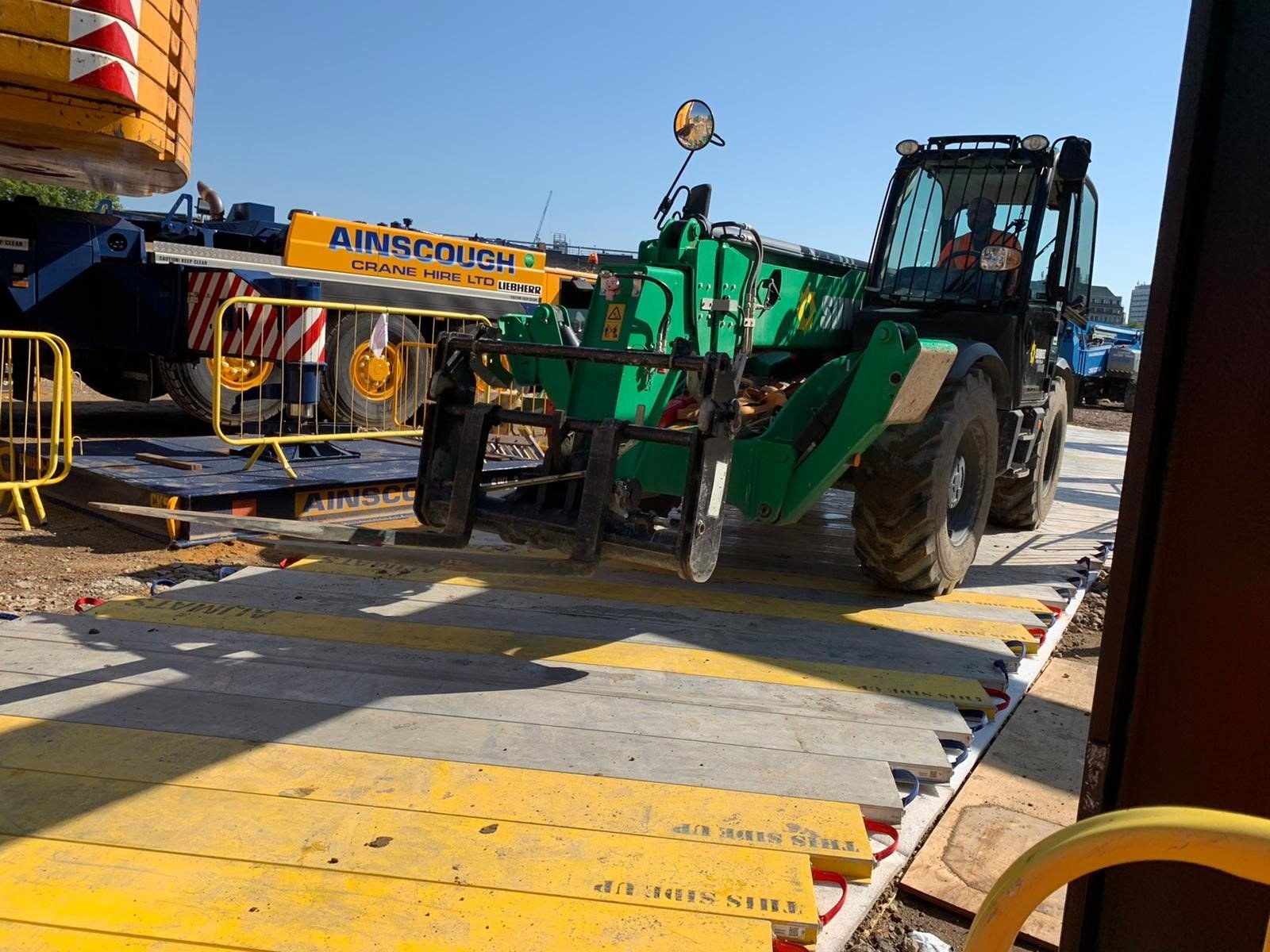
A piling programme generates a lot of vehicle movement that has nothing to do with the rig's own platform. Wagons deliver reinforcement cages and precast or steel casings, concrete and grout trucks make repeat runs to each bore, and telehandlers shuttle materials between the compound and the working area. Much of that traffic crosses ground that was never built to platform standard — perimeter access roads, laydown areas and grass verges pressed into service as a turning circle — and that's precisely the load spread and ground protection role we designed ALIMATS for.
The module range gives us the flexibility a piling job needs: Mini panels at 0.58 x 0.58m up to Extra Long panels at 3480 x 580mm, configurable from 1.34m² to 8.07m² depending on the route or standing area being covered. We can mat a delivery route through to the compound gate, then lift and relay it as the rig walks the grid to the next cluster of pile positions, without the panels ever sitting anywhere near the rig's own footprint.
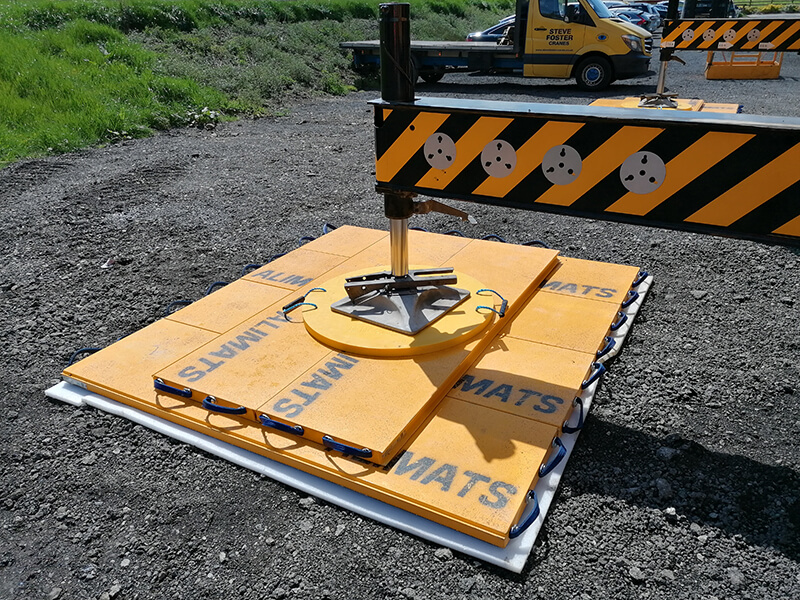
Where a mobile crane works alongside the rig — a common arrangement for lifting reinforcement cages into the bore or handling heavy pile segments — that's standard mobile-crane-outrigger ground protection, which we cover in detail in our mobile crane outrigger mats guide. The same principle applies: an SWL of up to 80 tonnes comfortably covers cranes up to 150 tonnes, sized for the outrigger pad loads rather than anything specific to the piling.
The same logic covers the wider compound, the cabin standing, welfare units, materials storage and the access roads tying it all together, in the same spirit as the access-route role ALIMATS plays around a tower crane base. None of it touches the rig's own platform. All of it is ground that would otherwise take a beating from weeks of support traffic.
Why aluminium suits a job that keeps moving
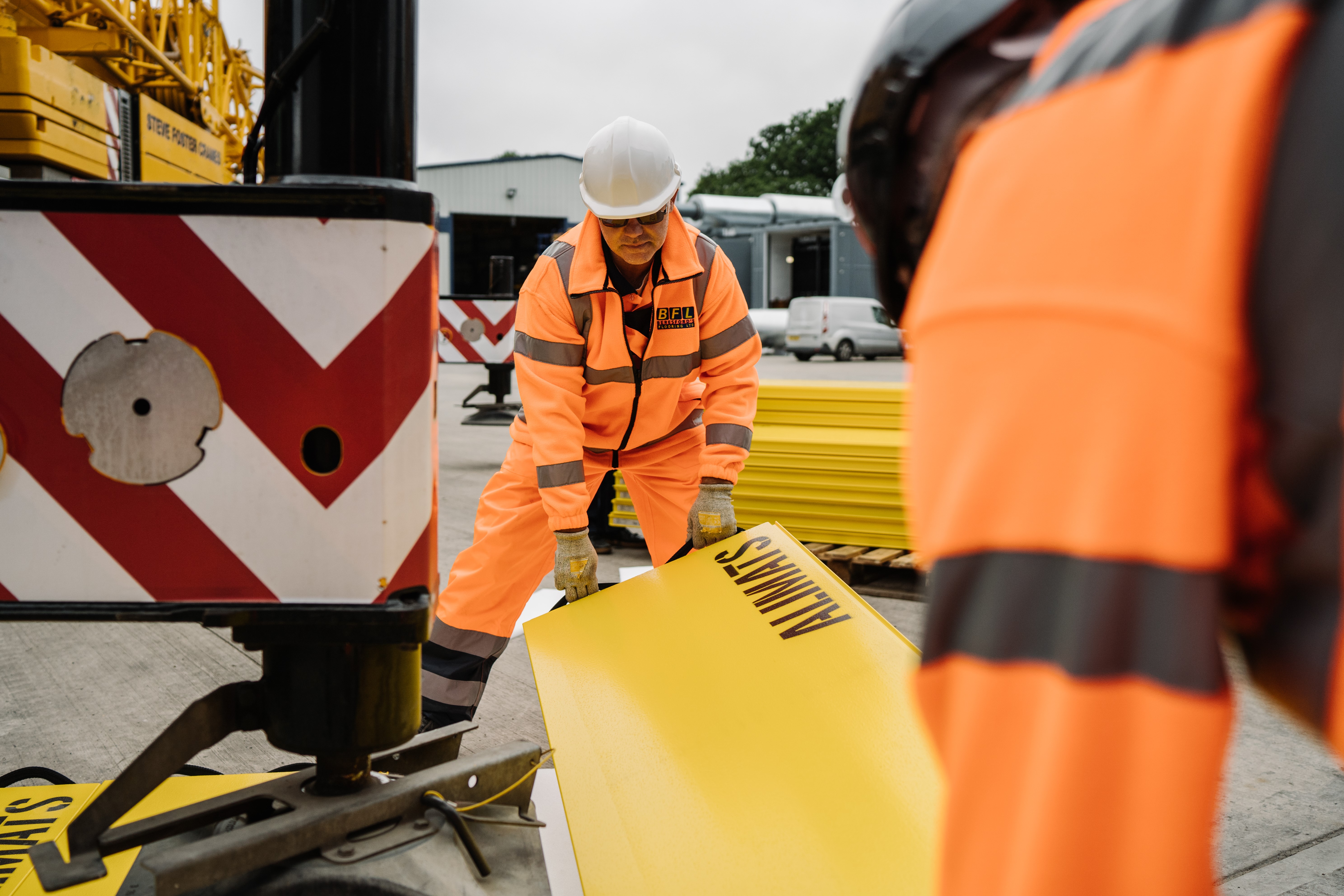
A piling programme can run for weeks across dozens of pile positions, with the rig walking the grid and the support traffic following it. That favours a mat you can pick up and relay quickly without bringing in extra plant, and that's aluminium's main practical advantage over a steel trackway: ALIMATS panels are handleable by two people with no lifting equipment needed, so we can move a route to keep pace with the rig rather than fixing it in place for the whole contract.
It also has to stand up to repeat loading on the same short stretch of ground, because a delivery route on a piling job rarely gets used once — it gets used by the same wagons and telehandlers, day after day, for as long as that cluster of positions takes. Our bending-test guide has the independent figures, but the short version is this: ALIMATS holds its shape under repeated loading where a competing UHMWPE plastic mat progressively deforms.
We inspect, clean and check every mat before it goes back out, which matters on a job where the same panels might be lifted and relaid a dozen times as the rig progresses. Availability by day, week or long-term hire, or by outright purchase, plus 24/7 delivery on our own FORS Bronze fleet with CPCS-trained drivers, means we can flex the mat quantity on site if the programme runs long or compresses.
Getting the scope right before you order
Given how often the terminology gets blurred, the single most useful question to ask any mat supplier on a piling enquiry is a blunt one: is this for the rig's own working platform, or for the ancillary access around it? If the answer coming back is anything other than a clear "the access around it," stop and check what's actually being proposed, because a modular aluminium mat quoted against a platform-scale bearing requirement is the wrong product sized against the wrong problem.
In practice, most enquiries that reach us are the second kind once they're properly scoped — protecting the compound, the delivery routes and any mobile crane standing near the rig — and that's the job ALIMATS is built for and proven on, including on programmes as demanding as HS2, Hinkley Point C, Heathrow, Gatwick, Grangemouth Refinery and London Bridge. The platform itself stays with the temporary works engineer, exactly where it belongs.
Frequently asked questions
Can ALIMATS be used as a piling rig's main working platform?
No. The rig's working platform is an engineered granular layer designed to carry the rig's full working and travelling loads across the compound, and it's specified and built as a groundworks item by a geotechnical or temporary works engineer. We build ALIMATS as modular ground protection for the ancillary access, plant and standing areas around that platform — not a substitute for it.
What's the actual difference between a "piling mat" and a crane mat like ALIMATS?
A piling platform is a designed thickness of compacted stone over a geotextile, sized by calculation for the rig itself. A crane mat is a portable modular panel we lay on top of existing ground to spread the point loads of wheels, tracks or outrigger pads for the vehicles and cranes working nearby. They're built for different jobs and they aren't interchangeable, even though both get called "mats" on site.
Will ALIMATS protect access routes for wagons delivering reinforcement cages or pile casings?
Yes, and it's one of the most common uses we see on a piling job. Delivery routes for cage and casing wagons, along with concrete and grout trucks making repeat runs, usually cross ground that was never built to engineered platform standard, and ALIMATS panels spread that traffic load across the route to stop it breaking up.
Do I still need mats if a mobile crane is working on the rig's own platform?
If a mobile crane stands on ground already built to platform standard, its outrigger loads have generally been accounted for in that design. Where the crane works from ground outside the engineered platform — a common arrangement for cage handling — that's standard outrigger ground protection, which we cover in detail in our mobile crane outrigger mats guide.
How much of a piling site typically needs ALIMATS-style ground protection?
It varies with the site, but it's usually the compound, the delivery and access roads, cabin and welfare standing, and any area where a mobile crane or heavy plant works outside the rig's own footprint. We leave the platform itself out of scope, because that's covered by the temporary works design.
Can the mats be moved as the rig walks across the site?
Yes. Panels are handleable by two people with no lifting plant required, so we can lift and relay a matted access route to follow the rig as it progresses between pile positions, rather than leaving it fixed for the whole programme.
Should I hire or buy mats for a piling programme?
Short or uncertain-duration programmes usually suit day, week or long-term hire, while longer or repeat programmes across multiple sites can make outright purchase more economical. We offer both, with 24/7 UK delivery on our own FORS Bronze fleet, so we can adjust the quantity on site if the programme changes.
What SWL do I need for wagons and telehandlers on a piling job?
Most delivery wagons, concrete trucks and telehandlers fall well within our verified SWL range of up to 80 tonnes, independently confirmed with a Fellow of the Institution of Structural Engineers. The right configuration depends on the specific vehicle's axle or wheel loads, so send us the details and we'll size it for the traffic you're actually running.