
"How heavy is it?" is the wrong first question
When a site team rings us to ask how heavy the incoming plant is, we understand the instinct — but it's the wrong question to open with. Two machines can carry identical operating weights on their spec sheets and still do something completely different to the ground beneath them, because weight is only half the story. What sets ground pressure is not simply how much a machine weighs, but how that weight reaches the ground — over what area, through how many separate points, and how continuously.
That's why a generic "is it heavy enough to need mats" conversation rarely gets anyone anywhere. A wheeled telehandler and a tracked excavator of broadly similar weight can load the ground in genuinely different ways purely because of how their running gear is built — before you've even reached the ground conditions themselves, or whether the machine is standing still or working hard. So the honest starting point is plant type — tracked, wheeled, or outrigger-based — and how each one fundamentally moves weight into the ground. Get that right and the sums come easily. Skip it and the numbers you plug in are built on sand.
Tracked vs wheeled: two very different footprints
Tracked plant — excavators, crawler cranes, a lot of piling rigs — runs on a pair of continuous steel or rubber tracks that span the full length of the undercarriage. That geometry carries the machine's weight along a long, unbroken strip on each side: two long, continuous rectangles beneath the machine rather than a handful of separate points. Because that contact area is continuous and comparatively large for the size of the machine, the same total weight is spread more thinly over each patch of ground than it would be if it were pinched into small points.
Wheeled plant — telehandlers, wheeled excavators, and mobile cranes travelling on their tyres rather than rigged on outriggers — works on the same underlying idea of weight over contact area, but the shape of that area is entirely different. Instead of two long strips you have three, four or more separate, comparatively small tyre contact patches, each only as big as the section of tyre actually deforming against the ground at that moment. The same overall weight is divided among fewer, smaller, discontinuous points rather than run along a continuous line.
None of this fixes the ground pressure of any particular model — that depends on the machine's real weight, its exact track or tyre specification, and its load state at the time, and it can only come from that machine's own manufacturer data (more on that below). What we're describing is a structural fact about running gear: tracks and tyres change the shape and continuity of the contact area, and contact area is one of the two things — alongside total force — that decide ground pressure. Two machines of identical weight, one tracked and one wheeled, simply will not load the ground the same way, purely because of that geometry.
| Category | Typical machines | How load reaches the ground | Why it matters |
|---|---|---|---|
Tracked | Excavators, crawler cranes, some piling rigs | Two long, continuous contact strips running the length of the undercarriage | Weight spread continuously over a comparatively large combined contact area |
Wheeled | Telehandlers, wheeled excavators, mobile cranes travelling on tyres | Three, four or more separate, comparatively small tyre contact patches | Same total weight divided among fewer, smaller, discontinuous points |
Outrigger-based | Mobile cranes when rigged for lifting, concrete pumps, some MEWPs | Entire machine reaction (plus load) concentrated through as few as four extending legs | Highest point-pressure category on most sites, regardless of the machine's overall weight |
Category:
Typical machines:
How load reaches the ground:
Why it matters:
Category:
Typical machines:
How load reaches the ground:
Why it matters:
Category:
Typical machines:
How load reaches the ground:
Why it matters:
Outrigger-based plant: a third, distinct category
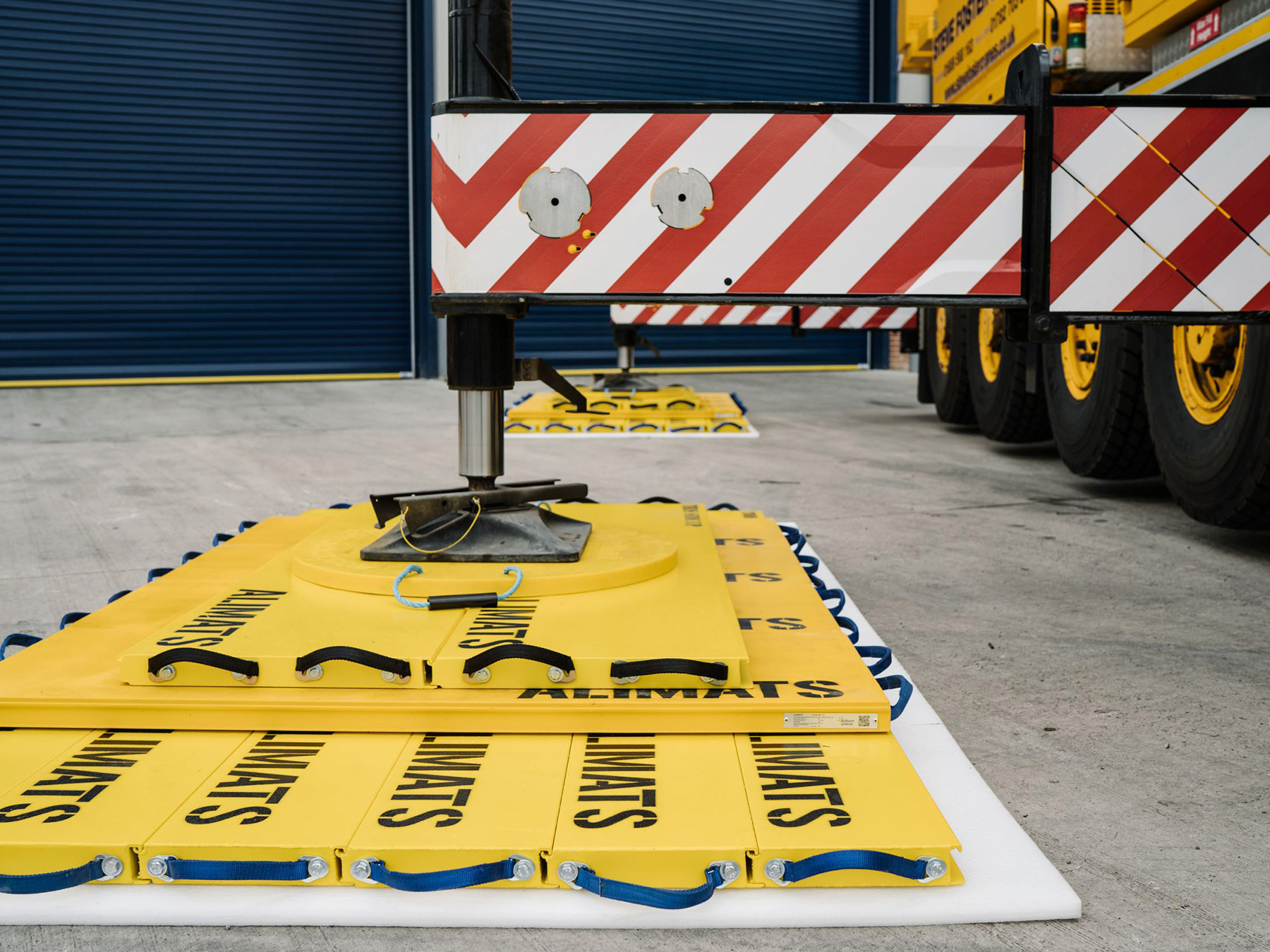
Mobile cranes rigged for lifting, concrete pumps, and some mobile elevating work platforms sit in a third category of their own. Rather than travelling on the ground the way tracked or wheeled plant does, they deliberately lift much or all of the machine clear of its wheels and drive the entire reaction down through a small number of extending legs, each ending in a comparatively small foot or float. Instead of spreading load continuously like tracks, or splitting it across several tyre patches like wheeled plant, an outrigger machine concentrates its whole weight — plus whatever it's lifting or pumping — through as few as four discrete points.
This is exactly why outrigger-based loadings are usually the highest point-pressure category on a typical site, even when the machine generating them weighs considerably less than a large tracked excavator working alongside it. That's no contradiction — it's the direct consequence of concentrating a given total force through a handful of points instead of distributing it along a track run or across several tyres. How a mobile crane's total reaction resolves into individual leg-by-leg loads, and how that shifts with boom position and radius, is where the real detail lives — we cover it fully in our mobile crane outrigger mats guide rather than repeat it here.
Static weight isn't the whole story: dynamic loading
Contact area and geometry aside, there's a further variable sitting on top of all three categories: whether the plant is static or actively working. A stationary dead weight on tracks, tyres or outriggers is the easy case. Plant that's working is a different matter — a concrete pump mid-pour with the boom out and vibration running through the legs, a crane slewing a suspended load out towards full radius, an excavator swinging a full bucket at reach — all of these can add loading effects on top of the static weight, from vibration through to dynamic and shock loading as mass moves around.
We set out the vibration case for a working concrete pump in more detail in our concrete pump outrigger pads guide. The point to carry away here is a general one: dynamic effects are real, and they need assessing for the actual working condition of the machine — not assumed away by reading a single static weight off a spec sheet and stopping there.
Tonnage class is a hiring shorthand, not a ground-loading figure
We see plant hire companies group machines into general size or tonnage classes all the time, and that's a useful shorthand for picking a machine with the right lifting capacity, reach or bucket size for the job. But it's a poor stand-in for an actual ground-loading figure when you're making matting decisions, because it bands plant by rough weight — not by how each machine puts that weight into the ground.
A "20-tonne class" tracked excavator and a "20-tonne class" mobile crane on outriggers can sit in the same hire bracket while loading the ground in completely different ways — one down a long continuous track run, the other through four small concentrated feet. The tonnage class tells you which machine to book. It tells you next to nothing about what mats or ground protection that specific machine, in that specific configuration, actually needs, which is why we always push past the tonnage class and ask for the real figures.
Where the real figures come from
The trustworthy source for a specific machine's loading data is that machine's own manufacturer technical data or operator's handbook — not a generic guide, and not a rule of thumb based on its size class. Every handbook or spec sheet states the operating weight in its various configurations. For outrigger-based plant the load chart goes further, giving the reaction at each individual leg across the boom positions and radii the machine can work at — and that leg reaction, not the machine's overall weight, is the figure that matters for matting design.
For tracked and wheeled plant the ground contact pressure is sometimes published directly, and where it isn't, it can be derived from the documented weight together with the stated track or tyre contact area — again, figures that come from the manufacturer's data for that model, not a generic estimate. Because the figure moves with configuration, attachment and load state, the right move is always to ask the plant hire company or the manufacturer for the specific data on the specific unit and set-up coming to site, rather than guessing from a general sense of "what excavators are usually like".
Once you have those real figures in hand, choosing matting becomes concrete. ALIMATS®, our modular aluminium crane mat system built from 6005A alloy, is configurable from 1.34m2 up to 8.07m2 per set-up and rated to a safe working load of up to 80 tonnes — comfortably covering cranes up to 150 tonnes, and independently verified with a Fellow of the Institution of Structural Engineers. Matching that configuration range to a piece of plant is straightforward arithmetic once you have the machine's real reaction figures to work with. Getting hold of the right figures in the first place is the part worth being disciplined about.
Same equation, different input
Whatever category the plant falls into — tracked, wheeled, or outrigger-based, static or working — the same question from our load-spread calculation guide still governs it: force divided by allowable bearing pressure gives the required contact area. That guide walks through the arithmetic in full, and our ground bearing capacity guide covers how to pin down the allowable bearing pressure for the ground itself.
What varies so much in character across plant types is the force side of that equation, which is why the answer to "how heavy is it" is so rarely the whole answer to "what ground protection do I need". Get the real figures for the specific machine, in its actual working configuration, from the people who hold them. After that, the calculation is the easy part.
Frequently asked questions
Does a heavier machine always need more ground protection than a lighter one?
Not necessarily. In our experience, total weight is only half of what sets ground loading — the other half is how that weight reaches the ground, whether down a continuous track run, across several tyre patches, or through a handful of outrigger feet. A lighter outrigger-based machine can produce more concentrated point loading than a heavier tracked machine, purely because it uses so few contact points.
Why do a crane's outriggers usually need more matting than its tyres would when travelling?
Because rigging on outriggers concentrates the crane's entire weight, plus whatever it's lifting, through as few as four small feet, rather than spreading it across four or more tyre patches while travelling. We cover the leg-by-leg detail of how that reaction is distributed in our mobile crane outrigger mats guide.
Is tracked plant always a lower ground-loading risk than wheeled plant of the same weight?
Tracks do spread load over a longer, more continuous contact area than tyres, and that's a genuine structural advantage. But the real figure for any specific machine still comes down to its actual weight and documented track or tyre specification, so we'd treat the tracked-versus-wheeled distinction as a factor to weigh alongside the machine's real data — never as a substitute for it.
How do I find the actual ground pressure figure for the specific machine coming to my site?
Start with that machine's own manufacturer technical data or operator's handbook, which states its weight and, for outrigger plant, gives the leg reactions from the load chart. Where a direct pressure figure isn't published, we'd always recommend asking the plant hire company or the manufacturer for it rather than estimating from a general description of the machine type.
Does a stationary crane load the ground the same way as one that's actively slewing a load?
No. A stationary dead weight is the simplest case, but a crane slewing a suspended load, or a concrete pump vibrating mid-pour, can add dynamic effects on top of the static weight. We assess those for the actual working condition rather than assuming them away.
Can I use a plant hire company's tonnage class to work out what size mats I need?
Tonnage class is handy for hiring the right-sized machine but a poor stand-in for a ground-loading figure. It bands machines by rough weight, not by how they put that weight into the ground, so we always tell clients that two machines in the same class can load the ground in completely different ways.
Do all outrigger machines have the same size of foot or float?
No — float and foot sizes vary between machines and models, which is exactly why we always work from the manufacturer's load chart for that specific machine and configuration, rather than assuming one outrigger machine behaves like another of similar overall weight.
Is dynamic loading only something to worry about with cranes?
No. It applies right across plant types — a concrete pump vibrating during a pour, or an excavator swinging a full bucket at reach, both impose loading effects beyond their static weight. We treat it as a variable to assess for whichever plant is actively working, not just for lifting equipment.
Once I have the real figures for my machine, how do I work out the mat size I need?
That's the arithmetic in our load-spread calculation guide — force divided by allowable bearing pressure gives the required contact area. Here, we've focused on why the force side of that equation looks so different across tracked, wheeled and outrigger-based plant, not the calculation itself.