
The project type matters as much as the postcode
Most conversations about crane mat specification start with geography - what's different about a UK site, a Gulf site, a European site. It's a fair question, and we've covered it elsewhere in this series. But it misses the variable that matters more day to day: what kind of project you're actually building. A nuclear new-build, a rail corridor, an airport, a refinery, a wind farm and a residential self-build each put genuinely different demands on the ground - different plant weights, different programme rhythms, different site constraints - and those demands hold whichever country the work happens in.
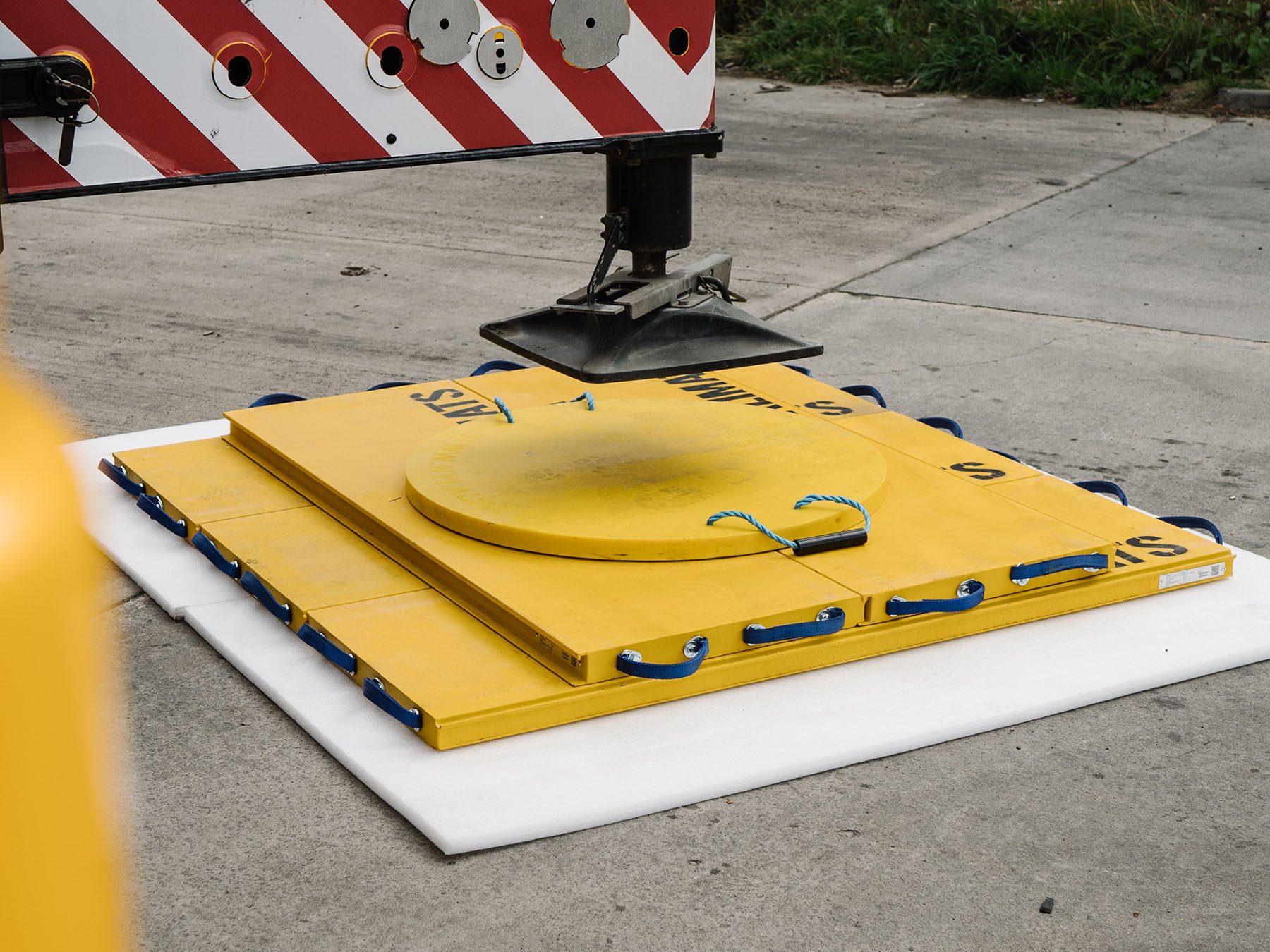
We manufacture ALIMATS®, our patented modular aluminium crane mat system, from Little Eaton in Derbyshire, and we deliver across the UK, 24/7. Every named project in this guide is a UK deployment - but the categories are universal. Energy infrastructure, transport corridors, airports, process plant, renewables, venues and commercial and residential builds recur in every country that builds them. What follows is a sector-by-sector look at how the ground-protection problem changes shape, with a real UK example for each.
| Project type | Distinguishing ground-protection challenge | UK example referenced in this guide |
|---|---|---|
Energy & nuclear infrastructure | Exceptionally heavy plant; rigorous engineering sign-off; multi-year programmes | Hinkley Point C |
Rail & transport infrastructure | Tight, constrained corridors; possessions and curfews; high public visibility | HS2; London Bridge |
Aviation infrastructure | Live runway/taxiway proximity; airport security; continuous terminal operations | Heathrow; Gatwick |
Process & industrial sites | Hazardous-area rules; continuity of a live, running facility; fast turnaround needs | Grangemouth Refinery |
Renewable energy | Remote access; upland or otherwise difficult, less-developed terrain | Scottish wind farm developments |
Commercial, venues & residential | Wide range of scale, from a major arena to a single self-build plot; same principles throughout | Co-op Live Arena; Google HQ King's Cross; residential self-build (TV series) |
Ports, marine & mining | Heavy plant on quaysides, laydown areas and extractive sites; same engineering principles apply | — |
Project type:
Distinguishing ground-protection challenge:
UK example referenced in this guide:
Project type:
Distinguishing ground-protection challenge:
UK example referenced in this guide:
Project type:
Distinguishing ground-protection challenge:
UK example referenced in this guide:
Project type:
Distinguishing ground-protection challenge:
UK example referenced in this guide:
Project type:
Distinguishing ground-protection challenge:
UK example referenced in this guide:
Project type:
Distinguishing ground-protection challenge:
UK example referenced in this guide:
Project type:
Distinguishing ground-protection challenge:
UK example referenced in this guide:
Energy and nuclear infrastructure: heavy plant, rigorous sign-off
Energy infrastructure - and nuclear new-build above all - sits at the demanding end of the spectrum, for a specific combination of reasons. The plant is often exceptionally heavy: reactor components, pressure vessels and structural steel modules push crane classes and outrigger loadings well beyond anything a typical commercial build generates. The sign-off culture is just as heavy - temporary works, ground protection included, go through detailed design scrutiny before anything is accepted for use, and there's little appetite for undocumented assumptions about ground bearing capacity. And the programmes run for years, not months, which means ground protection isn't a short-term convenience but infrastructure that has to perform lift after lift for the life of the works.
We've supplied ALIMATS to Hinkley Point C, the UK's nuclear new-build programme in Somerset - exceptionally heavy plant, high scrutiny and a multi-year programme in one place. It's exactly the combination this category throws at the ground.
Rail and transport infrastructure: constrained corridors, tight windows
Transport infrastructure imposes a different set of constraints again. Rail work in particular happens inside tight, linear corridors - narrow strips of land bounded by live track, existing structures or third-party boundaries - which leaves almost no room to reposition a crane if the first ground assessment turns out to be wrong. Much of it also has to fit around the operational railway: possessions, curfews and engineering windows that compress the available working time into short, tightly scheduled bursts, often overnight or at weekends. Add the public visibility of a major rail scheme and there's very little tolerance for a lift that stalls because the ground protection wasn't ready, or wasn't up to the job.
We've supplied ALIMATS to both HS2 and the works at London Bridge - a new-build high-speed corridor on one hand, construction in and around one of the busiest working stations in the country on the other. Two ends of the same category, and both demanding for the same underlying reason: no slack in the schedule and nowhere to move the crane.
Aviation infrastructure: building around live operations
Airports stack another layer of constraint on top of the access and security considerations already common to major infrastructure. Construction happens close to live runways, taxiways and aircraft stands, inside a security environment that goes well beyond a normal site's access control. Terminal operations don't stop for a building programme - passengers, staff and aircraft keep moving throughout - so ground protection has to be reliable enough that a crane position never becomes an unplanned source of delay or disruption to a live airport.
We've delivered ALIMATS to both Heathrow and Gatwick - major hub airports where the build proceeds alongside continuous live operations, and where a ground-protection failure isn't a private inconvenience but a very public one.
Process and industrial sites: hazardous areas, no shutdown
Refineries and comparable process plants bring their own distinct constraints. Much of the site sits within classified hazardous areas, which governs what equipment, vehicles and working methods are permitted, and where. Continuity matters just as much - a live process plant often can't simply be shut down to suit construction or maintenance, so temporary works, ground protection included, have to be planned, delivered and installed around a running facility rather than a cleared greenfield. That also puts a premium on fast, responsive supply: a plant that identifies a ground-protection need mid-programme usually needs it solved in hours, not weeks.
We've supplied ALIMATS to Grangemouth Refinery in Scotland - and it's the site behind one of our sharpest delivery examples. An order placed with Ainscough Crane Hire in the early afternoon was on site the following morning, inside an 18-hour turnaround. That's what responsive delivery into a live industrial site actually looks like.
Renewable energy: remote access and difficult terrain
Wind farm developments are a different challenge again - one rooted less in scrutiny or operational continuity and more in geography. These sites are remote by definition: upland, rural, away from established road and utility networks, which means access itself is often the first hurdle before a crane ever gets near a turbine base. Ground conditions are frequently more variable and less predictable than a city site - peat, upland soils and undeveloped ground behave very differently from the made ground and engineered fill of a brownfield build - and there's usually far less existing site infrastructure to fall back on if the first plan doesn't hold. On terrain like that, a mat you can position without heavy plant is a genuine advantage.
We've supplied ALIMATS to major Scottish wind farm developments. It's a useful example precisely because it turns on terrain and access rather than plant weight or regulatory scrutiny - a reminder that the ground-protection problem doesn't scale neatly with how prestigious or technically complex a project happens to look.
Commercial, venues and residential: the same principles at every scale
Between those major infrastructure categories sits a much broader band of commercial, venue and residential work - and it earns its own heading precisely because of how much it varies in scale while the underlying logic stays put. At the large end, Manchester's Co-op Live Arena is a nationally significant venue build with substantial crane activity on a constrained urban site, and we've supplied ALIMATS there. Google's UK headquarters at King's Cross sits in the same bracket - a major commercial development in a dense, high-value location where getting ground protection right first time matters both for the programme and for the public realm around it.
At the other end of the same category, we've put ALIMATS on a residential build featured on a well-known national homebuilding television series - a single plot rather than a multi-hectare development. The scale is a world apart, but the question is identical to the one facing Co-op Live or a nuclear new-build: what's the actual load going into the ground, and has that ground been properly assessed to carry it. Scale changes the numbers. It doesn't change the question.
Ports, marine and heavy extraction: the same physics on the quayside
Ports, marine terminals and heavy extractive sites generate as much crane mat and ground-protection demand as anything above. Quaysides, laydown areas and processing sites all put heavy plant onto ground that regularly needs engineered protection - for exactly the reasons that run through this whole guide. The load has to be spread, the ground has to be assessed, and the two have to be reconciled before the lift ever happens. The engineering doesn't change at the water's edge or the pit head; only the surroundings do, and the same load spread and load transfer principles that govern a nuclear site govern a quayside just as firmly.
The common thread across every sector
Strip away the sector-specific detail - the sign-off culture of a nuclear site, the possession windows of a rail corridor, the hazardous-area rules of a refinery, the remoteness of a wind farm - and the same question sits beneath every one of them: what is the actual load, what is the actual ground, and has that combination been properly assessed rather than assumed. That's the whole of load spread and ground bearing capacity, which is why we've given each its own companion guide - Load Spread Calculation and Ground Bearing Capacity Explained - rather than repeat them here.
What changes from sector to sector is everything around that core: how much scrutiny the answer has to survive, how tight the site is, how much time there is to get it right, and how visible the consequences of getting it wrong will be. Working out which of those pressures applies to your project is, in practice, at least as useful a starting point as knowing which country it's in.
Frequently asked questions
Does the type of project matter more than its location when specifying crane mats?
In practical terms, often yes. A nuclear site, a rail corridor and a wind farm each impose their own load profile, programme rhythm and site constraints, and that pattern repeats in every country where that type of project is built. Location still matters - ground conditions and climate vary by geography - but project type is at least as strong a predictor of what the ground-protection problem will actually look like.
Why is energy and nuclear infrastructure treated as its own category?
Nuclear new-build and comparable energy infrastructure combine exceptionally heavy plant with a rigorous engineering sign-off culture and programmes measured in years rather than months. We've supplied ALIMATS to Hinkley Point C, which puts all three of those demands in one place.
What makes rail and transport projects different from other construction sites?
Rail work typically happens inside tight, linear corridors close to live track or existing structures, and is compressed further by possessions and curfews that leave only short windows to work in. We've supplied ALIMATS to both HS2 and the works at London Bridge - a new-build high-speed corridor and construction around one of the busiest working stations in the country.
How is building at an airport different from a typical construction site?
Airport construction proceeds close to live runways and taxiways, inside an aviation security environment, while terminal operations carry on throughout the works. We've delivered ALIMATS to both Heathrow and Gatwick, where ground protection has to be reliable enough that a crane position never becomes a source of delay to a live airport.
Does crane matting work differently on a live industrial site like a refinery?
Yes. Hazardous-area classifications restrict what equipment and methods are permitted, and a live process plant usually can't be shut down to accommodate construction, which puts a premium on fast, responsive delivery. We've supplied ALIMATS to Grangemouth Refinery - the site behind one of our sharpest turnarounds, an order in the early afternoon on site the following morning inside 18 hours.
What's different about ground protection on a wind farm compared with an urban site?
Wind farm sites are typically remote, with limited existing access and road infrastructure, and their ground conditions - often upland or otherwise undeveloped terrain - can be far more variable and harder to predict than a city-centre brownfield plot. We've supplied ALIMATS to major Scottish wind farm developments, where access and terrain, rather than plant weight or scrutiny, are the defining challenge.
Do the same ground-protection principles apply to a small residential build as to a major venue?
Yes. We've supplied ALIMATS to both Manchester's Co-op Live Arena and a residential build on a national homebuilding television series. The scale differs enormously, but the underlying question - what's the actual load, and has the ground been properly assessed to carry it - is identical at both ends.
Do ports, marine and mining projects need crane mats too?
Absolutely. Quaysides, laydown areas and extractive sites all put heavy plant onto ground that regularly needs engineered protection, for exactly the same load spread and load transfer reasons covered throughout this guide. The named deployments here run through energy, rail, aviation, process, renewables and construction; if your scheme is a port, marine terminal or mining site, the same engineering applies and we'd be glad to talk it through.
Are the named projects in this guide UK sites?
Yes - every one. Hinkley Point C, HS2, London Bridge, Heathrow, Gatwick, Grangemouth Refinery, the Scottish wind farm developments, Co-op Live Arena, Google's King's Cross HQ and the homebuilding-series residential build are all UK deployments. We've grouped them by sector because the categories recur worldwide: the demands a nuclear site or an airport places on the ground are the same in any country. Our export enquiries and Middle East work are covered separately in our Middle East market guide.